Understanding why it is important to update the menu in a restaurant is one of the most commercially significant questions a restaurant owner can ask and most do not ask it often enough. A menu is not a housekeeping document. It is a commercial instrument that controls food costs, communicates brand values, attracts new customers, reduces waste, and increases average spend.
There is a menu sitting in a restaurant somewhere that has not changed in three years.
It still lists a dish whose main ingredient costs nearly twice what it did when the menu was printed. It still prices a bottle of wine at margins that made sense before energy costs spiked. It still uses the same language, the same layout, and the same design that was considered current when the restaurant first opened. And it is still doing what menus that are never updated always do: quietly costing the restaurant money, one order at a time.
Most restaurant owners understand, in principle, that menus should be updated. What is less understood is how much commercial weight a well-maintained menu actually carries. A menu is not a list of dishes. It is the most powerful sales document a restaurant owns. It shapes price perception before the first course arrives. It communicates culinary philosophy to a customer who has never eaten there before. It determines what gets ordered, what generates profit, and what produces loss.
In 2026, that document is under more pressure than at any previous point in the restaurant industry's recent history. Wholesale food costs rose 6.6% year over year. Full-service restaurant menu prices rose 4.1% over the same period. Sixty-eight percent of restaurants raised menu prices in 2025 to compensate. The restaurants that updated their menus strategically during that period retained their customers by framing price changes as quality improvements. The restaurants that simply raised prices on an unchanged menu handed those customers a reason to leave.
The question of why it is important to update the menu in a restaurant has a short answer and a long one. The short answer is that a static menu costs money. The long answer, the one that explains exactly how, and what to do about ii, is what follows.
Now, let's dive in!
Why Menu Updates Matter More Than Most Owners Realize
Before the seven reasons, it is worth establishing what a menu actually is and why its neglect carries the commercial consequences it does.
A restaurant menu communicates four things before a single order is placed: price expectations, food philosophy, brand personality, and quality standards. A guest who opens a menu covered in options from three years ago, with handwritten corrections on pricing and asterisks marking items that are no longer available, does not simply feel mild inconvenience. They form a judgment about the operational competence of the business they are sitting in. This is why having a clear and cohesive restaurant branding strategy matters so much; a messy layout suggests a messy kitchen. That judgment affects how much they spend and whether they ever return.
The opportunity embedded in regular menu updates is equally significant. Menus in 2026 are becoming more reflective of fast-moving consumer trends. Restaurants that treat the menu as a dynamic tool, reviewed quarterly, updated seasonally, redesigned when the brand has evolved, use it to manage costs, drive revenue, and shape customer perception simultaneously. It is also, ultimately, the most direct answer to why it is important to update the menu in a restaurant: not because the rules require it, but because the commercial returns compound in ways that neglect cannot replicate.
7 Reasons Why It Is Important to Update the Menu in a Restaurant
Each of the seven reasons below addresses a distinct commercial dimension of the menu: its relationship to cost, to seasonality, to competition, to customer experience, to brand, to waste, and to revenue. None of them operate in isolation. A menu update that addresses food costs will almost always improve kitchen efficiency.
A menu update that reflects seasonal ingredients will almost always generate marketing value, contributing to a stronger organic marketing strategy. The compounding effect of addressing all seven is what separates the restaurants that grow from the ones that plateau.
Taken together, they form the most complete answer available to any owner asking why it is important to update the menu in a restaurant. Every reason includes the data behind it and a single actionable step that can be taken this quarter.
Reason to Update Your Menu
Key Stat (2026)
Source
Takeaway
It Controls Food Costs and Protects Profit Margins
Wholesale food costs rose 6.6% YoY. Full-service menu prices rose 4.1% over the same period.
OysterLink 2026
Review food cost % dish by dish quarterly. Reprice or remove any item where food cost exceeds 30–35% of sale price.
It Reflects Seasonal and Locally Sourced Ingredients
76% of adults prefer restaurants with locally sourced ingredients. 39% of restaurants plan to add more local items in 2026.
Toast / TouchBistro 2026
Build a seasonal rotation calendar with 4 update points per year. Treat each launch as a marketing event.
It Keeps the Restaurant Competitive in a Fast-Moving Market
79% of adults prefer healthy menu choices. 30% are more likely to visit restaurants offering sustainable options.
Toast 2026
Review competitors' menus and food trend reports quarterly. Add 1–2 trend-aligned dishes per update cycle.
It Improves the Customer Experience and Reduces Decision Fatigue
73% of diners agree that menu clarity enhances their overall satisfaction.
Toast 2026
Reduce total menu SKUs by 15–20% with each major update. Track average order value and satisfaction scores.
It Strengthens Brand Identity and Communicates Restaurant Values
Diners in 2026 want to know what is in their meal, where it came from, and that it represents genuine value.
Modern Restaurant Management 2026
Treat each menu update as a brand exercise. Review whether design, language, and content still reflect the restaurant's current identity.
It Reduces Food Waste and Improves Kitchen Efficiency
28% of restaurants repurpose food trimmings. 26% offer varied portion sizes to reduce plate waste.
Toast 2026
Map every menu item against its ingredient list. Identify the 5 ingredients with lowest cross-menu utilization and redesign around them.
It Increases Average Spend Through Strategic Menu Engineering
Average US dine-in spend is $54 per person. Restaurants applying menu engineering consistently earn above that average.
1. It Controls Food Costs and Protects Profit Margins
Every restaurant menu contains at least one dish that is losing money. Most contain several. The problem is rarely obvious because the loss is distributed across the plate, a slightly too generous protein portion here, an ingredient whose wholesale cost has risen since the menu was priced there, and it rarely shows up as a dramatic number on a single line of a profit-and-loss statement. It shows up as a margin that is consistently narrower than it should be.
Wholesale food costs rose 6.6% year over year through 2025. Restaurants that did not update their menus in response did not absorb that cost cleanly. They absorbed it in ways that were invisible until the end of the quarter: in eroded margins on every underpriced dish, in the quiet financial drain of ingredients that cost more to purchase than the menu allows them to recover.
The mechanism for addressing this is menu engineering, the practice of classifying dishes by their popularity and profitability. The framework is straightforward: Stars are popular and profitable, Plowhorses are popular but low-margin, Puzzles are profitable but rarely ordered, and Dogs are neither. A menu update is the moment to promote the Stars, reprice the Plowhorses, reposition the Puzzles, and remove the Dogs.
Full-service restaurant menu prices rose 4.1% year over year through 2025 (OysterLink 2026). That price adjustment has to reach the customer through the menu. Updating the menu is the mechanism through which it does so, not as a correction written over an existing price, but as part of a coherent document that makes the value case for what the customer is being asked to pay.
Actionable takeaway: Review your menu's food cost percentage dish by dish, at least quarterly. Reprice or remove any item where food cost exceeds 30 to 35 percent of its sale price.
2. It Reflects Seasonal and Locally Sourced Ingredients
Seventy-six percent of adults are more inclined to dine at restaurants featuring locally sourced ingredients. Thirty-nine percent of restaurants plan to add more locally sourced items to their menus in 2026 (Toast and TouchBistro). These numbers reflect a sustained, deepening shift in how customers evaluate a restaurant's quality before they take a single bite.
A seasonal menu is a signal. It communicates that the kitchen is connected to its food supply, that the chef knows what is at its peak at this time of year, and that the restaurant is paying attention to the world beyond its own four walls. That signal earns a form of trust that a static menu cannot purchase at any price. From a graphic design concept perspective, this is where your visual identity meets your culinary philosophy.
The commercial argument for seasonal menus is equally compelling. In-season ingredients are at their flavour peak precisely because they are at their cost trough. A menu built around seasonal availability is not a philosophical statement. It is a margin strategy dressed as a culinary one.
Seasonal menu updates also create something a static menu never can: a reason to return. Every new seasonal menu is a marketing event. It generates content for social media, talking points for staff, press opportunities with local food writers, and a genuine reason for existing customers to come back and see what has changed.
Actionable Takeaway: Build a seasonal rotation calendar with four update points per year. Treat each launch as a marketing event, not an administrative change.
3. It Keeps the Restaurant Competitive in a Fast-Moving Market
A menu that has not changed in three years is not the same as a menu that was good three years ago. The standards have moved. The trends have shifted. The customer who walked through the door in 2021 expecting one set of options is walking through the door in 2026 with a different reference point, shaped by everything they have eaten, read, and seen in between.
Menus in 2026 are becoming more reflective of fast-moving consumer trends. Restaurants are turning to data to understand what is resonating: which ingredients are gaining momentum, which flavour profiles are emerging, which dietary preferences are moving from niche to mainstream. The 2026 food trend landscape includes plant-based options redesigned for flavour, global cuisines with increased regional specificity, savory flavour profiles, health-conscious dining across all price points, and nostalgic comfort food elevated through better sourcing.
Seventy-nine percent of adults prefer restaurants that provide healthy menu choices. Thirty percent are more likely to visit restaurants offering environmentally sustainable food items (Toast 2026). A menu update is the mechanism through which a restaurant demonstrates it is paying attention to what its customers care about, not with a press release but with the document that sits in their hands at the moment the relationship is formed.
Actionable takeaway: Review food trend reports and competitors' menus quarterly. Add one or two trend-aligned dishes per update cycle that genuinely fit the restaurant's culinary identity.
In 2026, customers research restaurants before they arrive. The best social media platforms for growing businesses are the same channels where dining trends are discovered and where a restaurant's relevance is formed in the mind of a customer who has not yet visited.
4. It Improves the Customer Experience and Reduces Decision Fatigue
The most counterintuitive finding in menu design research is one of the most consistently replicated: customers are happier when they have fewer choices. Not no choices. Fewer choices. A menu with thirty-five options is not a more generous offering than a menu with eighteen. It is a more exhausting one.
The psychology is straightforward. Every additional option requires the customer to make another comparison, evaluate another trade-off, and risk another form of regret if the choice proves disappointing. At a certain point, the volume of options stops feeling like abundance and starts feeling like work. Seventy-three percent of diners agree that improvements to the restaurant experience, including menu clarity, enhance their overall satisfaction (Toast 2026).
The trust dimension matters just as much. A menu with items crossed out, prices corrected in pen, or dishes flagged as unavailable communicates something specific: this restaurant is not in control of its own operations. That impression, formed in the first thirty seconds of the dining experience, cannot be fully repaired by excellent food.
Digital menus add another layer of urgency to this requirement. A physical menu updated in October but whose QR code still points to the September version creates a confusion that customers resolve by distrusting one of them, and that distrust extends to the food.
Actionable takeaway: Reduce total menu items by 15 to 20 percent with each major update. Track average order value and satisfaction scores in the months that follow.
5. It Strengthens Brand Identity and Communicates Restaurant Values
A menu is a brand document. Every choice made in its production communicates something specific about the restaurant: the typeface chosen for the headings, the language used to describe the food, the ordering of sections, the presence or absence of a sourcing story. Most of those communications are not conscious. The customer does not think to themselves: this typeface signals casual sophistication. They simply feel it.
Diners in 2026 want three things from the food they pay for: to know what is in it, to know where it came from, and to feel that it represents genuine value. These are not supplementary desires. They are the baseline expectations of a customer demographic that has become more informed, more discerning, and more willing to pay a premium for authenticity (Modern Restaurant Management 2026).
A menu that was written in 2019 may not speak to those expectations. The language may be generic where specificity would earn trust. The sourcing may be absent where transparency would earn loyalty. The design may feel dated in ways that communicate inattention rather than heritage. A menu update is the opportunity to close the gap between the restaurant a guest walks into in 2026 and the menu they find when they sit down.
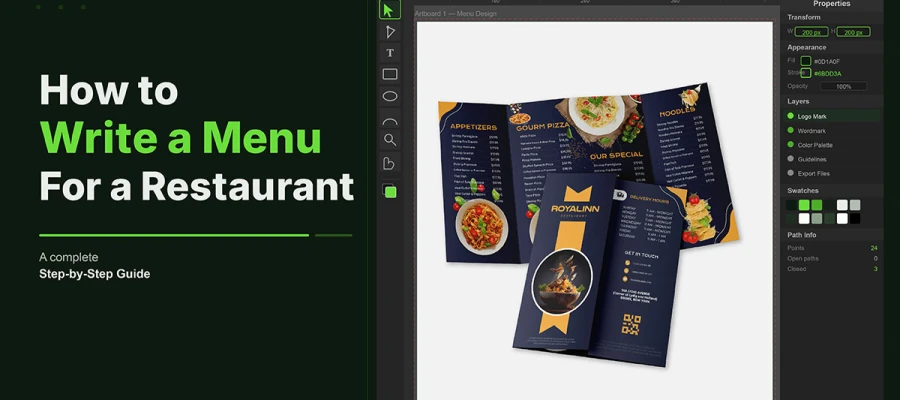
The physical design of the menu carries its own commercial weight, entirely separate from the words it contains. How typography affects food menu readability, the font sizes that make items legible without being clinical, the visual hierarchy that guides attention toward the dishes the restaurant most wants to sell, these are revenue decisions. Professional menu typography is a revenue tool, not a cosmetic one.
Actionable takeaway: Treat each menu update as a brand exercise. Review whether the design, language, and content still reflect the restaurant's current identity and the customer it most wants to serve.
That kind of gap is exactly what a well-written design brief helps identify before the redesign begins, not after.
6. It Reduces Food Waste and Improves Kitchen Efficiency
A restaurant menu with forty items requires a kitchen to hold ingredients for forty items. Many of those ingredients will be used in only one or two dishes. When those dishes are not ordered as frequently as the purchasing model assumed, the ingredients age, and the inventory becomes waste.
Twenty-eight percent of restaurants repurpose food trimmings as a waste-reduction strategy. Twenty-six percent offer varied portion sizes to reduce plate waste (Toast 2026). These are responses to a problem that a well-designed menu can address at its root rather than its symptoms.
The strategy is cross-utilization: designing the menu so that a single high-quality ingredient appears across multiple dishes. The heritage tomatoes sourced locally appear in the salad, the sauce, the bruschetta, and the garnish for the fish. The kitchen orders them in volume, pays a better price per unit, and loses almost none of them to spoilage. That is not a philosophy. It is operational leverage.
Thirty percent of consumers are more likely to visit restaurants that offer environmentally and sustainability-friendly food items (Toast 2026). A menu designed around cross-utilization and seasonal sourcing does not just reduce costs. It communicates the kind of operational mindfulness that has become, for a growing segment of diners, a reason to choose one restaurant over another.
Actionable takeaway: Map every current menu item against its full ingredient list. Identify the five ingredients with the lowest cross-menu utilization and redesign to either deploy them across more dishes or eliminate them entirely.
7. It Increases Average Spend Through Strategic Menu Engineering
Menu engineering is the practice of designing a menu to guide customer attention toward the dishes the restaurant most wants to sell: the dishes that are both popular and profitable. It uses placement, typography, pricing architecture, and visual hierarchy to influence the ordering behavior of every customer who opens the menu.
The average dine-in spend in the United States is $54 per person (TouchBistro 2026). Restaurants that apply menu engineering principles consistently earn more than that average. Those that present their dishes as a simple, unformatted list consistently earn less. The difference is not in the food. It is in how the food is presented before it is ordered.
The eye enters a two-page menu spread and moves to the upper-right corner first. This is a consistent, well-documented pattern in menu reading behavior, and it means that whatever is placed in that position is ordered significantly more frequently than identical dishes placed elsewhere. High-margin dishes belong in that position.
Price framing operates on a similar principle. The removal of currency symbols reduces the psychological friction of seeing a price. Descriptive language that emphasizes ingredient quality shifts the customer's attention from price to value. Anchoring a premium item at the top of a section makes every item below it seem more reasonably priced by comparison.
Actionable takeaway: Apply the Stars, Plowhorses, Puzzles, and Dogs framework to your current menu. Promote your Stars, reprice your Plowhorses, reposition your Puzzles, and remove your Dogs.
How Often Should a Restaurant Update Its Menu?
The frequency of a menu update depends on three variables: the type of restaurant, the volatility of its ingredient costs, and the pace at which its competitive context is moving.
For full-service restaurants, four seasonal updates per year is the industry standard. The logic is straightforward: four seasons produce four distinct windows of peak ingredient availability, four opportunities to create marketing events, and four moments to review pricing against current costs. Thirty-one percent of restaurateurs update their menu monthly. Twenty-four percent do it seasonally. The right answer for most full-service restaurants sits somewhere between the two (Toast 2026).
For fast-casual and quick-service restaurants, monthly or quarterly updates are more appropriate. The economics of these formats require more frequent recalibration. Many operators in these categories are revisiting prices monthly during periods of sustained food cost inflation, simply to maintain the margin that keeps the business viable.
The trigger events that should produce an immediate menu review, regardless of the calendar: an ingredient becomes unavailable or too expensive to maintain its current margin, a dish consistently underperforms, a food trend creates a demand gap the current menu does not address, or a significant change in the restaurant's costs requires a repricing conversation.
The minimum standard, below which no restaurant should fall: no more than twelve months should pass without a full menu review. A year in the restaurant industry in 2026 is long enough for wholesale costs, consumer preferences, competitive offerings, and the restaurant's own culinary direction to shift in ways that a twelve-month-old menu cannot accommodate.
The La Lucky case study demonstrates exactly this principle in a commercial context: a business whose operational strengths were real but whose presentation had not kept pace with what the market expected, and the measurable cost of that gap.
The Critical Role of Visuals in Menu Updates
Updating the content of a menu and leaving the design unchanged is like writing new words on old stationery. The message is current. The impression is not.
The physical design of a restaurant menu affects how the food it describes is perceived and how much customers are willing to pay for it. A well-designed menu with clear visual hierarchy, legible typography, and considered use of space communicates quality, organization, and attention to detail before a single dish has been evaluated on its merits. A poorly designed menu communicates the opposite.
Menu engineering works only when the design supports it. Placing a high-margin dish in the upper-right corner of a menu spread is effective only when the design draws the eye to that corner. Using descriptive language to elevate perceived value works only when the typography makes that language easy and pleasant to read. The content and the design are not separate decisions. They are the same decision made at two different levels.
Digital menus add a third layer to this requirement. The QR code menu, the online ordering page, the delivery platform listing, and the social media food photography must all be updated simultaneously with the physical menu. A customer who researches a restaurant online before visiting, finds a seasonal menu from last autumn, and arrives to find a different menu in their hands has already experienced a friction that excellent service cannot fully resolve.
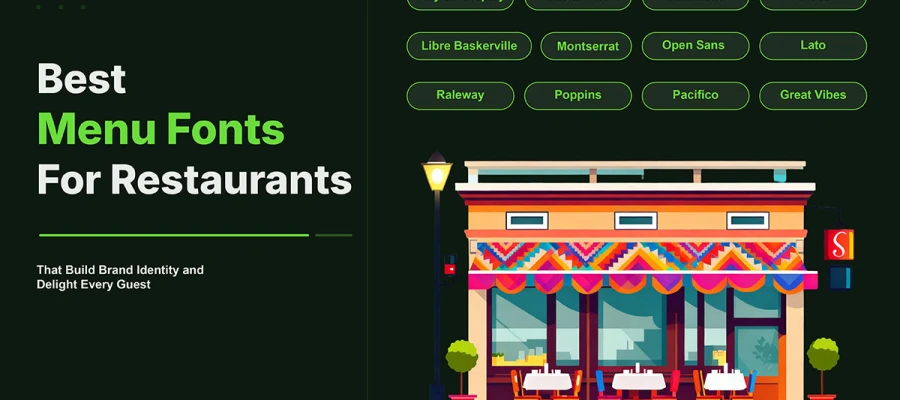
Typography shapes how food is perceived. Font choice, font size, line spacing, and visual hierarchy are not decorative decisions. They are functional tools that make a menu easier or harder to navigate. Understanding how typography affects food menu readability is a practical business requirement for any restaurant that takes its menu seriously.
Restaurant Menu Update FAQs
Every answer below opens with a direct response, because that is what both readers and AI search engines require.
Updating the menu is important because it controls food costs, improves profitability, reduces waste, and keeps offerings aligned with customer demand. Without updates, a menu can become outdated, unprofitable, and less competitive.
Most restaurants should update their menu about four times a year, with monthly price checks during cost changes. At minimum, a full menu review should happen at least once every 12 months.
Menu engineering is the strategic design of a menu to guide customers toward high-margin and popular dishes using layout, typography, and pricing structure. It matters because it directly influences ordering behavior and can increase average spend and overall revenue.
If a restaurant does not update its menu, it risks reduced profit margins, outdated pricing, higher food waste, and losing customers to competitors. It also signals stagnation and can lead to ongoing financial loss as costs rise.
A seasonal menu reduces ingredient costs, improves food quality, and creates stronger marketing appeal. It also encourages repeat visits by signaling fresh, locally sourced ingredients that attract more customers.
Updating a menu reduces food waste by improving ingredient cross-utilization and removing underperforming dishes. This helps lower spoilage, control over-ordering, and make waste reduction part of the menu structure instead of a reactive process.
Include a food cost review, updated pricing, removal or repositioning of underperforming dishes, and addition of a few well-aligned new items. Also update typography, layout, and ensure digital menus match the physical version.
Endnote
In real restaurant environments, the impact of a menu is rarely understood in design terms. It shows up later, in revenue distribution. Not total sales, but where the money actually comes from on the page.
That is the real reason behind why it is important to update the menu in a restaurant. Over time, menus begin to distort internal performance. High-margin items stop receiving natural attention, not because guests reject them, but because nothing in the structure actively brings them forward. Meanwhile, older, familiar items continue to absorb most of the ordering flow simply through repetition.
This creates a quiet imbalance that many owners misread as “customer preference.” In reality, it is layout inertia. The menu keeps rewarding old behavior while new strategy struggles to enter the guest’s awareness. The kitchen may improve, sourcing may change, pricing may be optimized, but the menu still reflects a previous version of the business.
Operators with experience start noticing this through revenue shape, not volume. Same number of covers, different profit outcome. Same traffic, different basket composition. The issue is not demand, it is distribution of attention at the moment of choice.
That is where Graphic Design Eye LLC provides professional menu design services focused on correcting that distribution. We work with restaurants where the goal is not visual refresh, but revenue clarity. Our approach restructures how items compete for attention so that high-value dishes are not dependent on persuasion from staff.
We realign category structure, adjust visual priority based on contribution, and rebuild layout flow so ordering naturally supports current business goals rather than historical popularity.
So, contact us to discover what professional menu design can do for your guest experience, your average spend, and the impression your restaurant makes before the first dish arrives.
The menu is the first thing your guests read. Make sure it says what you mean!
Graphic Design Eye LLC is a full-service creative agency built for brands that demand more than design — they demand vision. From strategic branding to complete visual identity, we partner with startups, agencies, and growing businesses as a dedicated creative force. With flexible subscription and project-based models. Let's start with us today!