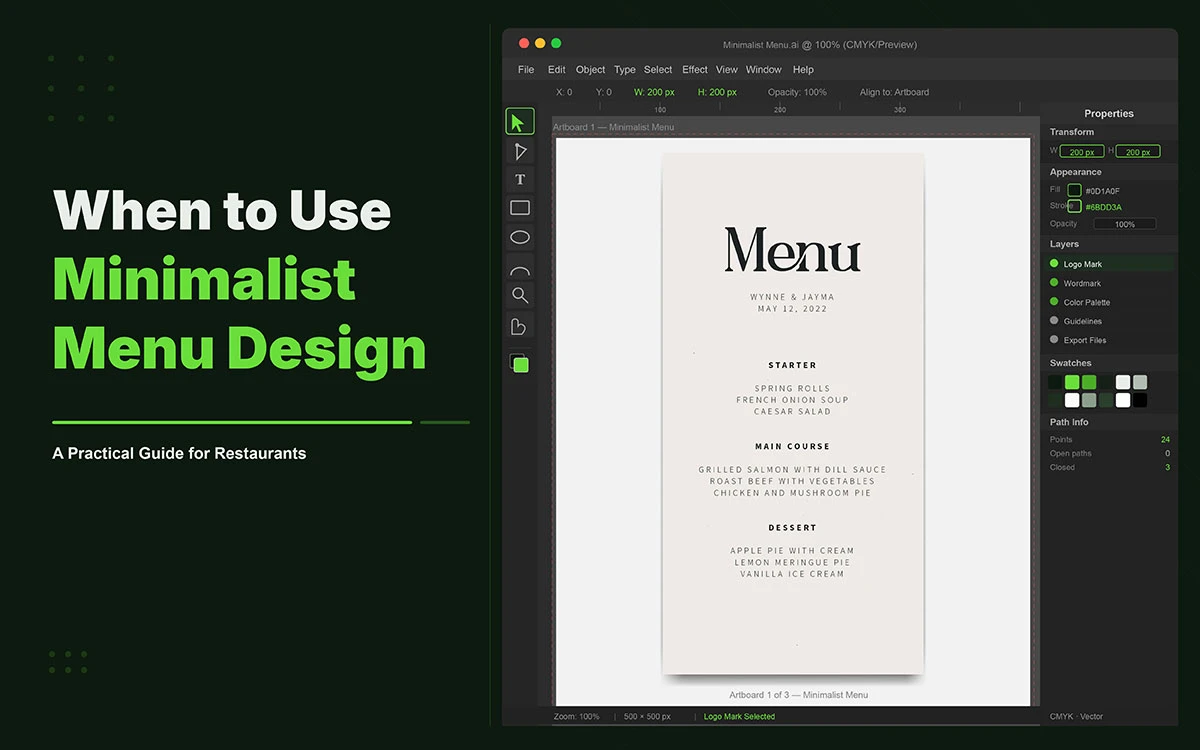
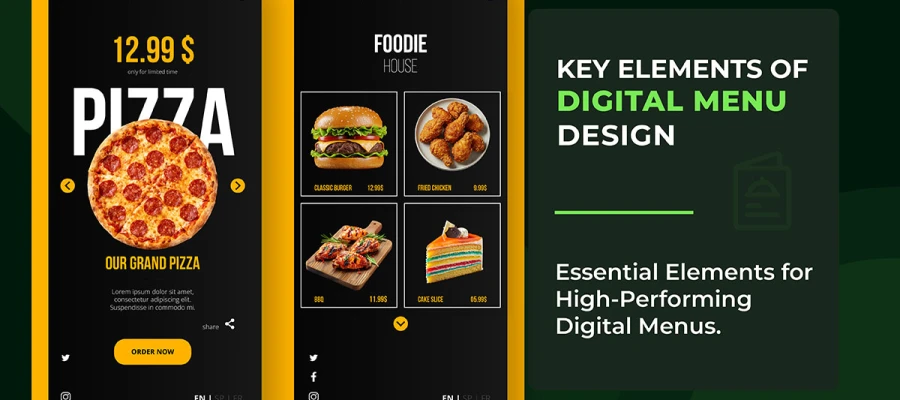
Looking at how to write a menu for a restaurant? It begins with selecting dishes deliberately, organizing them in a sequence that guides the guest naturally through the meal, and describing each one with sensory language that creates genuine desire. Pricing must be grounded in the food cost formula and sharpened with psychological tactics that influence spending without changing the price itself.
Your menu is not just a list. It is your restaurant's most powerful voice.
There is a moment, quiet and easily overlooked, that happens before the food arrives, before the waiter speaks, before the candles are even noticed. A guest opens a menu. And in that moment, everything your restaurant stands for must communicate itself through ink, typography, and carefully chosen words.
A restaurant menu is not merely a catalog of dishes and their prices. It is a declaration of identity: the voice of your chef, the philosophy of your kitchen, and the first promise you make to every person who walks through your door. When written well, it sells without pressure. When written poorly, it confuses, overwhelms, and disappoints long before the first course arrives.
This guide covers every dimension of writing a menu for a restaurant, from selecting and curating your dishes to writing descriptions that evoke genuine desire to pricing with psychological precision.
So, let’s dive in!
How to Write a Menu for a Restaurant?
Knowing how to write a menu for a restaurant is one of the most consequential skills an owner or chef can develop. The following table offers a high-level orientation, a map of the journey this guide will take you through. Each step is a discipline in itself, and each one compounds the impact of those that came before it.
Let’s get started!
What You Will Do
Why It Matters
Choose & Curate Dishes
Focus on fewer, better items
Organize Into Categories
Guide guests naturally through the meal
Write Compelling Descriptions
Use sensory language to create desire
Price with Strategy
Apply food cost formula + psychology
Optimize for SEO & AI
HTML structure, schema markup, keywords
01. Choose and Curate Your Dishes with Purpose
Every great menu begins with restraint. The temptation, especially for new restaurateurs, is to offer everything: to demonstrate range, to satisfy every palate, to leave no guest without an option. This impulse, however generous, is almost always a mistake.
Research consistently demonstrates that smaller, more focused menus reduce decision fatigue, decrease kitchen errors, and improve the overall dining experience. A guest confronted with forty-seven options does not feel spoiled for choice. They feel paralyzed. A guest offered twelve thoughtfully selected dishes feels cared for, understood, and already inclined to trust the kitchen.
How to Select Your Dishes
When building or refining your menu, evaluate each potential item against these essential criteria:
Ingredient availability and seasonality: Dishes built around seasonal, locally available produce are fresher, more cost-effective, and more compelling to describe. This also supports an organic marketing strategy by highlighting local partnerships
Food cost percentage: The industry benchmark sits between 28% and 35% of the menu price; any dish outside this range must justify its place with exceptional margins elsewhere
Kitchen workflow and preparation time: A dish that requires forty-five minutes of individual attention on a busy Friday evening is a liability, not a showpiece
Customer demand and local preferences: The most exquisite dish in the world fails if your community has no appetite for it
Recommended Menu Size by Restaurant Type
Restaurant Type
Ideal Menu Size
Guiding Principle
Fast Casual
10 – 20 items
Clarity and speed are the hospitality
Casual Dining
20 – 40 items
Variety without overwhelm
Fine Dining
5 – 12 courses
Curation as an art form
A menu is not a referendum on everything you can cook. It is a portrait of everything you cook best, and how that portrait is framed on the page is itself a discipline.
02. Organize Your Menu Into Clear, Logical Categories
Structure is not a bureaucratic formality in menu writing. It is an act of hospitality. A well-organized menu guides your guest through the natural progression of a meal, allowing their eye to travel comfortably from anticipation to satisfaction.
Organize these categories in the natural order of a meal. Guests read menus with an instinctive logic. They expect to encounter starters before mains, and desserts at the end. Disrupting this sequence creates subtle confusion that undermines the entire dining experience.
Use clear, bold headings for each section. This serves both the human guest and the digital reader. Search engines and AI systems extract structured information far more reliably from menus with well-labeled headings than from dense, undifferentiated lists. Where applicable, group dietary options with icons so guests with specific needs can navigate with confidence and dignity. How your menu is structured, in this sense, is inseparable from how your restaurant brand communicates itself at every touchpoint.
03. Write Menu Descriptions That Create Desire
If the selection of dishes is the architecture of your menu, the descriptions are its soul. This is the step most restaurateurs underestimate and the one that most powerfully determines whether a guest orders with excitement or with resignation.
A great menu description does not merely inform. It transports. It places the guest, for a moment, in the source of the ingredients, the warmth of the kitchen, the care of the chef. It uses language with precision and poetry in equal measure.
What Every Menu Description Should Include
The name of the dish: Clear, evocative, memorable
Key ingredients: Especially those that are premium, local, or signature
The cooking method: Grilled, slow-braised, wood-fired, hand-rolled
The flavor profile: Smoky, tangy, umami-rich, bright, velvety
Origin or story: Farm-sourced, a family recipe passed through generations, a regional specialty
Description Length by Restaurant Type
Restaurant Type
Recommended Description Length
Fast Casual
One sentence of 10–15 words. Clarity is the kindness
Casual Dining
Two to three sentences that invite without overwhelming
Fine Dining
Three to five lines that honor the provenance and craft of the dish
Language That Works and Language That Does Not
Reach for sensory specificity. Words like crispy, velvety, charred, fragrant, and tender do the emotional work that generic adjectives cannot. The phrase 'free-range chicken slow-roasted over applewood with a tarragon cream' is not merely more appetizing than 'roasted chicken'. It is more honest, more confident, and more worthy of the price attached to it.
Avoid the hollow superlatives that have lost all meaning through overuse: delicious, amazing, tasty, and homemade. These words are the equivalent of silence. They tell the guest nothing and trust them with nothing. Strike them from your menu entirely and replace them with the kind of precise, sensory food copywriting that places the guest inside the dish before a single bite.
✍️ The One Rule of Menu Writing
Every word on your menu is a salesperson. Hire only the ones that can close.
04. Price Your Menu with Strategy and Psychology
Pricing is where the business of hospitality meets its deepest tensions. Charge too little, and your kitchen operates at a loss no amount of passion can sustain. Charge too much without evident justification, and you lose the guest before they have even tasted the food. Price with intelligence and subtlety, and your menu becomes a quietly persuasive force.
The Food Cost Formula
The foundation of menu pricing is straightforward:
📐 Menu Price Formula Menu Price = Food Cost ÷ Target Food Cost Percentage
Example: A dish costs $4.00 to produce. Target food cost = 30%.
Menu Price: $4.00 ÷ 0.30 = $13.33. Round with purpose, not carelessness.
Industry benchmark: food cost should fall between 28% and 35% of menu price.
Food cost is only one variable in a complex equation. For a complete breakdown of overhead allocation, labor ratios, and competitive benchmarking.
Use charm pricing strategically: $14.95 is perceived as meaningfully less than $15.00, though the difference is negligible
Apply anchor pricing: Place your premium dish prominently at the top of a section, making mid-range items feel reasonable by comparison
Eliminate price columns: Right-aligned prices arranged in a vertical column invite guests to scan from bottom to top, choosing by price rather than desire. Embed prices naturally after each description instead
Always factor in overhead, labor costs, competitor pricing, and the perceived value your restaurant commands. A dish in a candlelit dining room with white-glove service carries different pricing authority than the same dish in a casual neighborhood bistro. Know the experience you are selling, and price according to a considered restaurant pricing strategy rather than instinct alone.
05. Write a Digital Menu for SEO and AI Discoverability
The finest printed menu in the world is invisible to the millions of people who search online before they walk through any door. In 2026, a restaurant without a properly structured digital menu is not merely behind the curve. It is absent from the conversation entirely.
Google's AI Overviews, ChatGPT, and other large language models increasingly surface specific restaurant information in response to user queries. They can only do so accurately and favorably when that information is structured, accessible, and well-written. This is not a technical nicety. It is a competitive necessity.
HTML Over PDF — Always
Publish your menu in HTML, not as a PDF file. HTML menus are fully readable by search engine crawlers and AI indexing systems. PDF documents, by contrast, are largely opaque to these systems. Their text may be present, but their structure is invisible. A beautifully designed PDF menu that exists only as a download is, from a discoverability standpoint, effectively non-existent. Making it web-native is a core part of user-friendly branding.
Structure Your Digital Menu with Semantic Headings
Use H2 tags for each menu category- Starters, Main Courses, Desserts
Use H3 tags for individual dish names
Write descriptions as paragraph text beneath each heading
Use keyword-rich but entirely natural language throughout. Write for humans first, and search engines will follow
Add Schema Markup
Implement structured data markup, specifically the Restaurant and Menu schema types from schema.org, on your website's menu page. Schema markup signals to search engines the precise nature of your content, enabling rich results, knowledge panel inclusions, and higher visibility in AI-generated responses. This single technical addition sits at the heart of any serious local SEO strategy for restaurants and can meaningfully expand your digital reach at no ongoing cost.
Keyword Strategy for Menu Pages
Dish-level keywords carry exceptional commercial intent. A person searching for 'wood-fired Neapolitan pizza in Brooklyn' is not browsing. They are deciding. Capture this searcher with H2 and H3 headings that mirror the natural language of hunger and intention.
Update your menu page consistently; stale content signals to search engines that a restaurant may no longer be operating, damaging rankings at precisely the moment they matter most. This ongoing refinement is part of broader ecommerce strategies and sustainable business growth strategies in the digital space.
Restaurant Menu Writing Common Mistakes
Any guide on how to write a menu for a restaurant would be incomplete without an honest account of what goes wrong. Even experienced restaurateurs fall into patterns that undermine their menus. Awareness is the beginning of correction.
Mistake to Avoid
Why It Costs You
Too many items (40+)
Overwhelms guests; strains the kitchen without proportionate return
Vague, generic language
'Fresh ingredients' and 'homemade' are the empty calories of menu writing
Missing dietary labels
Vegetarian, vegan, gluten-free, allergen info is expected and often legally required
Infrequent updates
Seasonal irrelevance and discontinued items erode customer trust and search rankings
Pricing without food cost data
Instinct is not a pricing strategy
PDF-only menus online
Renders your menu invisible to search engines and AI discovery platforms
Poor mobile formatting
60%+ of restaurant searches happen on mobile; a broken mobile menu loses customers
Restaurant Menu Writing FAQs
The following questions represent the most common queries around restaurant menu writing, drawn from real search patterns, People Also Ask features, and AI-generated query surfaces.
For casual dining establishments, research and industry practice suggest a range of 20 to 40 items represents the optimal balance between variety and focus. Fine dining menus typically offer between 5 and 12 courses. Fast casual concepts perform best with 10 to 20 items. Smaller menus reduce kitchen errors, accelerate service, and increase guest satisfaction by reducing the anxiety of choice.
An effective menu description includes the name of the dish, its key ingredients (particularly premium or distinctive ones), the cooking method, the flavor profile, and where relevant, an origin story or provenance detail. Descriptions should be concise but evocative, using sensory language rather than generic superlatives. Length varies by restaurant type: one sentence for fast casual, two to three for casual dining, and up to five lines for fine dining.
The standard formula is: Menu Price = Food Cost ÷ Target Food Cost Percentage. The target food cost percentage for most restaurants falls between 28% and 35%. This baseline must be adjusted to account for overhead, labor costs, competitor pricing, and the perceived value your establishment commands. Psychological pricing tactics such as removing dollar signs, using charm pricing, and deploying anchor items can meaningfully influence average spend without altering the actual price of any dish.
Always publish your menu in HTML format on your website. Search engines and AI indexing systems read HTML reliably and extract structured content with high accuracy. PDF files are largely opaque to these systems. Their text may exist, but their structure is invisible. A restaurant that publishes its menu only as a PDF download is effectively absent from AI-powered search results and Google's featured snippets.
A minimum of quarterly updates is recommended, aligned with seasonal ingredient changes. More frequent micro-updates such as adding a weekly special or removing a discontinued item signal to search engines that your page is active and relevant. From a customer trust perspective, a menu that matches what is actually available when a guest arrives is a foundational element of hospitality. Misalignment between the online menu and the kitchen's reality damages the dining experience before it has even begun.
In most jurisdictions, disclosure of the fourteen major allergens including gluten, dairy, nuts, eggs, and shellfish is a legal requirement. Even where regulations do not mandate it, allergen labeling is an act of care toward a growing segment of dietary-conscious and medically sensitive diners. A menu that clearly identifies allergens builds trust and accommodates inclusion. One that does not risks both legal liability and the loss of guests who cannot safely dine without that information.
Menu engineering is the discipline of analyzing each menu item's profitability and popularity, then using that analysis to inform placement, description, and design decisions. Items that are both popular and profitable, the stars of your menu, deserve prominent placement. Items that are profitable but less popular, the plowhorses, benefit from better descriptions. Menu engineering is not a luxury for large restaurant groups; it is a practical tool for any operation seeking to maximize the commercial potential of every guest interaction.
Publish your menu in HTML, not PDF. Use H2 headings for menu categories and H3 headings for dish names. Write descriptions in natural, keyword-rich language. Implement schema.org Restaurant and Menu structured data markup on your website. Keep the menu updated consistently. Ensure your website is mobile-optimized and loads quickly. These steps, taken together, significantly improve your visibility in traditional search results, Google's AI Overviews, and AI assistant responses.
Endnote
If you have made this far, I can feel one thing about you. You care. Not just about food, but about how people feel when they choose it. That quiet moment when a guest reads your menu and starts imagining their meal…that is where everything begins.
When you genuinely understand how to write a menu for a restaurant, you are not just listing dishes. You are guiding choices. Yup, you are craving. You are helping say, “Yes, this is exactly what I want”. And that feeling? It stays with them long after the plate is empty.
That is also where most restaurants get stuck. Because turning that feeling into words is not easy.
That is why we share what we know.
You can subscribe to our creative design newsletter. Every week, we break things down in a simple way. Menu psychology, smart wording, small changes that gently increase orders without feeling pushy.
But sometimes, you do not want to figure it all out alone. You just want it done right.
Need a Menu That Works as Hard as Your Kitchen?
At Graphic Design Eye LLC, we write restaurant menus that do more than list dishes. We make documents that sell and leave a lasting impression on every guest who holds them. From dish descriptions and pricing strategy to SEO-optimized digital menus built, our menu writing and design service covers every detail that turns a first visit into a lasting relationship while ensuring you remain visible in the search engines.
Somewhere tonight, a guest will open a menu, read a single line, and decide to stay. Make sure that line is yours!
Graphic Design Eye LLC is a full-service creative agency built for brands that demand more than design — they demand vision. From strategic branding to complete visual identity, we partner with startups, agencies, and growing businesses as a dedicated creative force. With flexible subscription and project-based models. Let's start with us today!