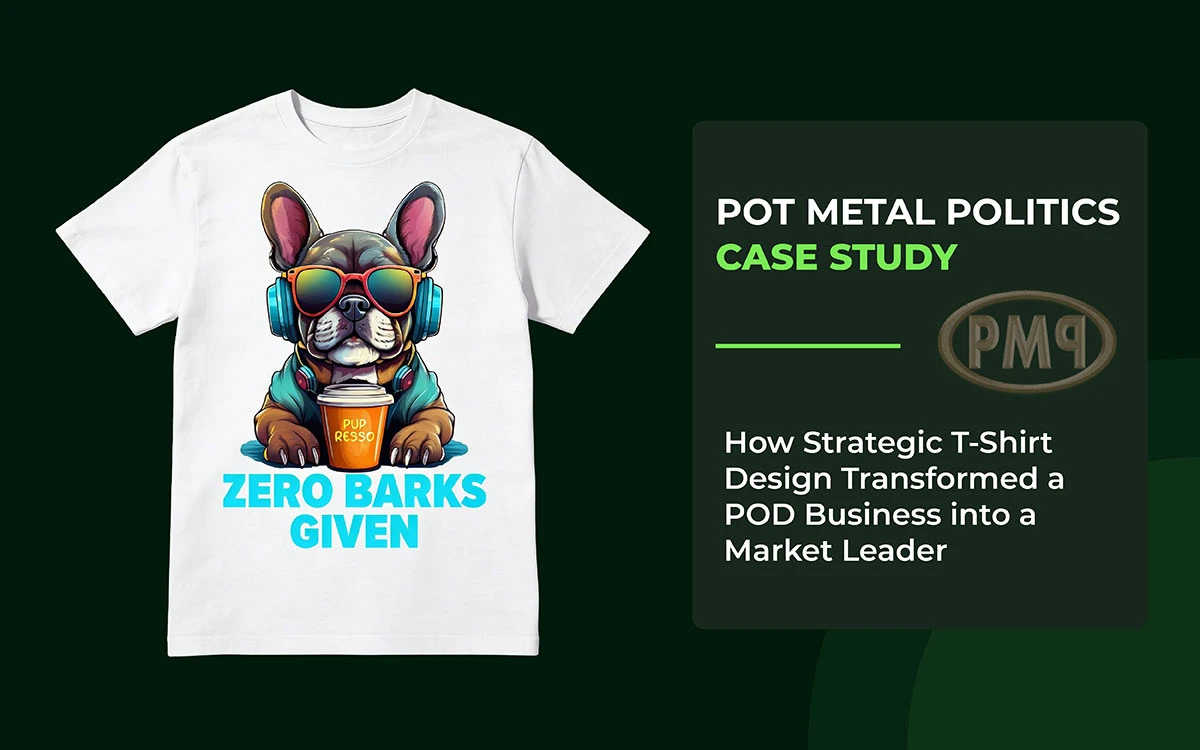
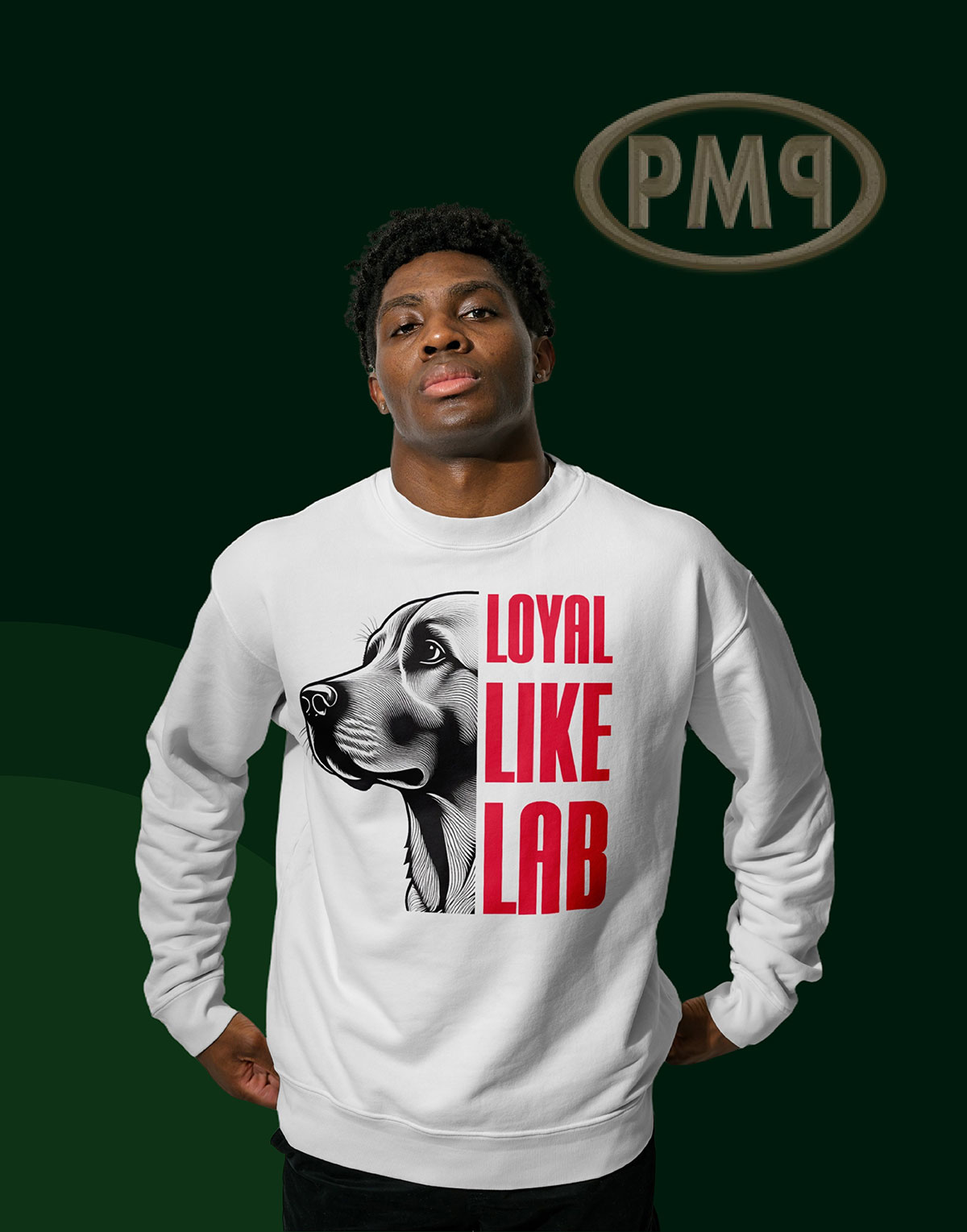
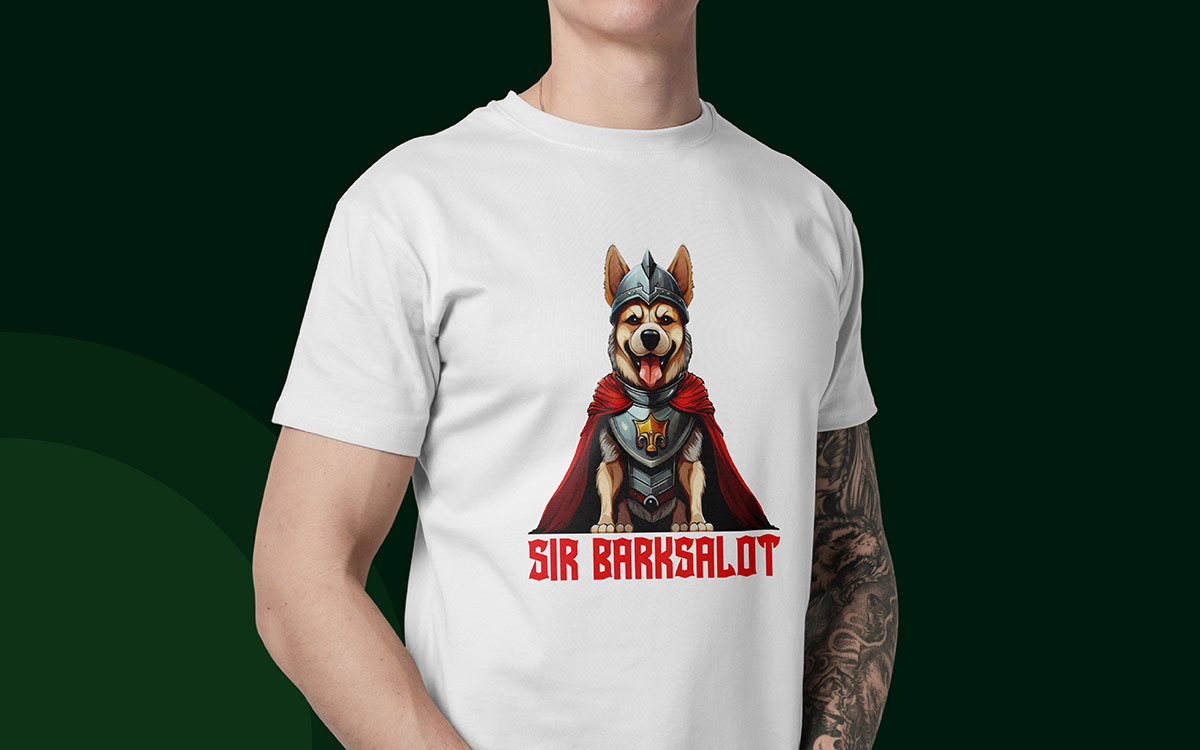
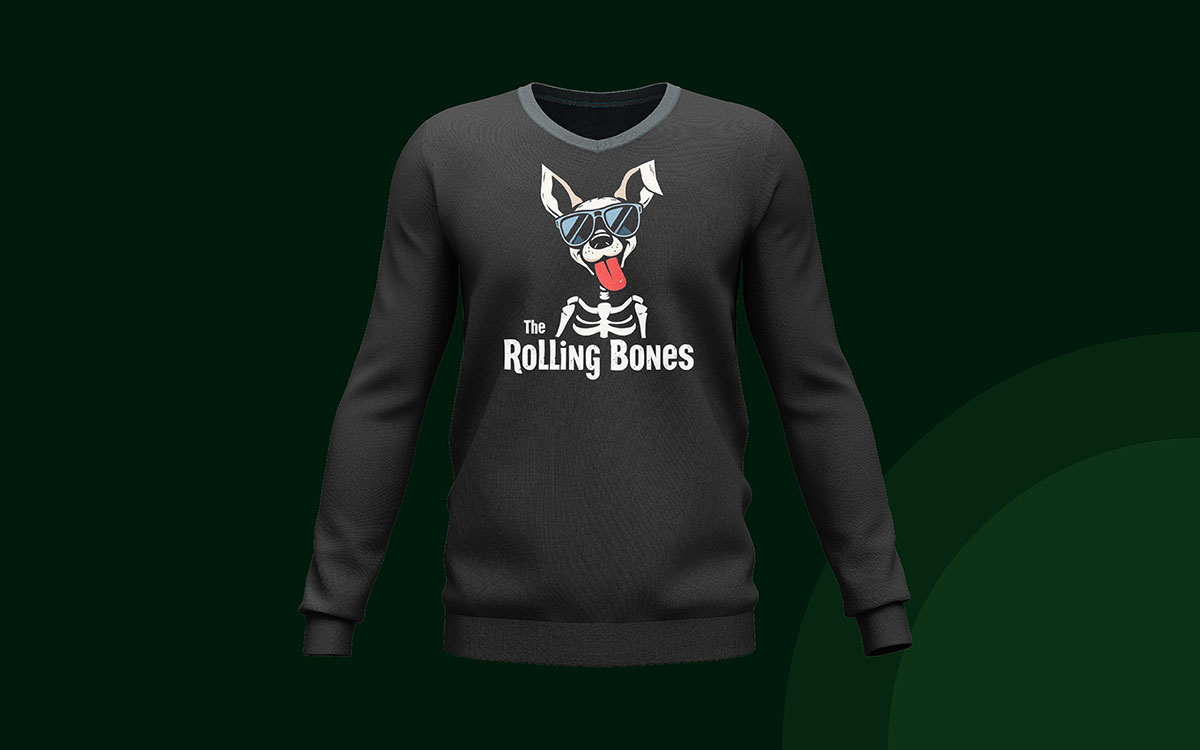
This Pot Metal Politics case study explores how a t-shirt brand overcame sluggish sales by making a focused investment in design.
Despite having a loyal customer base, the company faced limited revenue growth. To address this challenge, Pot Metal Politics invested in professional design services that significantly altered the business’s trajectory.
In the highly competitive print-on-demand industry, Pot Metal Politics saw strong design as a business necessity, not just an aesthetic choice. The outcome was clear and measurable.
The brand experienced higher customer engagement, a stronger brand identity, and consistent revenue growth in a crowded market.
For entrepreneurs and business owners in the print-on-demand sector, this case study offers practical lessons, evidence-based approaches, and actionable strategies to support long-term business growth.
Pot Metal Politics Case Study
Pot Metal Politics had a loyal and active audience. However, sales were not steady or predictable.
The brand faced a serious problem. It could not generate sufficient new designs quickly enough. Trends changed rapidly, and customer demand continued to grow.
To solve this issue, Pot Metal Politics partnered with professional design experts. The goal was to create a large number of high-quality t-shirt designs.
The assignment had clear objectives. Designs needed to be created quickly. They needed a consistent visual style. Most importantly, they had to connect directly with the audience.
As a result, the brand expanded its product range. Sales increased across the store. The brand identity became stronger and more recognizable.
This Pot Metal Politics case study demonstrates the power of a well-designed system. It helped the business grow without raising ongoing costs.
About the Pot Metal Politics
Pot Metal Politics is a print-on-demand t-shirt brand in the USA. The brand focuses on political views, social issues, and culture.
Its designs are bold, witty, and thought-provoking. These designs attract a highly engaged audience. Customers wear the shirts to express opinions and beliefs. They also show personality through wearable designs.
The brand began as a way to mix creativity with social awareness. It focuses on designs that feel timely and relevant. Many designs connect to current news and cultural movements.
Pot Metal Politics values originality and message consistency. The illustrations are visually strong and easy to recognize.
Thanks to loyal followers on social media, the brand grew quickly. It also gained popularity on online marketplaces. Today, Pot Metal Politics is a top choice for political statement t-shirts.
The Pot Metal Politics Problem
Although Pot Metal Politics had built a loyal customer base and earned genuine market recognition, it faced four interconnected operational challenges that were quietly eroding its ability to grow. Together, they represented not a collection of isolated problems but a single, structural failure: the absence of a professional design system capable of matching the ambitions and opportunities of the business.
1. Inadequate Design Production Velocity
The brand's internal design team could not keep pace with rapid cultural and political shifts. In a market where news cycles complete in hours, this was a competitive vulnerability.
▸ Lost revenue during trending news cycles
▸ Missed opportunities to engage customers at peak interest
▸ Competitive disadvantage as faster brands captured market share
▸ Customer dissatisfaction from the absence of timely, relevant designs
2. Visual Identity Inconsistency
Product designs lacked cohesive visual standards, resulting in a fragmented brand presentation across the full catalog.
▸ Reduced brand recognition across different products
▸ Potential customers questioning the company’s credibility
▸ Lower brand recall, making it harder for customers to identify Pot Metal Politics products
▸ Inconsistent customer experiences weakening trust and loyalty over time
3. Limited Product Portfolio
A restricted design selection constrained marketing options, prevented meaningful A/B testing, and created a ceiling on repeat purchases.
▸ Unable to run effective tests to identify best-performing designs
▸ Fewer options causing some customers to abandon purchases
▸ Email marketing limited to reusing the same designs repeatedly
▸ Unchanged product offerings discouraging repeat purchases
4. Absence of Scalable Systems
Each product launch was treated as a distinct, resource-intensive event with no standardized process for design, revision, or delivery.
▸ Reactive management replacing strategic planning
▸ Team exhaustion from handling constant design crises
▸ Unpredictable product launches frustrating customers and partners
▸ Difficulty predicting growth or allocating resources efficiently
These four challenges shared a single root cause: the absence of a professional design system. Pot Metal Politics understood its market deeply. What it lacked was the structural capacity to translate that knowledge into reliable growth in the T-shirt business.
The Pot Metal Politics Solution
Recognizing that incremental improvements would not solve structural problems, Pot Metal Politics engaged Graphic Design Eye LLC to develop a comprehensive design solution. The collaboration was focused not on producing individual designs, but on building a system, a scalable and durable framework that would systematically address each operational challenge and create the infrastructure for sustained growth.
The solution was built on five core components.
1. High-Volume Design Production
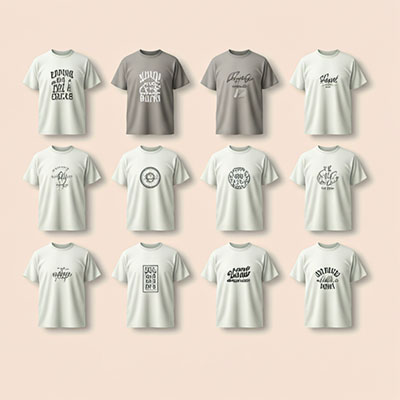
Creation of 200 custom T-shirt designs with consistent quality and strategic intent.
▸ Rapid and significant growth of the product catalog
▸ Multiple design options tailored to different audience segments and interests
▸ Ability to test different messaging and visual styles systematically
▸ Design inventory to support ongoing marketing campaigns without delays
2. Trend-Responsive Creative Development
Designs strategically aligned with current political discourse, cultural movements, and social conversations.
▸ Greater relevance during times of high audience interest
▸ Stronger emotional connection with the target audience
▸ Designs that spread organically through social sharing
▸ Brand perceived as culturally aware rather than commercially calculated
3. Reusable Design Asset Library
Development of adaptable designs, comprehensive style guides, and modular design elements for future use.
▸ Lower costs and faster timelines for future product launches
▸ Consistent quality across all future design work
▸ Quick adaptation of designs for seasonal campaigns or special events
▸ Protection against future creative delays and operational bottlenecks
4. Visual Brand Standardization
Establishment of comprehensive brand guidelines governing color palettes, typography, layout principles, and visual hierarchy.
▸ Instant brand recognition across all customer interactions
▸ Stronger perception of professionalism and credibility
▸ Clearer internal decision-making on design approvals
▸ A solid foundation for expanding the brand and introducing new products
5. Streamlined Production Workflow
Systematic processes for design requests, revisions, approvals, and file delivery, with defined responsibilities and quality checkpoints.
▸ Reliable timelines enabling better strategic planning
▸ Reduced stress and higher team morale
▸ Defined quality standards applied consistently
▸ Infrastructure that scales as the business grows
The Investment: $8,000 for 200 Custom Designs
The investment required to implement this solution was $8,000, representing forty dollars per custom design, inclusive of brand guidelines, a reusable asset library, and print-optimized files ready for immediate production.
To understand the value of this number, it is useful to place it in context.
- Freelance designers: $75–$150 per design, with inconsistent quality and no systematic process
- Design agencies: $100–$300 per design, with longer timelines and no infrastructure benefit
- Internal designer: $50,000+ annually before benefits, management overhead, and productivity gaps
At $40 per design, inclusive of the full system built around it, the investment represents one of the more compelling unit economics available to a growing brand.
The return on that investment compounds across several dimensions. Two hundred designs, each with an average three-year product lifecycle, represent an extended period of revenue generation from a single capital outlay. The reusable asset library reduces future design costs by approximately sixty percent.
The brand standardization improves advertising conversion rates by fifteen to thirty percent, making every marketing dollar more efficient. And the professional presentation commands premium pricing in a market where customers pay more for brands they perceive as credible and authoritative.
This is not an operating expense. It is business infrastructure, as durable and as productive as any equipment, system, or platform investment a business makes in the course of building something that lasts.
Results: Measurable Outcomes and Strategic Impact
The results of this investment manifested across both quantifiable improvements and qualitative shifts that continue to define the brand’s market position.
Product Catalog
Before: Limited selection struggling to maintain customer interest.
After: 200 custom designs providing comprehensive market coverage.
Impact: Increased average order value as customers discovered multiple appealing options simultaneously
Marketing Effectiveness
Before: Repetitive campaigns with declining engagement over time.
After: Deep, fresh design library supporting email, social, and paid advertising.
Impact: Improved click-through rates and reduced advertising costs per acquisition.
Operational Efficiency
Before: Weeks required for a single design production cycle.
After: Immediate access to an extensive, production-ready design library.
Impact: Rapid product launches aligned with trending cultural moments and events.
Brand Perception
Before: Inconsistent visual presentation undermining credibility.
After: Professional, cohesive identity across every customer touchpoint.
Impact: Increased customer trust and willingness to pay premium prices.
Beyond these measurable outcomes, the engagement established something more durable: the infrastructure for a business that can grow without being limited by its own operational capacity. The brand now has the scalability to pursue growth without proportional cost increases, the market responsiveness to capitalize on cultural moments as they occur, and the customer loyalty that consistent quality builds over time.
What Print-on-Demand Businesses Can Learn
The Pot Metal Politics case study is not simply the story of one brand’s transformation. It is a demonstration of principles that apply across the print-on-demand industry, principles that any business in this space can adopt, adapt, and act on.
Lesson 1: Design Quality Directly Correlates with Revenue
In a visual business, design is the product’s primary value proposition. Allocate a meaningful budget to professional design development. View it as an investment in revenue, not an expense against it. Test designs systematically to understand which visual and messaging approaches produce the strongest customer response.
Key Insight: Customers in the print-on-demand space are not purchasing fabric. They are purchasing a feeling, a statement, an identity. One design that genuinely connects will outperform ten that do not.
Lesson 2: Brand Consistency Accelerates Recognition and Trust
Visual consistency functions as cognitive shorthand. When customers can identify a brand’s products instantly, the recognition process happens without effort. Developing and maintaining comprehensive brand guidelines is not an administrative exercise. It is a revenue strategy.
Key Insight: Inconsistency forces customers to work harder, trust less, and decide more slowly. In a market where purchase decisions are made quickly and alternatives are abundant, this friction is commercially costly.
Lesson 3: Audience-Centered Design Outperforms Creator-Centered Design
The designs that drive sales are not the designs that the creator finds most satisfying. They are the designs that solve the customer’s problem, fulfill the customer’s desire, or express something the customer already believes. Knowing the audience emotionally, not just demographically, is the raw material of effective print-on-demand design.
Key Insight: The most beautiful design is worthless if it does not resonate with the target audience. Prioritize relevance over artistic preference, always.
Lesson 4: Reusable Assets Compound in Value Over Time
Design systems are not one-time costs. They are compounding assets. A modular design library that enables faster, less expensive product launches delivers more value in year three than it did in year one, because it has been applied more times and refined across more applications.
Key Insight: One-time design purchases depreciate immediately. Design systems appreciate. The distinction between the two is the distinction between businesses that grow efficiently and businesses that must continuously reinvest in foundational work.
Lesson 5: Strategic Investment Outperforms Incremental Spending
Fragmented, piecemeal design spending almost always costs more than a comprehensive solution and delivers less. The cost of inefficiency accumulates invisibly: in designs produced too slowly, in campaigns launched without adequate material, in opportunities missed because the infrastructure was not ready.
Key Insight: Businesses often spend more through accumulated inefficiencies than a comprehensive solution would have cost while simultaneously limiting growth potential.
Lesson 6: Speed-to-Market Captures Value That Patience Loses
In trend-driven markets, timing is integral to quality, not secondary to it. Building the capacity to respond quickly, maintaining design infrastructure that can be activated rapidly when opportunity arises, is a strategic competitive advantage that faster competitors will consistently exploit.
Key Insight: A good design released during peak audience interest outperforms a perfect design released after that interest has moved on. Build systems that can move at the speed the market demands.
Endnote
Now, we’ve reached the end of the Pot Metal Politics case study. This case study shows a clear lesson: a T-shirt is more than fabric and ink. A design that communicates clearly captures attention. A design that feels genuine encourages purchases. And a design that aligns with the audience’s values naturally drives sales.
This project demonstrates that careful T-shirt design can boost a print-on-demand business. Clear messages, strong visuals, and the right tone turn interest into action and designs into revenue.
For print-on-demand brands, this is a key reminder: don’t rush the design process. Take time to develop the idea and understand your audience. A strong design doesn’t necessarily connect with its audience.
If you’re unsure how to approach it, consulting us can save time and support growth. The right custom t-shirt design services build brands that people respect.
Till then, best of luck!