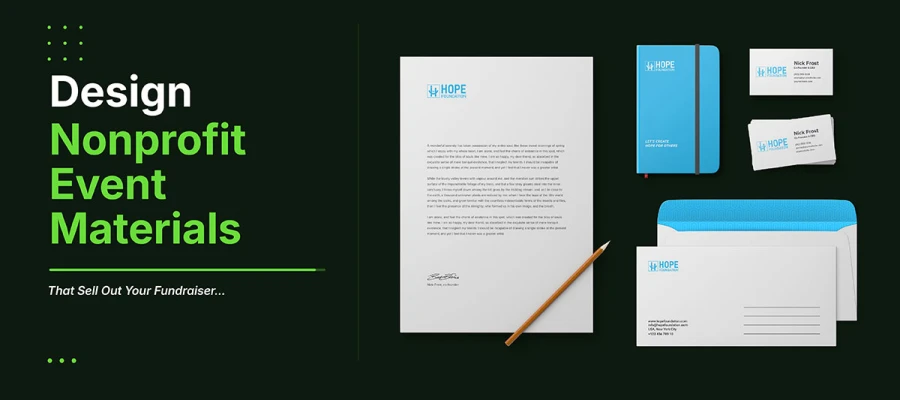
How to get media attention for your nonprofit starts with one asset most organizations lack: a professional press kit. A complete kit gives journalists the organization overview, impact statistics, high-resolution photography, spokesperson bios, the boilerplate, and a press release template, so a story can run without a single follow-up question. This guide covers all eight parts of a press kit, five proven pitch angles, and three real examples showing how preparation wins coverage.
You sent the email. Two heartfelt paragraphs about your work. Your website. Your phone number. Then nothing. No reply. No story. No coverage. The journalist who could have shown your mission to 40,000 readers looked at your email for thirty seconds. Then decided you weren't worth a follow-up.
Getting media attention for your nonprofit isn't just about picking good stories. It's about how ready your organization is to help a journalist tell them. A professional press kit gives you that readiness, an extension of the same branding design discipline that makes every other touchpoint recognizable. It turns simple interest into a published story. It removes every reason the story might not happen.
This guide is not just a list of generic tips. It looks at why so many newsworthy nonprofit stories go uncovered, and what separates an ignored pitch from a published one. You will see real cases where preparation, not luck, decided if a story ran. You will learn five pitch angles that earn coverage, and eight press kit parts that remove the friction that makes journalists move on.
By the end, you will know what to build first, and why one hundred words might matter most. So, keep exploring.
How to get media attention for your nonprofit
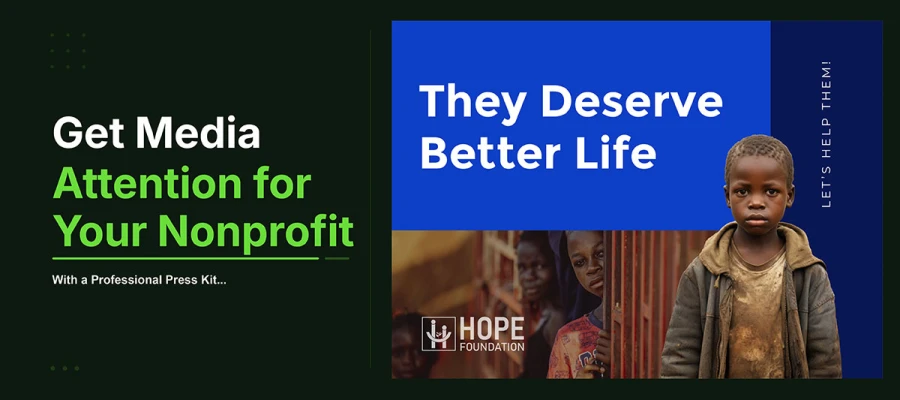
How to get media attention for your nonprofit depends more on prep than the story itself. Three examples show this. A pantry's anniversary pitch failed until it added data and photos. A housing nonprofit became a go-to source through steady data pitches. A mentorship group won TV coverage through visual detail. Let’s check it out!
Scenario 1: The anniversary that almost went unnoticed
A food pantry is turning 20. It sends the local newspaper a warm, two-paragraph email about it. No press kit. No photos. No data. No spokesperson named. Nobody replies.
Six weeks later, it tries again. This time it gives a real number (500,000 meals served), a one-page fact sheet, old photos next to new ones, and text the reporter can copy straight in. This pitch gets a feature story with a front-page photo. The reporter could see the whole article before writing a single word.
Scenario 2: The data point that became a local authority
A housing nonprofit spots something in its data: more applications from employed households. Instead of just noting this in its annual report, it builds a data pitch for reporters. It backs this up with a one-page impact sheet and offers its director for comment, with a bio and headshot ready to go. The story runs. Even better, the reporter saves the contact.
Over the next year, the outlet quotes the organization in every housing story it runs. That's not because it pitched every story. It became the easiest trustworthy source to reach, the kind of standing that comes from deliberately building nonprofit brand recognition from scratch.
Scenario 3: The visual opportunity that won the evening news
A youth mentorship group holds an annual celebration. TV never covered it before.
The next year, the pitch changes one thing. It describes the pictures before the program starts. It names the time, the exact location, the visual moments a camera crew will catch, the people who agreed to be filmed, and who's available for an interview.
A regional station sends a crew. The story runs ninety seconds on the evening news. That night, the group gets more donations than any other night that year.
The event was the same as last year. The prep wasn't.
5 media pitch types that help your nonprofit get media attention
If you really want to know how to get media attention for your nonprofit, use these five story angles: human stories, data stories, milestones or anniversaries, newsjacking, and visual stories. Each angle gives journalists a ready-made story rather than a report. It reduces the friction that usually stops nonprofit pitches from getting covered.
01. The human story pitch
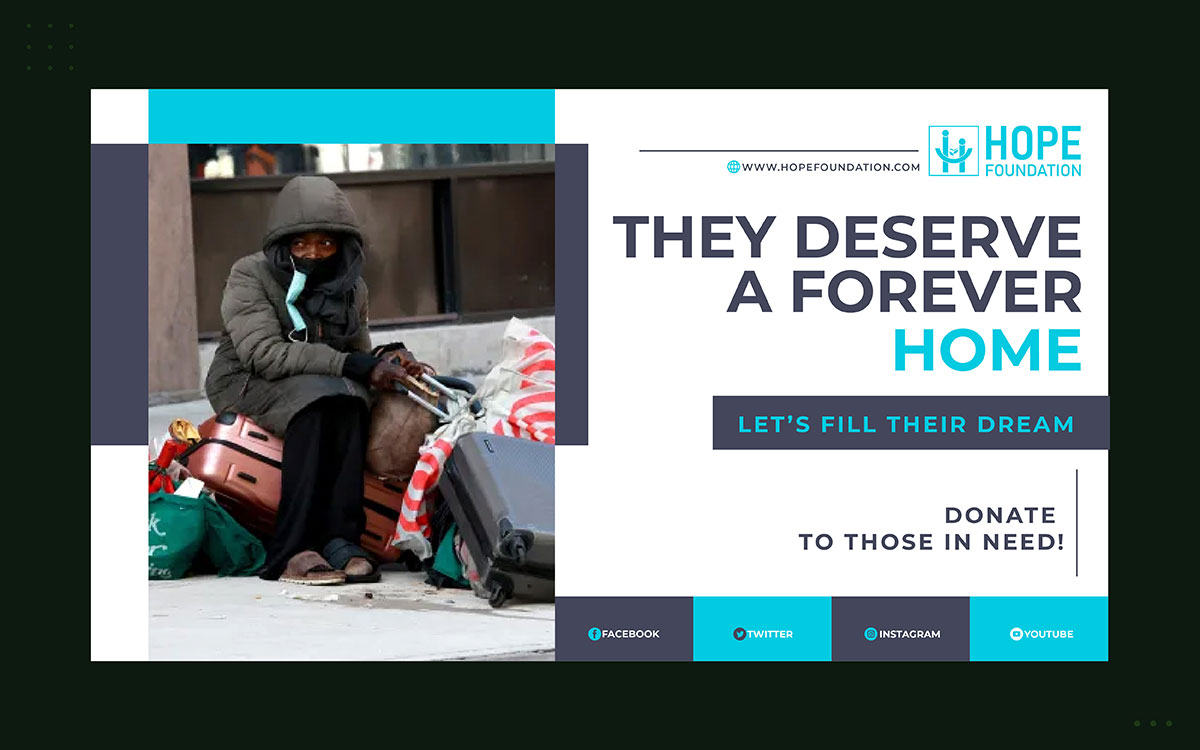
The human story pitch works best for nonprofit media coverage. It shares one named person's experience with your programs. Their story shows a bigger community need or trend.
This pitch is powerful because it gives journalists a story, not a report. It puts a real face and name behind an issue. Statistics alone can't do that — the same principle behind learning how to tell your nonprofit story visually for donors.
Keep the pitch to three or four sentences. Introduce the person. Describe their situation before your organization helped. Name what changed. Connect that change to a bigger trend. The journalist expands it into a full story. Your job is to make that story worth telling.
Pitch template: "Maria Rodriguez, 67, chose between medication and groceries every month. Then she joined [Organization Name]'s senior food program in October. Her story reflects a bigger problem. About 4,200 older adults in this city live below the poverty line. Would you like to speak with Maria and our program director about senior food insecurity in [City]?"
02. The data angle pitch
A data angle pitch starts with a local stat that's surprising or goes against what people assume. This works well for nonprofits with program data that shows things about the community people don't know.
This pitch suits journalists covering social issues, health, education, or local government. It frames your work as expert comment on a data point that readers will find useful. Your group becomes more than a service provider. It becomes a trusted source of community info, and that reputation grows with every story that quotes you.
Pitch template: "New data from [Organization Name]'s 2024 program intake shows 38 percent of families seeking food assistance in [City] have at least one working adult at home. This challenges common ideas about who faces food insecurity here. [Name], our executive director, can discuss what this data shows about working poverty in our community."
03. The milestone or anniversary pitch
A milestone pitch centers on a key moment for your organization. This could be a 25th anniversary, your 10,000th person served, a new facility opening, or finishing a capital campaign. It marks an important chapter in your history.
These pitches work well. They give journalists a timely news hook. At the same time, they let coverage look back at your history and ahead to your plans. They work especially well with local newspapers and community media that focus on local institutions.
Pitch template: "This month, [Organization Name] will serve its 50,000th meal since opening in 2009. This milestone shows 15 years of growth, both in food assistance needs and our community's response. Our founder and current executive director can be interviewed. We also have photos from our first year to compare with current program images."
04. The newsjacking pitch
Newsjacking means linking your work to news already trending. When a big story raises awareness about an issue, a local nonprofit can step in. They offer a local expert, local data, and a real local story. This makes the national news feel relevant nearby.
These pitches need speed. You usually have 24 to 48 hours after the story breaks. You also need a real local connection. It must matter to the journalist's audience. And your spokesperson must be a true local expert, not just someone from a related group.
Pitch template: "After yesterday's [national report/law/event] on [issue], [Organization Name] saw a [specific change] in local demand. Our director, [Name], can explain what this means for [City] residents. This includes intake data and a participant willing to share their story."
05. The visual story pitch
A visual story pitch centers on a moment, event, or setting that looks great on camera. This works well for TV news, visual-first websites, and outlets where a strong photo or video matters most.
The pitch leads with the visual, then gives context. It says what can be filmed: the activity, the place, the people who agreed to be shown, and the time window. A journalist who can picture the shot beforehand is more likely to show up.
Pitch template: “On Saturday, December 14 from 9 am to noon, [Organization Name] will hand out holiday food boxes to 200 families at [specific location]. Our volunteers include [visual detail, like families working together, multilingual helpers, kids pitching in]. [Named spokesperson] can do an on-camera interview. We also have high-resolution photos from last year's event.”
The 8 components every nonprofit press kit must include
A complete nonprofit press kit needs eight parts: an org overview, key stats and impact data, a boilerplate statement, spokesperson bios, high-res logos, high-res photos, a press release template, and a spokesperson Q&A. This is how to get media attention for your nonprofit. Missing even one can delay or block coverage.
Component 1: Organization overview
What it is: A one-page document. It covers the mission, history, programs, reach, who it serves, and key wins. Written in third person, like news writing, not marketing. About 400 to 500 words.
Why journalists need it: This is the first thing a journalist reads in the press kit. It answers five key questions: who is this group, what do they do, who do they help, where do they work, and why does it matter? A brochure answers these with excitement. A press kit overview answers them with facts.
Design tip: Write it in AP style, the style journalists use. Keep paragraphs short. Skip exclamation points. Avoid claims you can't prove. "Award-winning" needs the award's name. "Largest in the region" needs a source. Every claim must have proof behind it. It should also match your nonprofit branding strategy, so journalists see one consistent story everywhere.
Component 2: Key statistics and impact data
What it is: A one-page sheet showing your organization's best stats, laid out clearly. People served. Program results. Areas covered. Years running. Budget size. Growth numbers, if you have them.
Why journalists need it: Data gives stories credibility. Clear, verified stats make a journalist's job easier and the story stronger. "The organization served 4,200 families in 2023, up 31 percent from last year" is a real detail. "The organization serves many families" is not.
Design tip: Show stats visually, not in paragraphs. Make big numbers stand out with larger fonts. Add sources in small text below each figure. Group related stats together. Design it to be photographed or screenshotted, since journalists often share these visuals straight from press kits.
Component 3: The boilerplate statement
What it is: A short paragraph, 75 to 100 words, describing the organization. It appears at the end of every press release. Written in third person. Factually complete. Same across all media communications.
Why journalists need it: Journalists copy this paragraph straight into their story. They use it to identify the organization for readers who don't know it. It must be accurate, current, and complete on its own. Many boilerplates haven't been updated in years. They still mention old programs or past leaders.
Design tip: Write it for someone who has never heard of the organization. They may never read anything else about it. Every fact must be verifiable. Include the founding year, main mission, geographic scope, main population served, and the website. Treat it as the most important 100 words the organization writes. It may be the only 100 words many readers ever see.
Component 4: Executive director and key spokesperson biographies
What it is: A one-page document with short bios for the executive director and other spokespeople who might get quoted. Each bio is 150 to 200 words, written in third person. It covers their work background, link to the cause, and relevant credentials.
Why journalists need it: A journalist quoting the executive director needs a bio to introduce them to readers. If the bio isn't in the press kit, they must ask for it. That causes delays. A bio that's incomplete, outdated, or badly formatted means extra work for the journalist. Either way, it slows down getting the story published.
Design tip: Add a professional headshot with each bio, polished with the same care as photo retouching work. The photo must be high resolution, at least 300 DPI at print size, with a neutral or slightly blurred background. It should be in a format journalists can use directly in print or online. A blurry phone photo in a messy setting doesn't count as a press photo.
Component 5: High-resolution logo files
What it is: All approved logo versions in high-res formats for print and digital use. This includes PNG with transparent background, SVG for scaling, and EPS or AI for print. All colors (full color, black, white) and both layouts (horizontal, stacked) are included, covering the core types of logo design most nonprofits rely on.
Why journalists need it: Journalists or designers adding the logo to a story, event listing, or partner page need a file that fits their workflow. A logo pasted in a Word file, saved from a website, or only in JPG with a white background will not work. Each missing format risks leaving the logo out of the coverage.
Design tip: Keep logo files in clearly labeled folders. Use one folder per format. Name files so the version, color, and format are clear without opening them. "OrganizationName_Logo_Horizontal_FullColor_RGB.png" tells a designer everything they need. "logo.png" tells them nothing.
Component 6: High-resolution photography
What it is: At least ten professional photos for print and digital use: photos of programs in action, photos of beneficiaries with proper consent, photos of staff and volunteers, and photos of facilities or communities. Minimum 300 DPI at print size, JPG format.
Why journalists need it: Photos make a nonprofit story visual. A story about a food bank without an action photo might not get published. Or it may run smaller. Ten strong photos give editors choices. That means you control how you're shown, not the journalist. This is why graphic design is important for nonprofits. Groups with good visuals get their stories run.
Design tip: Include a caption sheet with every set of photos. Each caption should name identifiable people (with their consent to be named), describe what's happening, give the location and date, and credit the photographer. A photo without a caption makes extra work for the journalist before it can run.
Component 7: Press release template
What it is: A ready-to-use press release template for news like program launches, campaign results, milestones, new leaders, or partnerships, the bread and butter of any nonprofit's content marketing calendar. It follows the standard format: headline, dateline, lead paragraph, body, boilerplate, and contact info.
Why journalists need it: Journalists rely on press releases for hard news. A properly formatted release needs no rework before a journalist can use it. One that buries the news, uses marketing language instead of facts, or skips contact info just creates extra work.
Design tip: Write the headline for a journalist, not a donor. State the news directly: "City Food Bank Opens Second Location on East Side, Doubling Capacity." Not: "Exciting New Chapter for Our Growing Organization." The first gives a story. The second gives homework.
Component 8: Spokesperson Q&A document
What it is: An internal document with 10 to 15 ready answers. It covers questions journalists often ask: about funding, leadership, program results, who the org serves, its stance on policy issues, and plans. It preps spokespeople before interviews. It's not given to journalists directly.
Why journalists need it: A surprised spokesperson may give an unclear or wrong answer. That can turn into a problem in print. A prepared spokesperson gives clear, quotable, accurate answers. This helps both the story and the org's goals.
Design tip: Include one answer to a tough question, like funding sources, a controversy, or a challenged statistic. A confident, accurate answer to a hard question helps the org far more than an awkward, unprepared one.
Nonprofit media attention FAQs
How to get media attention for your nonprofit needs three things. A complete press kit. A clear pitching plan. And story angles that meet real news standards. These FAQs cover press kit basics, writing press releases, how often to pitch, and what makes a story newsworthy.
To get media attention for your nonprofit, build a full press kit. Find journalists who cover your cause in your area. Pitch stories using angles like human interest, data, milestones, news tie-ins, or visuals. Journalists prefer groups with a ready press kit. It makes their job easier.
A nonprofit press kit needs several things. An organization overview. Key stats and impact data. A boilerplate statement. Leader bios with headshots. High-res logo files. Program photos with captions. A press release template. A spokesperson Q&A. Missing any piece can stop media coverage.
Write a nonprofit press release. Put the specific news in the headline. Give a full summary in the first paragraph. Add supporting quotes in the body. Put the boilerplate at the end. Use AP style. The lead paragraph must answer who, what, when, where, and why. Once these criteria are followed, journalists will publish it directly.
Nonprofits should pitch local media once a month. Use a real news hook, like a program milestone, local data, or current events. Pitching every month builds media relationships. Over time, this leads to stronger, more reliable coverage.
A nonprofit story becomes newsworthy when it fits three things: timing, place, and people. It should connect to a real event, matter to the publication's readers, and focus on a named person whose story shows a bigger issue. Surprising local data builds trust. A strong visual boosts the chance of TV coverage.
Endnote
How to get media attention for your nonprofit was never really about having a more dramatic story than the organization down the street. It was always about removing every reason a journalist might have to look away.
Now that you know what separates a pitch that gets ignored from one that gets published, the only thing left is to build the materials that make coverage easy to say yes to. The fastest way to turn this guide into a finished press kit is to have Graphic Design Eye LLC design your organization overview, impact sheet, boilerplate, and photography into a single, consistent, journalist-ready package, so your team can start pitching within weeks instead of months.
Start with the boilerplate. Then let the rest of the kit follow. Reach out to Graphic Design Eye LLC when your team is ready to build a press kit that works as hard as your mission does, and send your first pitch knowing it already answers every question a journalist might ask.
Your organization deserves to be covered. Build the kit that makes it possible.
Graphic Design Eye LLC is a full-service creative agency built for brands that demand more than design — they demand vision. From strategic branding to complete visual identity, we partner with startups, agencies, and growing businesses as a dedicated creative force. With flexible subscription and project-based models. Let's start with us today!