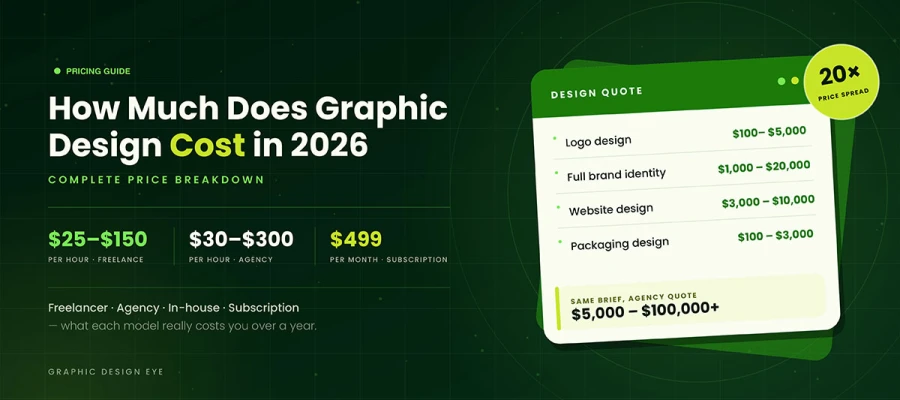
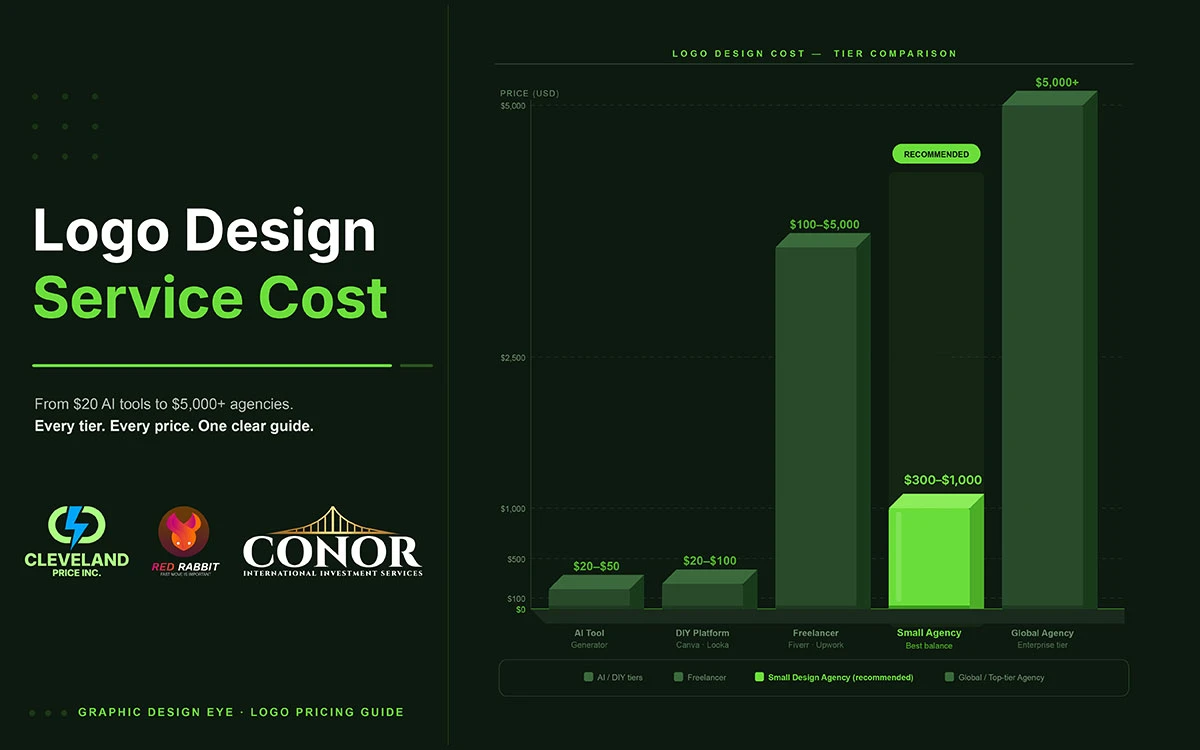
Looking at how much does graphic design cost for your business? The answer depends on experience, complexity, and craftsmanship. Freelancers charge $25 to $150 hourly. Agencies charge $30 to $300 hourly. Logos and branding cost more. Website designs also need bigger investments. The cheapest option can end up costing more later. Revisions, delays, and lost trust add up. This guide covers real 2026 pricing. It covers projects, models, and hidden fees. You can budget clearly and invest wisely.
There is a particular silence after a design quote.
You open the email. You see the number. Something tightens. You do not know if it is fair, inflated, or too cheap to trust. Every business owner knows this silence.
The confusion is not your fault. Design is one of the few purchases where quotes can vary hugely. One provider says $400. Another says $8,000. Both describe "a logo." Both think their price is fair.
So, how much does graphic design cost? It deserves a real answer. A wide range helps nobody. This guide gives real 2026 numbers: hourly rates by engagement model, project prices by deliverable, hidden costs, and a simple framework for choosing what fits your volume and budget.
Stay tuned to read quotes confidently. You will feel less anxious. And that’s the whole point.
What determines graphic design cost in 2026
Before one number makes sense, understand what moves it. Graphic design costs depend less on design itself. They depend on who does the work, their experience, and your risk.
These six factors explain nearly all the variation.
Engagement model. Freelance, agency, in-house, or subscription. This changes pricing logic entirely. It may be hourly, project-based, salaried, or monthly.
Experience and seniority. A junior designer executes. A senior designer decides. You pay for better judgment and fewer revisions. The work also lasts longer without needing to be redone.
Project complexity and revisions. A social post takes hours. A brand identity can take weeks. It includes logos, typography, colors, and guidelines. Complexity drives hours, and hours drive cost.
Designer location. US, UK, and Australian rates are higher. Eastern and Southeast Asia cost less. Remote work has narrowed this gap for routine work. Strategic work has widened it.
Turnaround and rush fees. Speed comes at a premium. Most freelancers and agencies charge rush fees. These are often 25–50% above standard rates.
Rights and file delivery. Source files and commercial rights cost extra. White label or reseller rights may also cost extra. Confirm these before comparing quotes.
Two providers can quote the same deliverable differently. That explains most price shocks in this industry.
How much does graphic design cost
Hourly rates show a designer’s value. Project prices show your job’s cost. So, how much does graphic design cost per deliverable? Much more predictably, as it turns out.
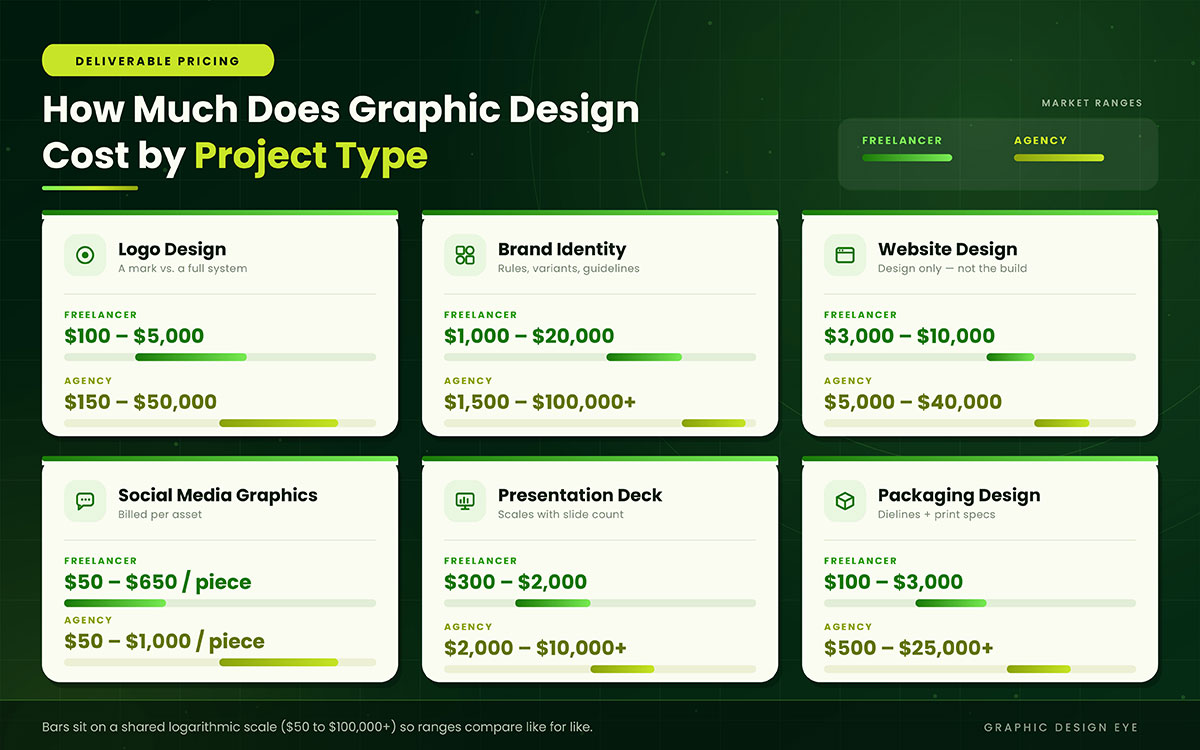
Take a glance at the chart to have a clear picture of how much graphic design costs.
Project type
Freelancer
Agency
Logo design
$100–5,000
$150–50,000
Full brand identity
$1,000–20,000
$1,500–100,000+
Website design (small business)
$3,000–10,000
$5,000–40,000
Social media graphics
$50–650 per piece
$50–1,000 per piece
Presentation/pitch deck
300–2,000
2,000–10,000+
Packaging design
100–3,000
500–25,000+
Logo design
Logo design has the widest price gap. The reason is simple. A $100 logo is a mark. A $15,000 logo is a system: primary and secondary lockups, responsive variants, clear space rules, color specifications, and all file formats for printers and developers. Neither provider is lying. They are selling different products under a single name.
Before comparing two logo designs, ask which deliverables and file types are included. That list explains the price gap better than talent does.
Website design
Website design has a second variable: development costs. A $5,000 freelancer quote usually covers layout, UX, and responsive design. It rarely covers the build, CMS, plugins, or hosting.
Agencies tend to bundle these stages together. They price the entire project as a single engagement. That is why their prices start higher. Confirm what the web design includes early. This can change your budget by thousands.
Social media graphics
Social media graphics are where per-piece pricing gets expensive. At $50 to $150 per polished asset, twenty monthly posts cost $1,000 to $3,000. That’s before designing any ad creative. Agencies rarely price these separately. They include them in a monthly retainer. This shows how costs change at volume.
If you publish weekly, per-asset billing quickly adds up. Remember this when planning your social media post ideas.
Presentation and packaging design
Presentation and packaging design follow the same principle: constraints cost money. Pitch decks seem cheap per project but scale badly. A fifty-slide deck means fifty layout decisions, and each must work in a boardroom. Packaging costs even more, primarily due to production requirements. It requires dielines, print specs, material choices, and rules for every panel. All must be settled before printing.
That production burden, not creative difficulty alone, is why packaging design commands more than comparable digital assets.
Graphic design pricing by engagement model
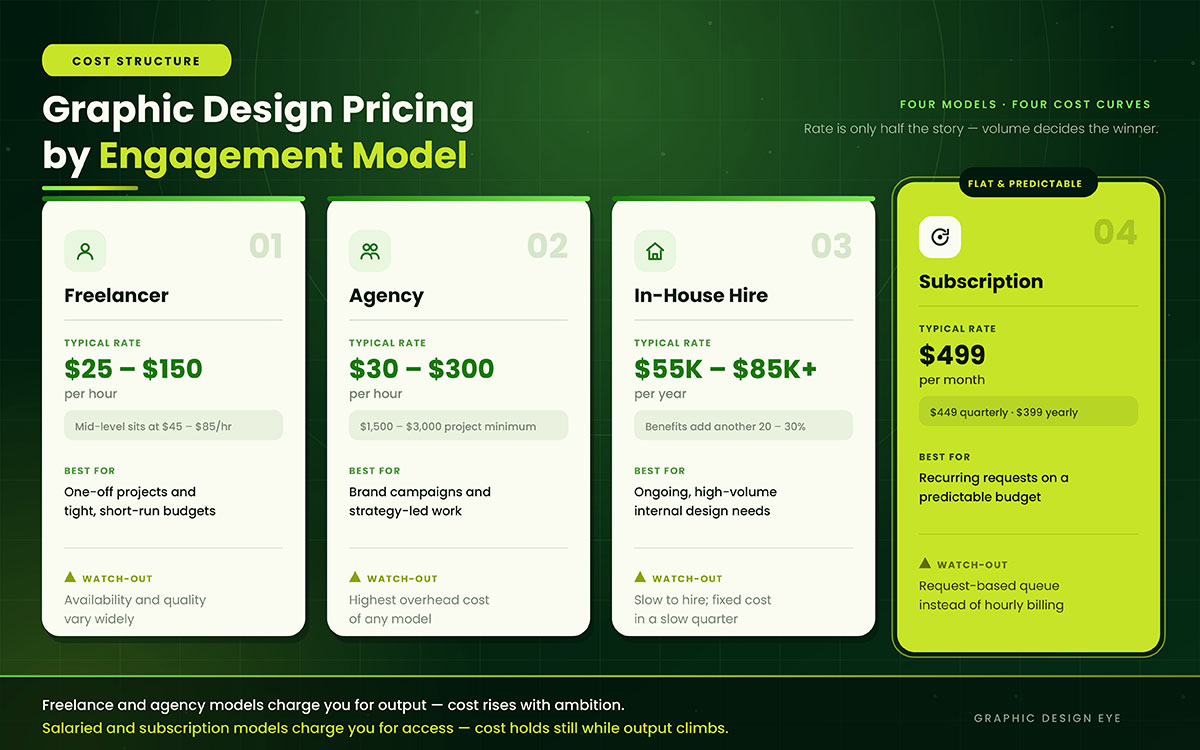
Each model has a different cost structure, risk profile, and failure mode. Here is how the four compare in 2026.
Model
Typical rate
Best for
Watch-out
Freelancer
25–150/hr (mid-level 45–85/hr)
One-off projects, tight budgets
Availability and quality vary widely
Agency
30–300/hr, 1,500–3,000 project minimum
Brand campaigns, strategy-led work
Highest overhead cost
In-house hire
55,000–85,000+/yr salary
Ongoing, high-volume internal needs
Slow to hire; benefits and overhead add up
Subscription
$499/month, flat fee
Recurring requests, predictable budget
Request-based queue instead of hourly billing
Note what the table does not show. An in-house salary is not the true cost. Benefits, payroll taxes, software, and equipment add 20-30% more. An agency's hourly rate is rarely final. Project minimums set a floor for small briefs.
Subscription pricing works differently from all three. Graphic Design Eye's plans start at $499 monthly. Quarterly billing costs $449 per month. Yearly billing costs $399 per month. Every cycle includes unlimited requests and revisions. It also includes a one-business-day turnaround. Full commercial rights are included too. The rate stays fixed as volume grows. That is the structural difference. It matters more than the headline figure.
Disclosure: Graphic Design Eye LLC operates a subscription design service. The market figures above are sourced independently; our own pricing is labeled accordingly.
Freelance vs. agency vs. in-house vs. subscription (which costs less)
Here is where most budgets go wrong. Businesses compare project prices, then stick with them for three years.
Look at the trajectory instead of the entry point.
Freelance is cheapest for one project but costs more per hour as volume grows. Ten requests a month at $65 an hour add up quickly, and you handle the coordination yourself.
Agency offers the highest quality ceiling and floor. You pay for brand strategy, market positioning, and a team that challenges your assumptions. If you need forty Instagram carousels, it is not the right choice.
In-house turns a variable cost into a fixed one. That works well during busy quarters but hurts during slow ones.
Salary stays the same even when requests drop, and the cost of hiring a graphic designer can take months.
Subscription keeps costs flat as requests increase. Ten requests and forty requests cost the same, which completely changes the usual arithmetic.
The decision is really about predictability. Predictability is worth more than budgets admit. Freelance and agency models charge for output. So, costs rise with your ambition. Every extra campaign brings another invoice. Every new channel adds another cost. Unplanned assets also add to the bill. The total becomes hard to forecast. Even one or two quarters ahead. Salaried and subscription models charge for access. So, costs stay steady as output grows.
Neither is universally correct. But if you have delayed a campaign because a design quote was higher than expected, you already know which cost structure your business finds easier to live with. That instinct is worth trusting. It reflects how your business actually operates, rather than how you wish it did.
Hidden costs that change the final price
The quote is not the invoice. That gap causes most budget overruns.
Revision rounds beyond the quoted limit. Most quotes include two or three. The fourth is billable and common.
Rush and expedited delivery fees. Urgency costs more. Plan two weeks ahead. You can often save 25% by starting earlier.
Stock photography, fonts, and licensing. Commercial font licenses can cost hundreds. They are often billed separately.
File format and source file delivery. Some providers deliver flattened files. Editable originals cost extra. This can be costly to discover late.
Usage and commercial rights scope. Regional and channel limits exist. Reseller restrictions exist too. Read the scope, not just price.
Transparent tiered pricing solves most of this before it starts. Graphic Design Eye LLC's clipping path service publishes its tiers openly: Basic at $59, Advanced at $99, Executive at $399, and Leading at $799. Each tier states its volume, turnaround, output formats, unlimited revisions, and full commercial rights up front. You know the final price upfront. That is the standard to expect from any provider, whatever the discipline.
How to choose the right graphic design cost model
Forget the rate cards for a moment. How much does graphic design cost is ultimately answered by two questions about your own business: how many requests do you generate in a month, and how much budget volatility can you absorb?
Under 3 design requests a month → a freelancer. Per-project pricing is cheapest at low volume. The flexibility is real.
A large brand launch or campaign → an agency. Research, positioning, and consistency justify the premium.
Daily internal design needs → an in-house hire. At daily volume, salary gives the lowest hourly rate.
Steady requests without payroll overhead → a subscription. Predictable output, predictable invoices, no hiring cycle.
Be honest about which row you are in. Most businesses overestimate launch design needs and underestimate month nine needs.
Graphic design cost FAQs
Every pricing conversation comes down to these questions. Buyers ask them before setting a budget. Here are direct answers, so you can settle the figure and focus on the brief.
Apart from these questions, if you’ve anything else to ask, reach out to us anytime. We charge no fee for clearing up confusion.
How much does graphic design cost on average in 2026 comes down to 25–150 per hour for freelancers and 30–300 per hour for agencies. Most mid-level freelance work ranges from $45 to $85 per hour, while subscriptions start at around $499 per month.
A freelancer is almost always cheaper per project. Agencies cost more for strategy, teams, and accountability. For single projects, freelancers win on price. For campaigns, agencies justify the higher cost.
Freelance logo design costs $100 to $5,000. Agencies charge $150 to $50,000. The difference comes down to scope. A logo is simpler than a full identity system. Identity systems include variants, guidelines, source files, and commercial rights.
Typically, you get unlimited requests and revisions. You also get fixed turnaround times and source files. Full commercial rights are also included. Graphic Design Eye LLC includes these in every plan. This applies to monthly, quarterly, and yearly plans.
Because design covers many different products sold under one name. Experience, location, project complexity, revision rounds, turnaround speed, and usage rights all affect the final price. Two quotes for the same brief may actually cover very different deliverables and scopes of work.
Start by counting your monthly design requests, since volume determines the right model. Three requests a month suit a freelancer. Steady, recurring work suits a subscription instead. Flat monthly pricing keeps your costs predictable and stops them from rising as requests grow.
Endnote
At last, we’ve come to the end. So, if I ask, how much does graphic design cost? What would be your answer?
Yes, It’s never specific in this industry. It depends on your model, complexity, and monthly volume. Change one, and the cost changes too.
Stop asking what design costs. Ask about your design pattern. A business ordering two projects yearly differs from one shipping fifteen monthly. The right pricing model for one can punish the other. That mismatch drains most design budgets, not hourly rates.
Your next step is simple. Count your requests. Define your scope in writing. Confirm revisions, source files, and rights before comparing prices. Then choose a structure that keeps costs steady as you grow.
If you want to see how a full-service creative studio handles brand identity, digital design, packaging, presentations, and photo editing, explore Graphic Design Eye LLC and its wider work.
Clarity is the cheapest thing you will buy. Everything else prices itself accordingly.
Graphic Design Eye LLC is a full-service creative agency built for brands that demand more than design — they demand vision. From strategic branding to complete visual identity, we partner with startups, agencies, and growing businesses as a dedicated creative force. With flexible subscription and project-based models. Let's start with us today!