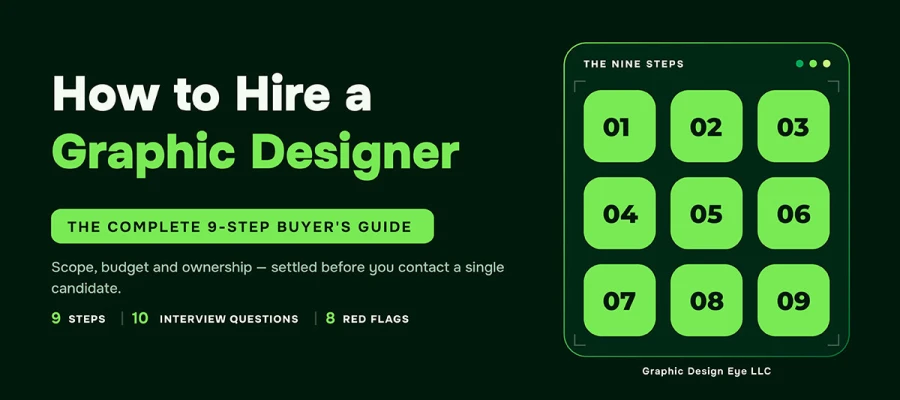
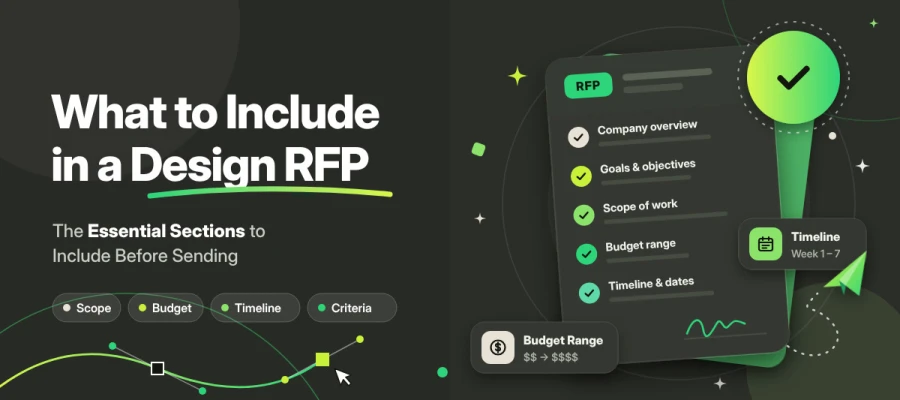
Knowing how to hire a graphic designer comes down to nine clear steps. Start by defining what you need and setting a budget, then write a clear brief. Next, shortlist five to eight candidates and check their portfolios against your needs. Interview your top three and, if the project calls for it, run a small paid trial. Once you've chosen someone, sign a contract covering scope, revisions, and copyright assignment. Finally, onboard the designer with a set feedback schedule. Make sure ownership is agreed on in writing before work begins.
Bringing a designer onto your brand but not sure where to start? You're in the right place.
Somewhere on your desktop is a logo folder you don't really like. Maybe it cost a hundred dollars. Maybe a thousand. Either way, it never quite fit, and you've been working around it since. Shrinking it into the corner of an invoice. Hoping nobody looks too closely.
Sound familiar, right?
That folder is where most design hiring goes wrong. Not the work itself, but everything before it starts. The brief that was never written. The budget never said out loud. And the contract that never mentioned who owns the files. Hiring a creative designer is a process problem before it's a talent problem.
This guide walks you through hiring a graphic designer step by step, so the right fit becomes obvious and the wrong one gets ruled out before any money changes hands.
Keep reading!
How to hire a graphic designer
Ask ten founders how to hire a graphic designer, and nine will name a website. Fiverr. Upwork. Dribbble. That's a sourcing answer to a scoping question, and it's why so many projects stall around revision three, with everyone frustrated and nobody sure what went wrong.
Hiring well is a sequence. Each step narrows the field, and skipping any one costs real money later.
Read the nine steps first, then the details under each. Let's get into them!
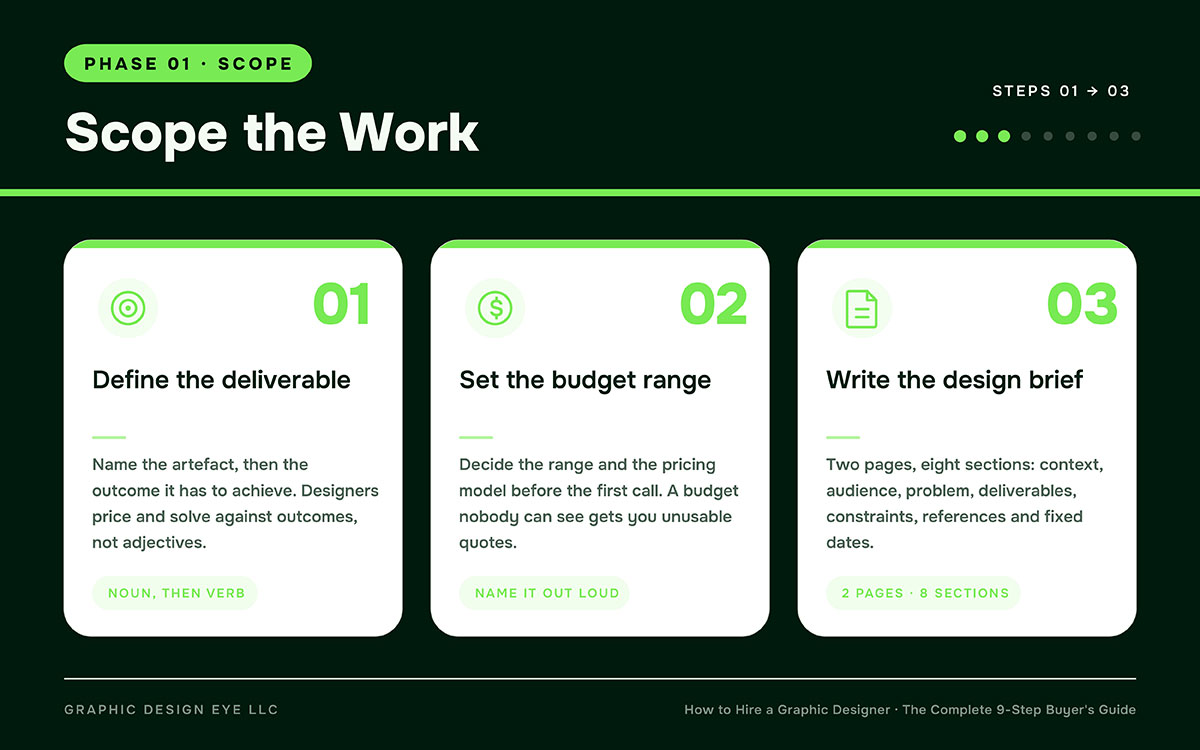
01. Define the deliverable and the business outcome it serves
Start with the noun, then add the verb. The noun is the thing itself: a logo suite, a twelve-page brochure, forty social templates. The verb is what it needs to do: open a category, boost trade show conversion, stop the sales team rebuilding decks by hand. Designers price and solve for outcomes, not vague ideas. If you can't name the outcome, you're not ready to brief anyone yet. It's worth checking the main types of graphic design to see which one fits your problem.
02. Set the budget range and pricing model before you contact anyone
A budget you won't name doesn't get you a better price. It gets you proposals aimed at a target nobody can see. Decide two things before the first conversation: the range you can defend to your finance lead, and the structure you want, whether that's hourly, fixed fee, retainer, or a monthly subscription. Naming a range doesn't commit you to spending it. It just stops candidates from quoting for different projects.
03. Write the design brief
The brief is the most important document in this process. Keep it to two pages and cover eight things: business context, audience, the problem, deliverables and formats, must-haves, three references you like with your reasons, success criteria, and a timeline with fixed dates. The reasons matter more than the references. "I like this" tells a designer nothing. "This works because the text still reads on a trade show banner" tells them everything.
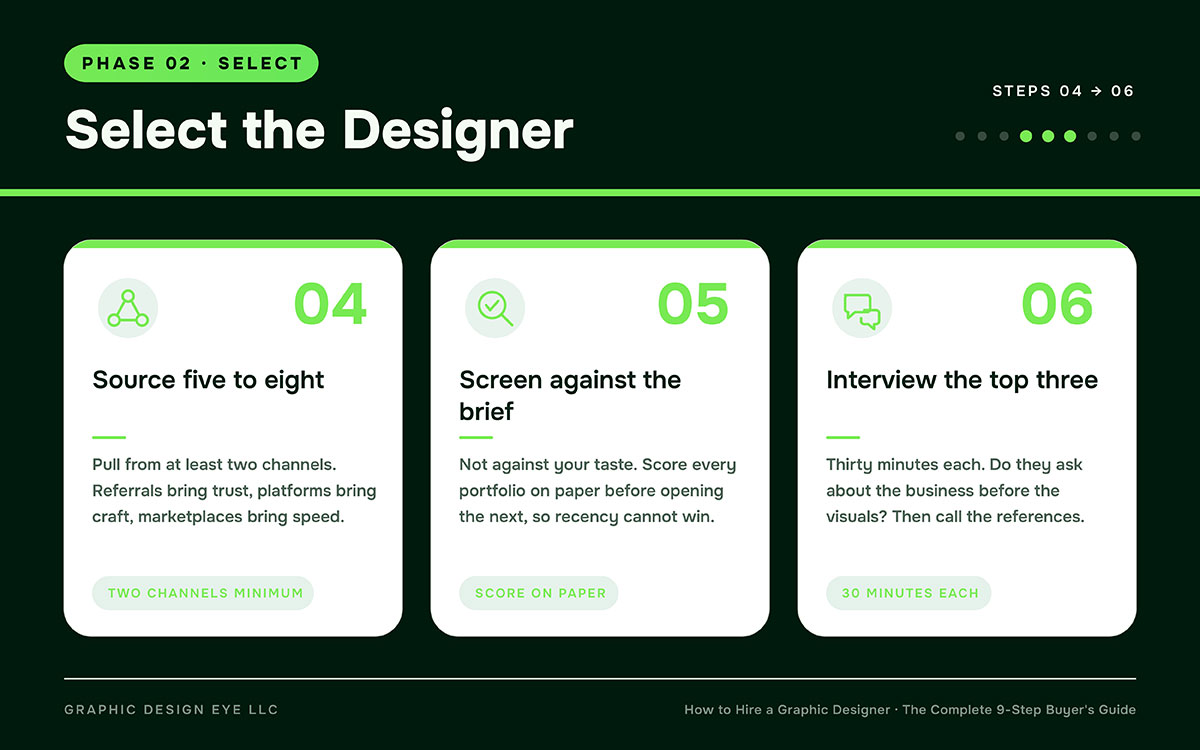
04. Source a shortlist of five to eight candidates from two channels
One channel gives you one type of designer. Referrals bring trusted people who are rarely free. Portfolio sites show skill but hide reliability. Marketplaces offer volume and speed but less consistency. Studio rosters offer teams, not individuals. Pull from at least two sources to give your shortlist real variety, and use a vetted list, like our roundup of top graphic design companies, as one of them.
05. Screen portfolios against your brief, not against your taste
This is where most shortlists fall apart into personal taste. You're not judging whether you'd hang the work on your wall. You're judging whether this person has solved a problem shaped like yours: the same audience, the same channel, the same limits. Score each portfolio against your brief on paper before moving to the next. Written scores stop the last portfolio you saw from winning just because it's freshest in your mind.
06. Interview the top three and check references
Thirty minutes each is enough. You're testing three things: whether they ask about your business before talking visuals, whether they can explain a past decision in terms of a client goal, and how they handle disagreeing with a client. Then actually call the references. Ask the previous client one key question: what happened when something went wrong?
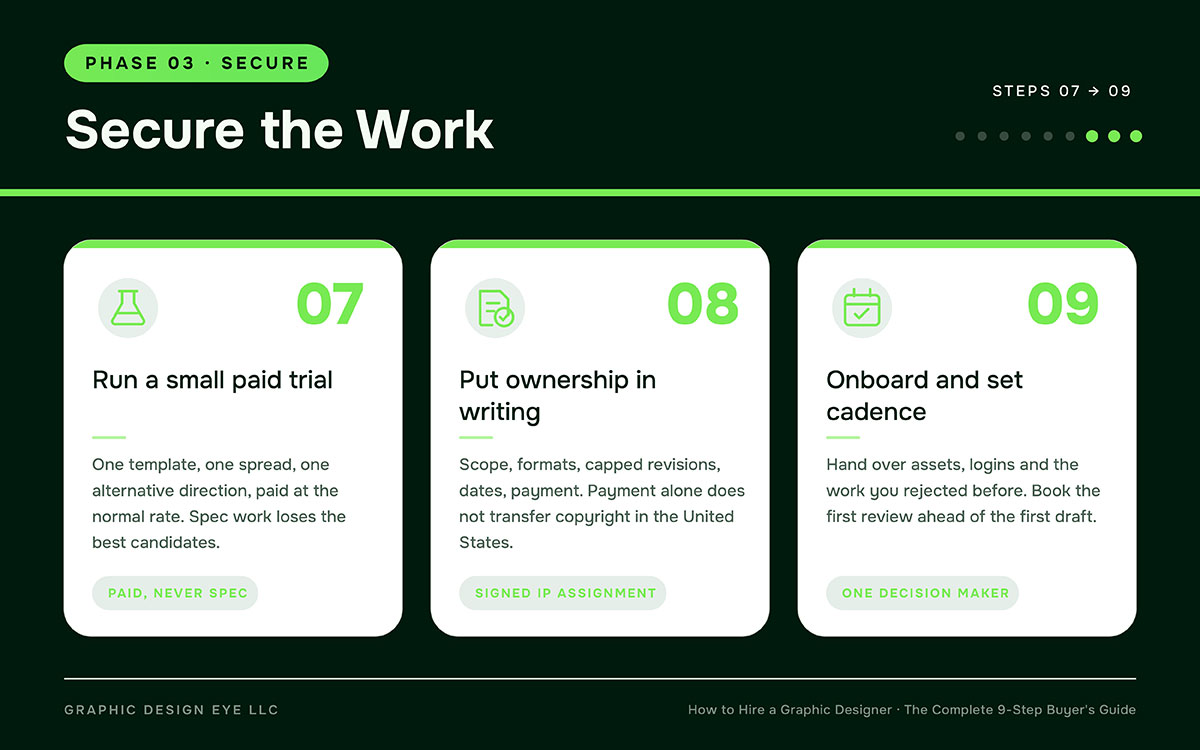
07. Commission a small paid trial where the stakes justify it
A paid trial is fair. An unpaid one isn't. Keep it small, real, and paid at the designer's normal rate: one social template, one interior spread, one alternative direction for a mark. You're buying information about how you'll work together. Speculative work disguised as an audition is the fastest way to lose your strongest candidates.
08. Agree scope, revisions, timeline, payment and IP assignment in writing
Nothing here is optional, and the ownership clause matters more than the price. A handshake and a paid invoice don't transfer copyright in the United States. The agreement needs to name the deliverables and their formats, cap the number of revision rounds, set fixed dates, set the payment schedule, and assign copyright to you in a signed writing. The contract section further down covers exactly what that assignment needs to say.
09. Onboard, run the first review, and set the feedback cadence
Hand over brand assets, tone guidance, logins, and, most helpfully, examples of past work you rejected and why. Book the first review before work begins, not after the first draft lands. Then agree on the cadence: who consolidates feedback, how fast it comes back, and who gives final sign-off. One named decision maker matters more to the quality of the work than any clause in the contract.
The One-Sentence Version
Scope, budget and ownership are decided before you contact a single candidate. Everything after that is selection.
How to evaluate a graphic design portfolio
A portfolio is a sales tool. It shows you someone's 10 best hours from the last 2 years, nicely framed in a mockup. Your job is to see past the presentation and into the thinking.
Judge relevance before aesthetics. Has this person solved a problem similar to yours for a similar audience in the channel you need?
Look for case studies that explain a problem, a process, and a result. Finished visuals with no story show execution, not necessarily judgment.
Check range against repetition. One strong style repeated ten times means a specialist; great if it fits your brand, a problem if it doesn't.
Confirm the work is theirs. On team projects, ask what they specifically did. Art direction, execution, and pitching are different jobs.
Check the basics: type hierarchy, spacing, color discipline, and whether the logo still works at favicon size or in a single color.
Ask to see real-world examples. A photo of an actual shelf, a live site, a printed piece. Real use beats polished mockups every time.
That last point matters most. Mockups hide production problems: bleed lost in trimming, a logo that blurs when embroidered, colors that fade on a phone at night. Identity work, especially, must survive situations a portfolio never shows, which is why a good logo design service tests a mark at 1 centimeter and in 1 color before calling it done.
Ten interview questions and what a strong answer sounds like
A graphic design interview should test judgment and communication skills, since the portfolio already demonstrates technical ability.
The ten questions below reveal how to hire a graphic designer, handle disagreements, and address past mistakes. Ask them to your top three candidates and compare their answers side by side.
Ask this
A strong answer sounds like
What questions do you have about our business?
They ask about customers and commercial goals before visuals
Walk me through a decision in this project and why
A named constraint, an option rejected, a reason tied to the client
What would you need from us to do this well?
Specific inputs, named decision maker, realistic dates
Tell me about a project that went badly
Owned, specific, and describes what changed afterward
How do you handle it when a client is wrong?
Evidence and options, not compliance and not ego
What is your revision process?
A defined number of rounds with a definition of a round
Who else works on this, and on what?
Honest about subcontractors and their scope
What files will we receive at handover?
Named formats, source files, fonts and license status
What is your current capacity?
A real number of concurrent projects, not "always available"
What happens if we need changes in six months?
A stated rate or retainer, agreed before it is needed
Ask all ten of the final three candidates. Score them the same day, before the impressions blur.
8 Mistakes when hiring a graphic designer
Most hiring mistakes show up during the sales conversation, before any contract exists. A designer's behavior at the quote stage predicts how the whole engagement will go.
The eight warning signs below help you spot a bad fit early, before you commit any money or time.
No contract, or resistance to putting scope in writing. That reluctance tells you something.
Refuses to hand over source files, or reveals late that they cost extra. Ask this at the quote stage, not at handover.
A portfolio made entirely of mockups, nothing shipped. Concepts don't prove someone can actually produce work.
Can't explain a single decision in terms of a client goal. "It felt right" isn't something you can brief.
Quotes instantly without asking about your business. Fast quotes usually mean templates, not expertise.
Vague revision limits, or "unlimited revisions" with no clear brief or deliverable list to bound them.
Slow or unclear communication during the sales stage. It won't get better after you pay the deposit.
Prices far below market with no explanation. Usually reused templates or hidden outsourcing, discovered too late.
The unlimited revisions flag needs one honest caveat, since plenty of good studios offer them, including this one. The key is boundaries. Unlimited changes within a fixed brief and deliverable list is a real service promise. Unlimited revisions with no brief and no deliverable list are an unpriced obligation, and unpriced obligations are eventually resolved in the provider's favor.
Hiring a designer FAQs
Before commissioning design work, most buyers land on the same dozen questions about cost, ownership, timelines, and contracts when hiring a graphic designer. This section answers each one directly, based on what clients ask before signing. Find your question below and get a straight answer. If none of the questions match your concern, feel free to contact us anytime for a free consultation.
Rates usually run $25 to $150 an hour for freelancers and $75 to $300 an hour at studios. Logos range from a few hundred dollars to five figures depending on scope. The median annual wage for graphic designers is $61,300, per U.S. Bureau of Labor Statistics data.
A single asset like a flyer or social set usually takes a few days to two weeks. A logo suite takes two to four weeks. A full identity system with guidelines takes six to twelve weeks. Client feedback speed, not designer speed, is usually what slows things down.
Choose a freelancer for a clear deliverable, a defined brief, and a tighter budget. Choose an agency when work spans strategy, multiple channels, and several disciplines, or when consistency matters more than cost. Many businesses use both, an agency for identity and a freelancer for ongoing work.
Not automatically. In the U.S., an independent contractor keeps copyright unless there's a signed written transfer. Payment alone doesn't move ownership. You need a clear copyright assignment signed before work begins, since a work-for-hire clause alone often doesn't cover design work.
Scope and named deliverables, file formats, revision rounds with a clear definition of one round, milestone dates, payment schedule, copyright assignment, source file transfer, font and stock licensing responsibility, kill fee terms, and whether the designer can show the work in their portfolio.
Expect editable source files plus exports. For identity work, that usually means AI or SVG vectors, EPS and PDF for print, PNG with transparency and JPG for digital, plus one color and reversed versions. Ask for the full list in writing at the quote stage, not at handover.
Two to three rounds is standard for fixed-fee projects, with extra rounds billed at an agreed rate. Some providers, including Graphic Design Eye, offer unlimited changes within a fixed brief and deliverable list. Either works, as long as the boundary is written down.
A portfolio of shipped, relevant work matters more than any credential. Look for production experience, fluency in the tools your workflow needs, and the ability to explain decisions in business terms. References from past clients matter more than certificates.
No. A bachelor's degree is the typical entry point for the field, but it's not required to commission good work. Many excellent commercial designers are self-taught or came from other fields. Judge the portfolio and reference calls instead.
Yes, expect to. Deposits of 30 to 50 percent are standard and protect both sides. What matters is tying later payments to clear milestones, not vague progress, and making final payment the trigger for copyright transfer and file handover.
They replace parts of production, not judgment. AI is useful for exploration, variation, and rough drafts. It can't decide brand strategy, defend a decision to a stakeholder, or take responsibility for print production. Ownership of AI-generated output also raises unresolved legal questions.
Filter for working hours, not geography. Ask candidates directly which hours overlap with your team, how fast they respond, and how they handle urgent requests. Distributed studios often cover more hours than a local freelancer working alone.
Endnote
Now that our discussion has ended, your next hire gets easier from here.
Here's how to hire a graphic designer: decide what you need and what it's worth before talking to anyone, screen against a written brief instead of personal taste, judge portfolios and interviews on judgment rather than polish, and put scope, revisions, and copyright assignment in signed writing before work starts. Onboard with one named decision maker and an agreed feedback schedule, and the eight mistakes above won't happen.
Do these things and the hire stops being a gamble. It becomes a process you can repeat for the next deliverable, and the one after that, until your visual identity works like an asset, which is how strong design shapes brand identity over time.
If you'd rather start with a defined scope than a blank page, the team at Graphic Design Eye LLC works from a written brief and a fixed list of deliverables on every project, so ownership, file formats, and revision terms are settled at kickoff, not at handover.
Structure is everything! Write the brief, and the right designer will find you! 🎯✨
Graphic Design Eye LLC is a full-service creative agency built for brands that demand more than design — they demand vision. From strategic branding to complete visual identity, we partner with startups, agencies, and growing businesses as a dedicated creative force. With flexible subscription and project-based models. Let's start with us today!