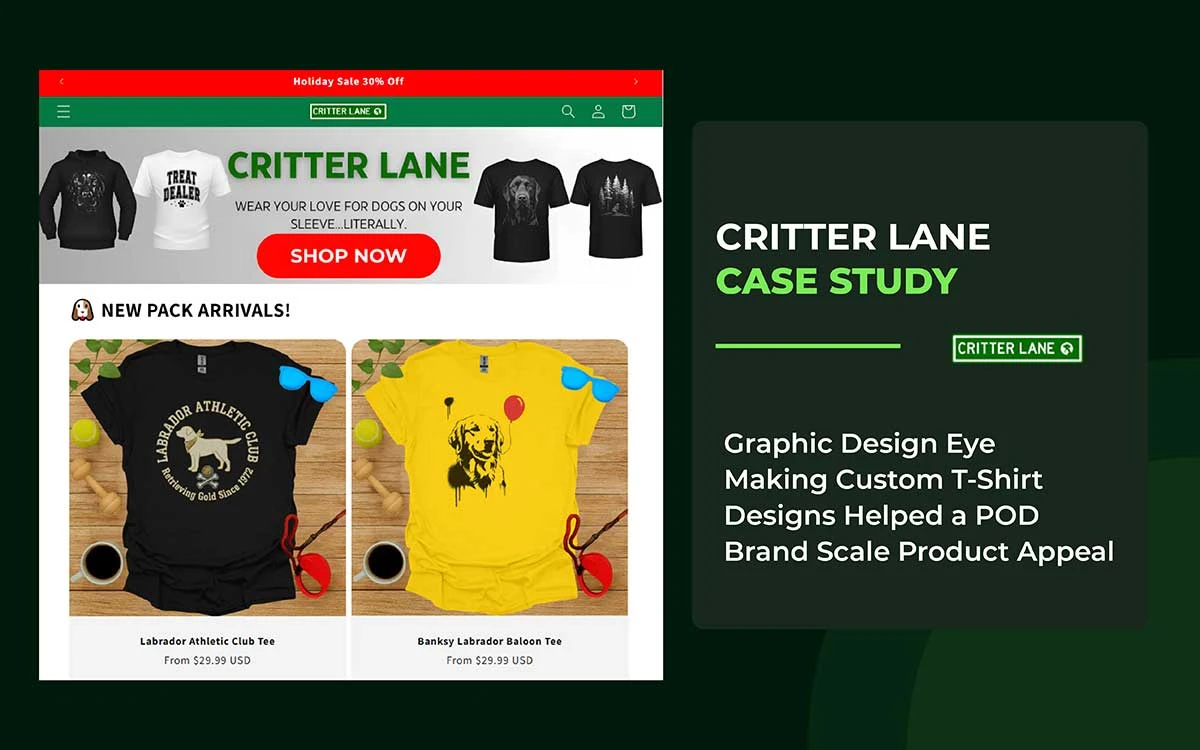
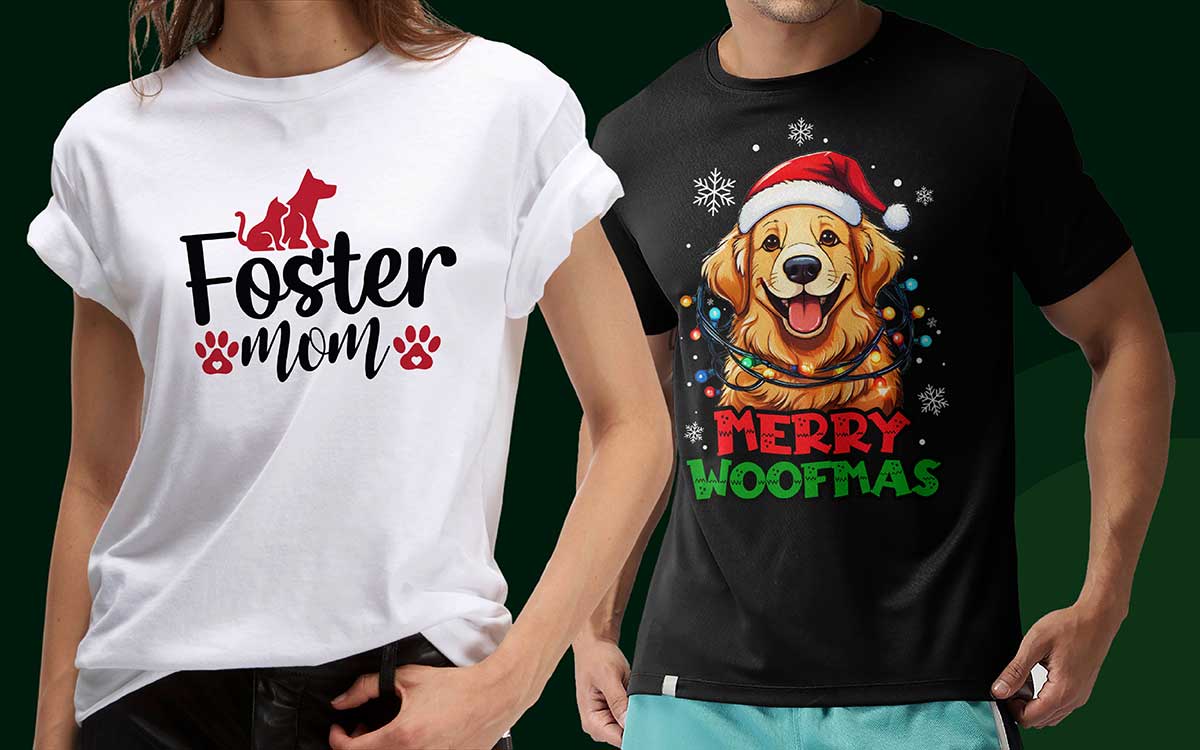
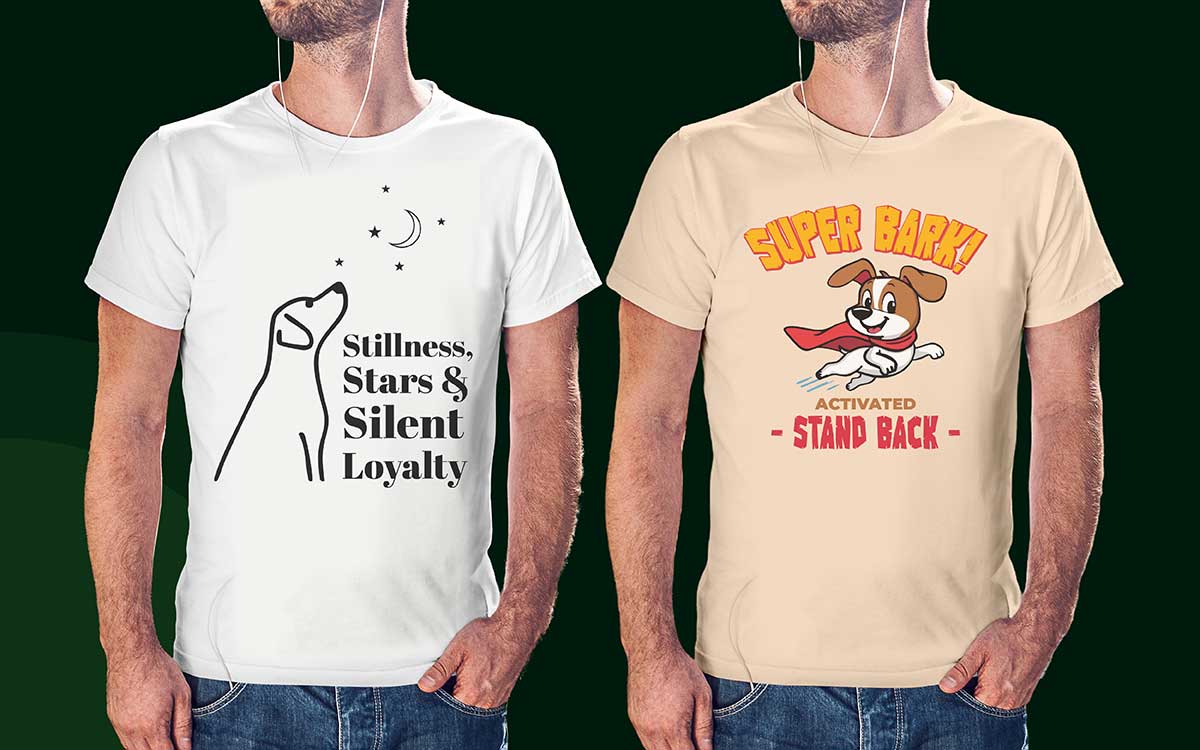
This Critter Lane case study explores how strategic design planning and thoughtful execution can turn a clear concept into market-ready products that attract attention and build customer loyalty, even in competitive industries.
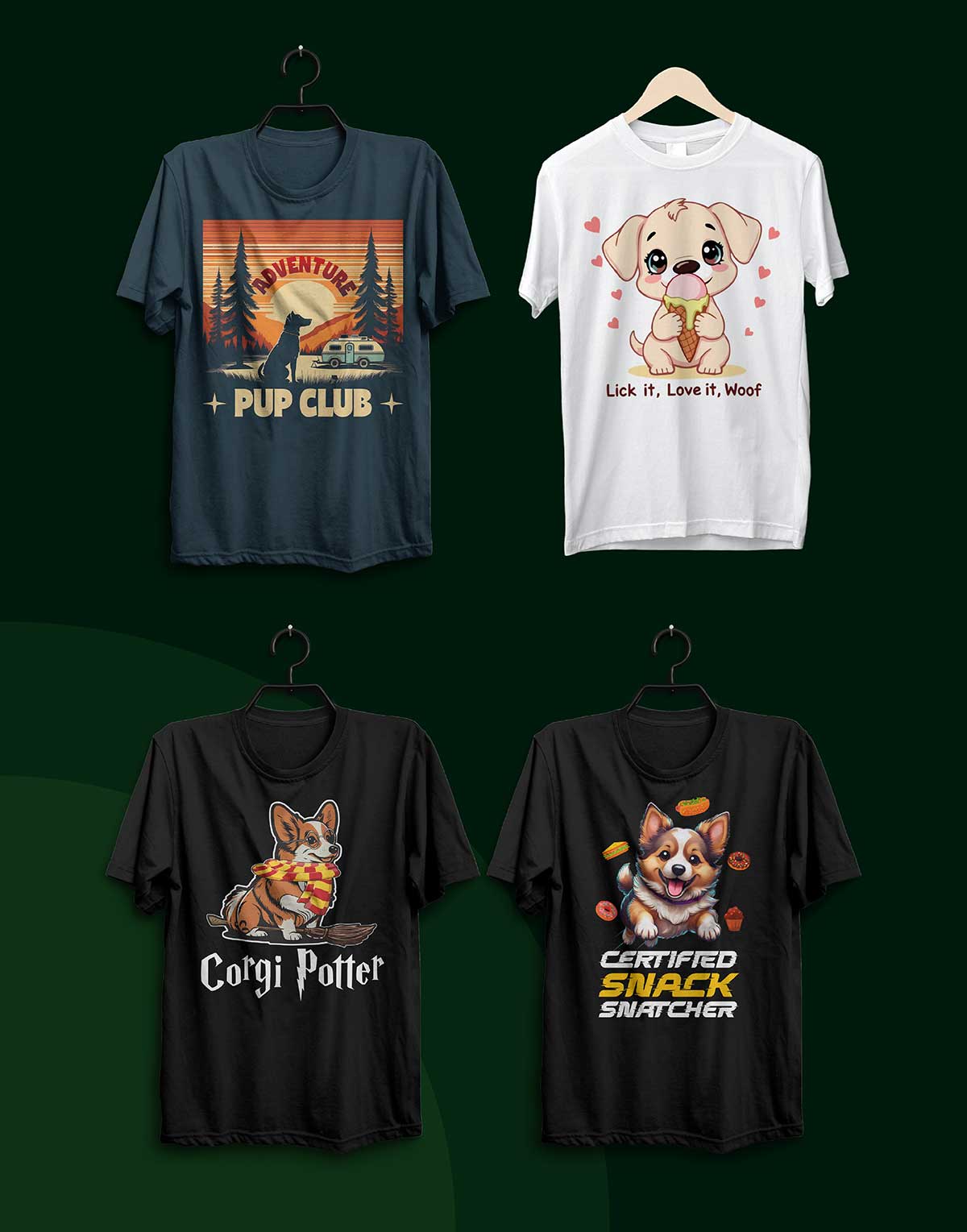
The pet products industry, worth billions of dollars each year, has long followed a familiar style: bright colors, exaggerated features, and playful graphics that prioritize cuteness over sophistication. For pet owners who value thoughtful design, this often feels out of step with their personal taste.
Critter Lane saw this gap and aimed to create products that honored both the emotional bond between pets and their owners and consumers' modern aesthetic preferences. Turning this idea into a real product line, however, required expertise in graphic design, brand strategy, and practical production.
Let's dive right in!
Critter Lane Case Study
The pet apparel market is crowded, filled with cartoonish patterns and mass-market products. Amid this, Critter Lane stood out with a clear goal: to celebrate the genuine bond between dogs and their owners through clean, gallery-quality designs.
Through smart design strategies, careful execution, and staying true to the brand’s values, the partnership created a line that appeals strongly to style-conscious customers while remaining commercially successful.
This analysis highlights the approaches, challenges, and lessons learned that allowed Critter Lane to stand out in a crowded market and build a strong foundation for future growth.
This case study explores how professional design expertise helped Critter Lane create a premium custom t-shirt collection that broke away from typical pet apparel trends and set a new industry standard.
Keep reading!
Critter Lane About
Critter Lane was founded by Dan, a passionate dog owner who became frustrated with the limited options in the pet product market. His frustration inspired him to create a brand that does things differently.
Unlike many pet brands that rely on cartoonish designs, Critter Lane focuses on highlighting each dog’s unique personality. The brand uses thoughtful, artistic designs that celebrate pets as individuals rather than turning them into caricatures.
Through creativity and authenticity, Critter Lane stands out in a market full of generic, one-size-fits-all products.
Critter Lane operates on several foundational principles that distinguish it from competitors:
- Professional Artistry: Talented illustrators turn pet photos into elegant line art that captures each dog's true personality. The designs are never cartoonish or exaggerated. This approach respects the pet while creating art that looks great in modern homes and on stylish clothing.
- Material Excellence: Every product is made with premium materials that feel good and last long. Critter Lane ensures the materials match the artwork's quality, offering customers both beauty and durability.
- Emotional Resonance: Instead of using generic images, Critter Lane focuses on capturing each pet’s unique character. This personal touch helps customers see their own animals in the designs, creating meaningful emotional bonds that go beyond a simple purchase.
The Critter Lane Problem
Despite possessing conceptual clarity and market insight, Critter Lane confronted significant obstacles in translating its philosophy into a coherent product line. These challenges represented both creative and strategic dimensions that required specialized intervention.
The Aesthetic Displacement Problem
Dan’s journey started with a personal frustration that many adults shared: there were no pet-themed clothes that matched mature design tastes. The market mostly offered two types of products, neither of which met his needs:
- Childish designs: These featured cartoon dogs with exaggerated features, bright primary colors, and playful fonts. They mainly appealed to kids or people who preferred fun over elegance.
- Generic mass-market options: These had low-quality prints, boring layouts, and designs that didn’t capture pets' unique personalities or the bond between pets and their owners.
This gap in the market was more than just a business opportunity. It showed that companies didn’t fully understand how modern consumers like to express their values and personal style, even when it comes to showing love for their pets.
The Translation Barrier
Having a clear vision and spotting a market need are important for business, but they are not enough to guarantee success. Critter Lane faced several key challenges that required expert solutions:
- How could photographs of real dogs be turned into artistic designs that still look like the dogs but also have the visual quality of gallery art
- Which design techniques could create a minimalist style that conveys personality and emotion without resorting to complex details or bright colors?
- How could each design be unique while still fitting together as part of a consistent collection that strengthens the brand?
- Which production factors needed to be considered to ensure the designs would work well across different types of clothing, printing methods, and sales channels?
Answering these questions required more than basic graphic design skills. It called for strategic thinking, knowledge of production, and a deep understanding of how visuals communicate a brand’s values.
The Differentiation Imperative
In a market full of similar products and low-price competition, standing out is not easy. Without top-quality design, Critter Lane risked being seen as just another custom pet product company, no different from many others.
The importance of design went beyond looks. The design of the products would affect the brand’s reputation, pricing, customer loyalty, and long-term success. Poor execution could weaken the brand’s value, no matter how good the concept is.
The Critter Lane Solution
Recognizing the need for specialized expertise, Critter Lane allied with Graphic Design Eye to bring their vision to life. Graphic Design Eye approached the project as more than a typical client engagement. Instead, they developed a true partnership, focused on solving both creative and strategic challenges together. Their approach combined strong design skills with careful planning to create results that looked great and worked well for the business.
Conceptual Reframing: From Merchandise to Art
The main idea behind this project came from a simple question: What if each t-shirt design were treated like a piece of art in a gallery, rather than just a product for sale?
This change in thinking shifted the team’s priorities. Instead of focusing on flashy visuals or adding lots of decoration, the designs followed principles of fine art: simplicity, purpose, use of empty space, and respect for the subject.
Thinking this way, the team avoided common industry trends and fads. Every design choice was guided by one question: Does this design honor both the subject and the t-shirt itself in a meaningful way?
The Artistic Process: From Photography to Portrait
Creating wearable art from real dog photographs involved a careful, multi-step process that combined skill and creativity:
- Studying the Dogs: Artists started by closely observing each dog’s unique features, posture, and expression. The goal was to capture what made each dog special, beyond just its breed.
- Interpreting the Image: Instead of simply copying the photo, artists chose which details to highlight, simplify, or omit. This step focused on balancing visual detail with emotional impact.
- Using a Single Color: The designs were created with simple, one-color line work. This gave the portraits a classic, timeless look while keeping them clear and easy to produce.
The final portraits showed each dog’s personality and presence without relying on realistic detail or extra decoration. Each design succeeded in what great portrait art does best: capturing the essence of the subject, not just its appearance.
Audience-Centric Design Philosophy
Critter Lane focused on customers who value style and have a keen eye for quality. These customers apply the same standards to everything they buy. Understanding this helped shape the design choices:
- Room to Breathe: The designs used plenty of empty space so the artwork didn’t overwhelm the shirt. This made the design feel balanced and allowed the wearer’s overall style to shine.
- Natural Fit: Designs were placed carefully to match body shapes and the shirt’s structure. The artwork felt like a natural part of the shirt rather than an afterthought.
- Subtle Messaging: The designs avoided obvious slogans or forced emotions. Instead, they communicated quietly, encouraging people to notice and reflect without demanding attention.
This approach respected the intelligence and taste of sophisticated buyers, who tend to avoid flashy marketing and appreciate thoughtful, well-made products.
Production-Ready Design Excellence
Having a great design idea is not enough; if it can’t be made well, it leads to disappointment instead of a successful product. Graphic Design Eye made sure every design choice worked in real-world production.
- Line Weight Adjustment: The thickness of each stroke was carefully set to maintain a clear, sharp design regardless of the printing method. It also held up after many washes.
- Contrast Testing: Designs were checked to ensure they stood out across different fabric colors and textures without requiring complex color adjustments.
- Scalability Checks: Each design was tested on various garment sizes and styles to ensure it looked good on everything from small accessories to large clothing items.
This careful attention to production details ensured the final products looked as intended, worked in real life, and met customers' high standards.
Brand Coherence Across the Collection
Creating a full product collection is different from designing single, isolated items. It requires a balance between consistency and variety. Graphic Design Eye developed a clear approach to achieve this balance:
- Consistent Visual Style: All designs followed the same basic rules for lines, layout, and spacing. This made each product instantly recognizable as part of the Critter Lane brand.
- Unique Designs: Even with a unified style, each item had its own personality. This allowed customers to make individual purchases while still feeling like the pieces belonged together.
- Flexible Design System: The process was designed to be repeatable. New designs could be added in the future without harming the brand’s look or needing a complete redesign.
Through this approach, Graphic Design Eye turned a set of separate designs into a cohesive collection. The result was a strong, recognizable brand that could grow and expand in the market.
Critter Lane Investment $1,000
Critter Lane invested $1,000 in custom t-shirt designs as a strategic choice. Instead of chasing quick sales, they focused on building a strong foundation.
This approach shows that even a small budget, when used carefully and with a clear purpose, can create results that far exceed the initial investment.
Investing in Intellectual Capital
The budget purchased something fundamentally more valuable than finished designs: comprehensive strategic thinking and creative problem-solving. This included:
- Conceptual Development Time: Time spent learning Critter Lane’s philosophy, audience, and market before creating any visuals. This careful planning avoided wasted effort and kept every design aligned with the brand’s goals.
- Iterative Refinement: Multiple rounds of revisions tested different artistic styles, layouts, and creative ideas. Weak concepts were discarded, while strong ones were improved through careful evaluation.
- Technical Optimization: Designs were carefully adjusted to work well across different production methods and materials, ensuring high quality in every final product.
This investment in thinking time distinguished Graphic Design Eye's approach from commodity t-shirt design services that prioritize speed and volume over strategic value creation.
Building Scalable Systems Over One-Time Assets
Rather than producing a finite number of designs that would quickly require replacement or supplementation, the investment created a sustainable design framework:
- Replicable Methodology: A clear method for turning dog photos into artwork that matches the brand. This makes it easy to create new designs in the future without having to start from scratch.
- Consistent Visual Language: Guidelines for line work, composition, and overall look ensure all products share a unified visual identity.
- Quality Standards: Defined benchmarks help ensure every future design remains high-quality, even as the business grows.
This systematic approach maximized the long-term return on the initial investment by creating infrastructure rather than merely purchasing outputs.
Protection Against Aesthetic Obsolescence
Design trends cycle rapidly, and trend-driven aesthetics depreciate quickly as consumer preferences evolve. Critter Lane's investment specifically avoided this trap through:
- Timeless Design Principles: Classical approaches to composition, proportion, and visual hierarchy that remain effective regardless of temporary aesthetic fashions.
- Minimalist Restraint: Deliberate simplicity that ages gracefully rather than appearing dated as more elaborate styles fall from favor.
- Authentic Expression: Designs rooted in genuine emotional connection rather than manufactured sentiment or aesthetic posturing, ensuring sustained relevance.
This temporal awareness protected the investment from rapid depreciation and positioned Critter Lane's visual identity for sustained effectiveness.
Investment in Emotional Authenticity
The most important, but hardest to measure, benefit came from creating a real emotional connection with customers. When people see their own pets reflected in the artwork, they feel a genuine bond. This connection leads to several valuable outcomes:
- Higher perceived value: Customers see the product as special, enabling premium pricing and protecting profits even in a competitive market.
- Stronger loyalty: Happy customers return more often and recommend the brand to others, lowering the cost of finding new buyers and increasing overall lifetime value.
- Natural promotion: Satisfied customers share their experiences on social media or with friends, providing free marketing that spreads the brand’s reach.
Over time, these intangible benefits grow and multiply, delivering returns far beyond the original investment while also strengthening the brand’s market position.
What Other T-shirt Businesses Can Learn
The Critter Lane case study yields several transferable insights applicable to businesses across the custom apparel sector and beyond. These principles demonstrate how strategic design thinking creates competitive advantages that transcend specific industries or product categories.
1) Design Sophistication as Differentiation Strategy
In markets where companies mostly compete on price and standard products, many focus on efficiency, heavy marketing, or fast product turnover. Critter Lane took a different path: it competed by offering outstanding design and strong aesthetic value.
This approach works especially well for customers with refined tastes. These buyers look for products that match their values and style. For them, design quality matters more than price or convenience—it can be the main reason they choose one product over another.
To succeed with this strategy, a business must truly commit to good design. Customers can easily tell the difference between real design excellence and products that only look stylish on the surface. Achieving success requires consistently high standards in every part of the customer experience.
2) The Strategic Value of Restraint
Contemporary business culture frequently equates impact with intensity, leading to designs that maximize visual elements, color complexity, and decorative features. Critter Lane's success demonstrates that restraint can generate greater impact than elaboration when executed with confidence and strategic purpose.
Minimalist design offers many practical benefits beyond looking good. Fewer design elements make production easier and cheaper. A simple, timeless style helps products stay relevant longer. Clear, uncluttered visuals also make a brand easier to recognize and remember.
But true minimalism is not easy. It takes skill to remove everything that isn’t essential while keeping the design strong. Designers need to understand how to balance elements, guide the viewer’s eye, and communicate emotion. Poorly done minimalism can feel empty. Done well, it creates clarity and power through careful simplicity.
3) Recognition as Emotional Currency
Most generic pet products show customers only a rough idea of an animal: cartoon dogs that hint at the species but don’t capture the pet’s true personality. Critter Lane did something different. They created designs that accurately reflected each individual pet, allowing customers to see their own animals in the artwork.
This idea goes beyond pet products. Any business that helps customers express themselves or show their identity benefits from accuracy and attention to detail. People are willing to pay more for products that truly represent their lives, rather than settling for generic versions.
To achieve this, businesses must understand what makes each customer unique and translate those differences into design or experiences. The effort pays off. Accurate, personalized products build loyalty that lasts far beyond a simple purchase.
4) Garments as Canvases, Not Billboards
Most clothing design treats shirts and garments mainly as advertising tools, focusing on making logos or messages stand out rather than blending them into the overall look. Graphic Design Eye took a different approach. They treated each shirt as a complete work of art, where the garment itself played an important role, not just a surface for graphics.
This approach changed how decisions were made about design placement, size, and layout. Instead of trying to cover as much of the shirt as possible, designers focused on how the artwork worked with empty space, how it followed the body’s shape, and how it fit with the shirt’s construction.
The result: products felt thoughtful and personal rather than just promotional. Customers saw them as a reflection of their own style, not just branded merchandise. This approach strengthened the connection between the wearer and the product, making the clothing feel like an extension of the wearer's personal style.
5) Budget Constraints as Creative Catalysts
Working with a limited budget forced Critter Lane to focus. With only $1,000, they couldn’t explore multiple directions or rely on high volume. Instead, they put all their effort into perfecting one approach. The result was sharper ideas and more unique outcomes.
It shows an important lesson for new businesses: a small budget doesn’t stop you from achieving excellence. When money is tight, focusing your resources can create a stronger brand than spreading them thin across several average projects.
Success comes from accepting limits while keeping high standards. Instead of competing with larger companies on quantity or variety, smaller businesses can stand out by aiming for excellence in carefully chosen areas where quality and uniqueness matter more than size.
Endnote
What the Critter Lane case study ultimately demonstrates is not merely that good design produces good products. It demonstrates that design, when treated as a strategic discipline rather than an aesthetic service, produces something more durable: a brand.
Dan came to this project with a frustration and a vision. He left with a system, a standard, and a market position. The $1,000 invested did not purchase a collection of T-shirt designs. It purchased the intellectual infrastructure that allowed a philosophy to become a product, a product to become a collection, and a collection to become a brand that its customers felt genuinely connected to.
The pet apparel market is still full of cartoonish dogs and generic designs. Critter Lane is not competing with any of them. It is operating in a different category entirely, one it helped create through the discipline of refusing to produce anything less than what its audience deserved.
That is what strategic design makes possible. Not just better products, but a better position from which to build everything that comes next.
Your vision deserves more than a designer who delivers files. Contact Graphic Design Eye LLC to build a T-shirt collection that reflects who your brand truly is, and gives your customers something worth wearing for years.
The customers you are trying to reach are not waiting for another generic option. They are waiting for something worth choosing.