TL;DR:
Screen printing vs sublimation printing are two popular methods for custom t-shirts, but which one is right for your project? We'll cover what matters: real costs by order size, wash durability, and fabric compatibility. You'll also learn which method handles complex colors, why polyester vs cotton matters, and how to calculate each shirt's true cost.
 T-Shirt Design
 Feb 13,2026
 15 minutes
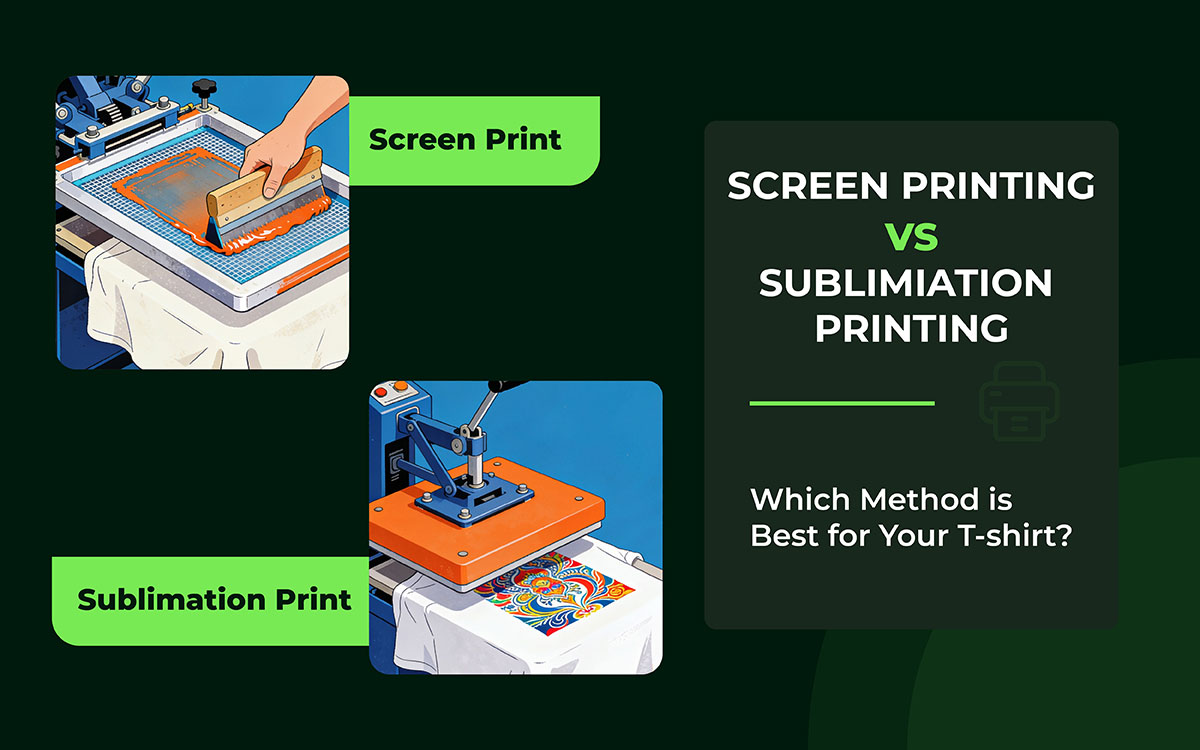


Here's what you need to know, screen printing works great when you're ordering a bunch of cotton shirts with simple, bold designs. Sublimation printing is your go-to choice for bright, photo-quality prints on polyester that won't fade easily.
Picking the right method isn't just about what fabric you're using or how many shirts you need. It's about making sure you don't waste your money and that your designs look exactly how you want them to.
Choosing wrong doesn't just cost you cash. Your colors might look off, your design options might get limited, and your prints could crack or fade after a few wears.
Maybe you're starting your own clothing brand, getting shirts for your sports team, or making merch for an event. Either way, knowing which method works for your situation makes the difference between stuff that looks homemade and gear that looks legit.
After you read this article, you'll know exactly which method is best for your project. Even better, you'll understand how to set up your designs so they turn out perfect every single time.
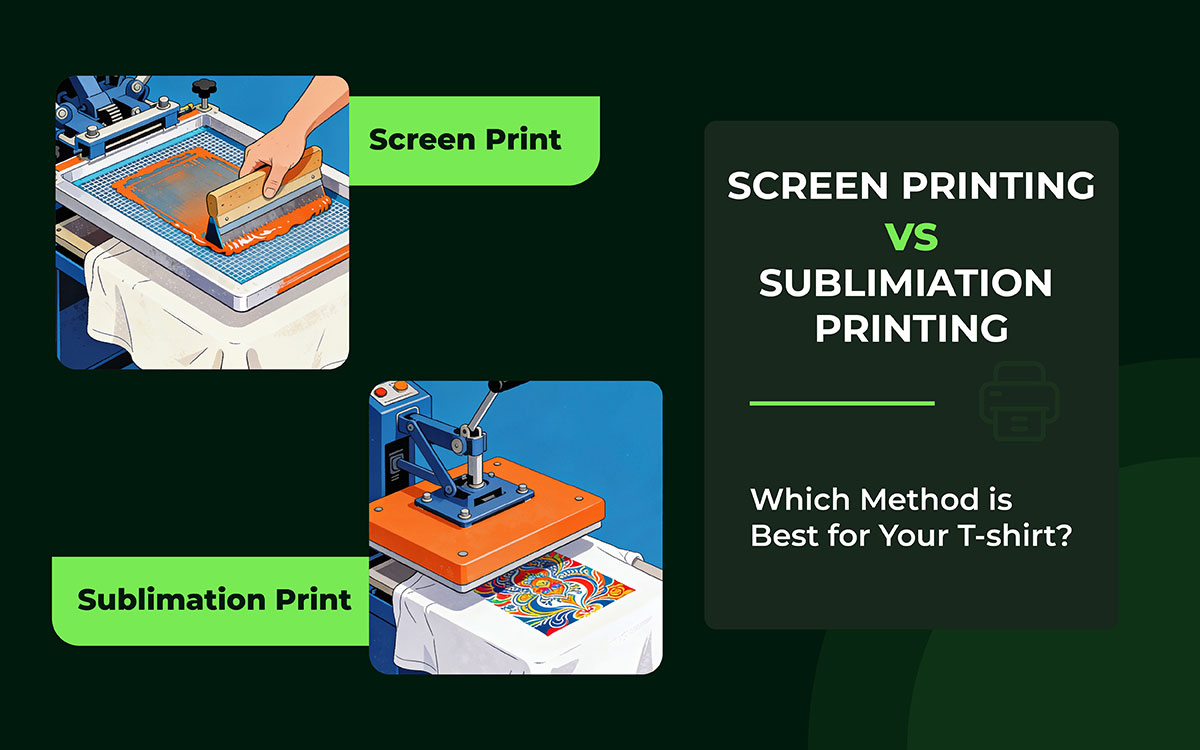
Screen printing works great when you need lots of cotton shirts with bright, solid designs. Sublimation is your go-to for colorful, detailed graphics on polyester; it feels smooth and covers the whole shirt. Think about how many you need, what fabric you're using, and how complex your design is.
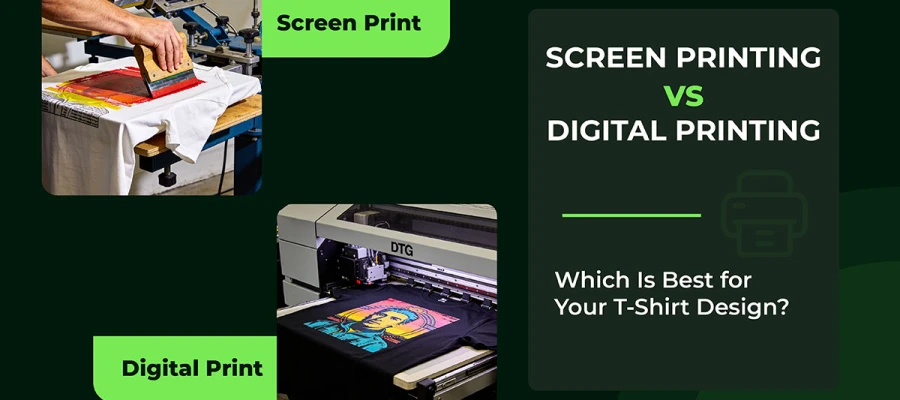
Let's explain the comparison of screen printing vs sublimation printing side by side:
| Point | Screen Printing | Sublimation Printing |
|---|---|---|
| 1. Cost Comparison | Cheaper for bulk orders (50+). Costs drop to $3–5 per shirt. High setup cost ($20–50 per color screen) makes small orders expensive. | Best for small runs (1–20). Costs $10–15 per shirt. No setup fees, but higher per-unit cost. |
| 2. Print Quality Comparison | Thick, vibrant, opaque colors. Slightly raised texture. Excellent for logos and solid designs. Limited to highly detailed artwork. | Smooth, seamless, photo-quality prints. Unlimited colors and gradients. Best for complex designs and images. |
| 3. Durability & Washability | Durable for 30–50 washes. Can crack or fade if poorly cured. Performs best on cotton. | Extremely durable: 50+ washes with minimal fading. No cracking, since the dye embeds into the fabric. Best on polyester. |
| 4. Design Compatibility | Best for simple designs (1–6 colors). Works on cotton, blends, polyester, and dark fabrics. | Ideal for detailed, colorful, full-coverage designs. Requires light-colored polyester fabrics. |
| 5. Pros & Cons | Pros: Low cost for bulk, works on all fabrics, vibrant colors, and versatile. Cons: High setup cost, limited color options, raised-ink feel, and labor-intensive. | Pros: No setup cost, unlimited colors, soft feel, highly durable, eco-friendlier. Cons: Works only on polyester, has a higher per-unit cost, and requires special equipment. |
Curious about how much screen printing and sublimation cost for t-shirts? Screen printing is cheaper when you order a lot, more than 50 shirts, at around $5-10 each. Sublimation works better for small orders under 20 shirts, costing about $10-15 per shirt because there are no setup fees.
Screen printing requires screens to be made first, and each color needs its own screen. In 2026, companies like Ryonet or Anatol charge $20-50 per screen. When you print lots of shirts, this setup cost gets spread out.
A t-shirt printing provider might charge only $3-5 per cotton t-shirt when printing 100. But if you just want one shirt or a few samples, those setup fees make it expensive. That's why it doesn't work well for online stores that print shirts one at a time.
Sublimation differs because it skips setup costs entirely. It uses digital printers like Epson's new SureColor models, which cost between $500 and $2,000 to get started. Each shirt costs money for special ink (about $0.50-1) and polyester blanks ($5-8 each). Dark-colored fabrics cost more because they need a light base layer first.
If you're growing a brand in busy US markets, do the math. Screen printing is better for 50 or more shirts. Sublimation fits sellers on Etsy or temporary stores.
Note: There are additional costs people often don't think about. Screen printing needs chemicals, ink, and machines that dry the designs. This maintenance can cost $200- $ 500 per year.
Screen printing gives you thick, bright colors that you can actually feel on the shirt. It works great for logos on all kinds of materials.
Sublimation is different. It creates smooth, picture-perfect designs that blend right into polyester fabric. The result feels soft and looks really professional.
Here's what you need to know for your next project.
Screen printing works by pushing ink through a mesh screen onto fabric. You can use plastisol ink or water-based ink. The prints come out super bright and really stand out on dark shirts.
You can match exact colors using Pantone guides. Tests from Printful in 2026 show that these prints retain about 80-90% of their brightness even after multiple washes. The print has a raised texture that feels high-quality.
But most designers don't like how it looks on really detailed artwork because you can see and feel the ink layer.
Note: Screen printing ink handles sunlight better.
Sublimation uses heat, about 400 degrees, to turn a special dye into a gas. That gas soaks right into the fabric fibers. You can't feel anything on the surface afterward.
This method is amazing for complex designs such as photos, landscapes, or color gradients. You're not limited to colors at all. New inks can reproduce any color perfectly on polyester. They beat screen printing when it comes to subtle color changes.
The only downside is that sublimation fades on cotton or cotton-blend fabrics. It only works well on synthetic materials.
Note: Sublimation holds up well in a humid atmosphere.
Want to know which printing method lasts longer? They're both pretty solid choices, but sublimation wins for keeping colors bright. It can withstand over 50 washes without fading or cracking. Screen printing works well on cotton and usually lasts 30-50 washes if done right.
Screen printing applies ink directly to the fabric, creating a tough, durable layer that wears down slowly. The newer water-based inks are even better now.
According to xTool's 2026 info, they last way longer without peeling if you heat them at 320°F for a minute. Turn your shirts inside out and wash them in cold water, and they'll last forever. People on Reddit say their event shirts have held up for over five years.
Sublimation puts the dye inside the fabric threads. That means it won't crack or fade. Analysts found that 95% of the color stays bright after 50 washes. It's perfect for sports clothes, where people are really active.
Polyester fabric also helps it last because it pulls moisture away. But there are downsides. Screen printing can crack if you stretch the fabric too much. Sublimation colors might bleed if you wash them in really hot water.
Tip: Just use gentle wash cycles. Screen-printed cotton shirts dry better when air-dried rather than in a dryer.
What’s the best printing method for designs? Screen printing works great for simple designs with a few colors on any type of fabric. Sublimation is better for detailed, colorful graphics. Yet, you’d need polyester shirts and light-colored materials to get good results.
Screen printing does well with t-shirt designs that use 1-6 colors. You need a separate screen for each color. It works on cotton, mixed fabrics, and even hoodies. The downside is that fading colors use a technique called halftoning, which can look grainy when viewed closely.
Sublimation lets you use as many colors as you want and creates photo-quality prints. It's great for full-coverage designs. You must use 100% polyester (or at least 65% polyester blends) and white or light fabrics, or the colors won't look right.
Did you know: Some creative people are combining screen printing with sublimation backgrounds to create unique effects.
Ready for a balanced view? We're breaking down screen printing vs sublimation printing pros and cons all down here:
Screen printing saves you money when you order a ton and works on almost anything, but getting started takes time and effort. Below are the key pros and cons of screen printing:
| Pros | Cons |
|---|---|
| ✅ Cost-effective for bulk (50+ units), dropping to $3–5 per shirt | ❌ High setup costs ($20–50 per color screen) for small runs |
| ✅ Vibrant, opaque colors on any fabric, including cotton | ❌ Limited to 6–8 colors without extra fees; gradients tricky |
| ✅ Durable with proper curing; lasts 30–50 washes | ❌ Ink feels raised; it can crack or peel over time if not maintained |
| ✅ Versatile for logos and spot colors; works on dark bases | ❌ More labor-intensive; environmental impact from chemicals |
| ✅ Scalable for businesses in high-demand states | ❌ Not ideal for photorealistic or all-over designs |
Sublimation delivers amazing quality even for small orders, though it only works on certain fabrics. Pick whatever fits your project size and vibe. The sublimation printing pros and cons are listed here:
| Pros | Cons |
|---|---|
| ✅ No setup fees; great for small runs (1–20 units) at $10–15 each | ❌ Limited to polyester fabrics; poor on cotton |
| ✅ Seamless, no-feel prints with unlimited colors and gradients | ❌ Requires light-colored bases; colors mute on darks |
| ✅ Highly durable; embedded dye resists fading after 50+ washes | ❌ Higher per-unit ink costs ($0.50–1 per print) |
| ✅ Perfect for photorealistic and all-over designs | ❌ Needs specialized equipment like heat presses ($300+) |
| ✅ Eco-friendlier with less waste; suits sustainable trends | ❌ Sensitive to heat; can bleed if washed improperly |
Picking the right way to print your t-shirts depends on a few important things. Think about what material you're using, how much money you have, what your design looks like, how many shirts you need, and what kind of finish you want.
To help you decide, here is a step-by-step guide on how to choose the right method between screen printing and sublimation printing.
Screen printing works well on cotton and mixed fabrics for a traditional look. Sublimation does better on polyester because it blends right into the material.
Screen printing has been around since the 1960s, but in recent years, companies have been using improved water-based inks. It works best on natural materials like cotton, organic fabric mixes, or even wool.
Screen printing’s benefit is that it works on both dark and light-colored shirts. You can also use special inks for cool effects, such as raised textures or glow-in-the-dark designs. The downside is that it feels heavier on synthetic materials.
Sublimation only works on synthetic materials, mostly polyester or polyester blends. The dye actually bonds with the fabric when you apply heat. It creates prints that won't crack or peel off.
Sublimation’s benefits are that the prints are lightweight and actually embedded into the fabric, so they move naturally with it. The downside is you're stuck with light-colored polyester shirts, since dark backgrounds make the colors look dull.
If your customers care about comfort, match your printing method to the shirt material. You'll get durable, attention-grabbing results that keep customers coming back.
If you're printing fewer than 50 shirts, sublimation is cheaper at $5-10 each. Screen printing works better for large orders of 100+ units, where prices drop to $2-5 per shirt once setup costs are covered.
Screen printing requires you to buy screens upfront. You need one for each color, and they run $20-50 each. You'll also pay setup fees of about $50-100 for each design. That makes it a bad choice if you just want one shirt or need to test an idea.
But here's where it gets interesting: when you print 100 or more shirts, the cost per shirt drops way down. It works great for promotional events or for stocking shelves.
Sublimation takes a different approach. There are no setup fees because everything's digital. You can get a beginner printer for $400- $800. Ink and special paper add another $1-3 per shirt.
This method fits perfectly with on-demand printing, which online sellers love. People who reviewed these methods said sublimation beats screen printing for new businesses. Why? You don't waste money on extra screens you might not use. Plus, the colors look amazing, even though polyester fabric costs about 20% more than cotton.
Screen printing is ideal for bold, simple graphics, while sublimation is best for detailed, photo-realistic designs.
The design you pick usually depends on how complicated your artwork is. This affects whether it can be recreated easily and how good it looks, especially now that AI tools are changing creative work.
Screen printing works best for logos, words, or simple vector images that use only a handful of colors. It builds up layers of ink to create clean, raised prints you can actually feel.
Every single color requires its own screen, though, so keeping things simple saves money. That's why it's popular for minimalist streetwear.
Sublimation lets you use as many colors as you want. It handles gradients and photo-realistic details by infusing dye directly into fabric.
Since there's no limit on colors, you get smooth blending between shades. It also performs best on white polyester to keep colors bright and vivid.
Note: You’ll need high-quality image files at least 300 DPI to avoid a blurry, pixelated print.
Screen printing applies ink to the surface of the material, creating a slightly raised texture. It looks bold and punchy, lasting through 75+ washes if you take care of it properly.
Sublimation creates designs that sink into the fabric, giving you a super-smooth feel. Colors stay bright even after 50+ washes.
What matters most is how your design looks and how long it stays nice. That's what keeps customers happy when they want clothes that last.
Screen printing gives you thick, solid colors that really pop, especially when you're putting bright designs on dark shirts. Based on tests people did in 2024, these prints hold up through 75 washes before they might start cracking. This makes screen printing perfect for tough work gear.
Sublimation turns ink into a gas that bonds with the fabric fibers. You end up with designs you can't even feel when you touch them. The colors stay vivid and breathable, plus they won't crack or peel.
They keep looking good for 50+ washes without losing their brightness. Just remember that colors won't look as good on fabrics that aren't polyester.
Here are simple answers to common questions about screen printing and sublimation for t-shirts. These come from what's happening in the industry right now:
Neither one wins every time. It depends on your needs. Sublimation excels for vibrant, full-color, all-over designs on polyester with superior fade resistance (no cracking/peeling). Screen printing is better for bold, minimalist designs on cotton, bulk orders, and specialty effects.
Yes, you can screen print on polyester. You'll need special inks that cure at lower temperatures. It prevents color bleeding and keeps everything looking clean. The results look great, but the print might feel a bit thicker or less breathable compared to cotton.
No, regular sublimation doesn't work well on dark shirts. You need light-colored polyester because the dyes bond in a see-through way.
In the end! You’ve seen the comparison between screen printing vs sublimation printing regarding costs, quality, and durability metrics. Now comes the crucial question: what's your next move?
Here’s the mistake most companies make: they focus too much on printing techniques and forget about something way more important. Which is getting your design ready for actual printing.
At Graphic Design Eye LLC, we help brands, teams, and creators pick the best printing method, not just the trendy one. If you want screen printing for strong, lasting designs, or sublimation printing for bright, full-color images, our team makes sure your art, fabric, and print setup work well together every time.
From design planning to ready-to-print files, we watch the small details that stop fading, cracking, and color mistakes, so your T-shirts look clean from the first day and stay that way. If you plan merch or uniforms, or want to start a clothing brand, let Graphic Design Eye LLC lead you from idea to final print with confidence.
Get in touch with Graphic Design Eye LLC!