TL;DR:
The ultimate social media growth strategy is about chasing virality or copying big brands with massive teams. It’s about clarity, consistency, and creating content that genuinely connects with your audience. Now, social media becomes more than just likes and followers, it becomes a powerful channel for brand awareness, trust, and real business growth.
 Social Media Graphics
 Feb 04,2026
 16 minutes


Creating a perfect strategy may give you the edge to accelerate your social media growth. However, not everyone will meet the same fate!
According to research, Instagram’s engagement rate just decreased by 2.33% in just one year, while LinkedIn grew by 0.5% in the same period.
Therefore, developing a perfect strategy is essential here. Are you thinking about what a good social media strategy is? Or how to start social media growth marketing?
You need to assess your objectives first, then decide which platform would be better for organic social media growth, and analyse your competitors.
Well, the list doesn’t end here, nor does your journey in learning how you can create the best social media growth strategy for yourself.
So, without any further ado, let’s binge on!
In social media, you’re important, but your presence matters the most. Especially if you want to create personal brand or your own business, you’d definitely need a growth strategy to attract the maximum audience.
Here, we’ve introduced 10 essential steps to create a perfect social media growth strategy for your online presence. Following these steps will help in increasing the quality of content and enhancing your social media presence and sales.
Keep reading!
Remember your reason to grow in social media. Is it for revenue, creating engagement, or getting good leads?
Remember that your intention is the key player here. So, don’t make things complicated, which can make your workflow unstable.
Making people aware of your brand is the best way to establish a strong foundation for your business.
Even famous enterprises always invest in creating a good brand awareness among people.
To make people around you know about your company, you’d need to:
You can keep track of daily search volumes, followers, organic traffic, and mentions your product is getting from your audience.
Research the comments and reviews you’re getting from your customers regarding the product. It’ll help you to know your own service’s shortcomings.
The more attention your post gets, the more your brand will spread among people. You can learn what your audiences are thinking about your product.
Take notes of the daily reactions, DMs, shares, and clicks to understand your organic social media growth.
Obtaining high-quality leads for your customers and collaborators will make the process much easier for you.
Research shows that around 89% leads are usually generated from social media content. It reduces your time lag and saves extra expenses.
Making a small mistake in identifying the correct platform for your business can be a wrong move. If you fail to generate enough organic traffic from your campaigns, it can render your plan ineffective.
Therefore, before deciding the best social media platform for your work, try to learn correctly about your traffic and the platforms as well.
However, learn the following steps to certainly get a clear picture of picking the right one for you.
Identifying your audiences is one of the most important parts of making a strategy. Research your traffic’s pattern well before making a plan.
Observe their online behaviors, and divide them according to their age, location, and interests.
Sell what they need the most. Your pain points may vary from person to person. However, you’ll definitely realize which type of content they are attracted to the most.
Then, you can decide which platforms are relevant to their patterns.
The capability of investment matters much in marketing strategy. Your plan will vary according to your caliber.
For example, with enough funding, you can let a graphic design agency handle your social media interface. Otherwise, you can’t do so.
So, having a clear sense of your budget can help you understand which platform is good to invest in and which is not.
As the consumption rate of social media is increasing day by day, you may be confused about which platform is the right one.
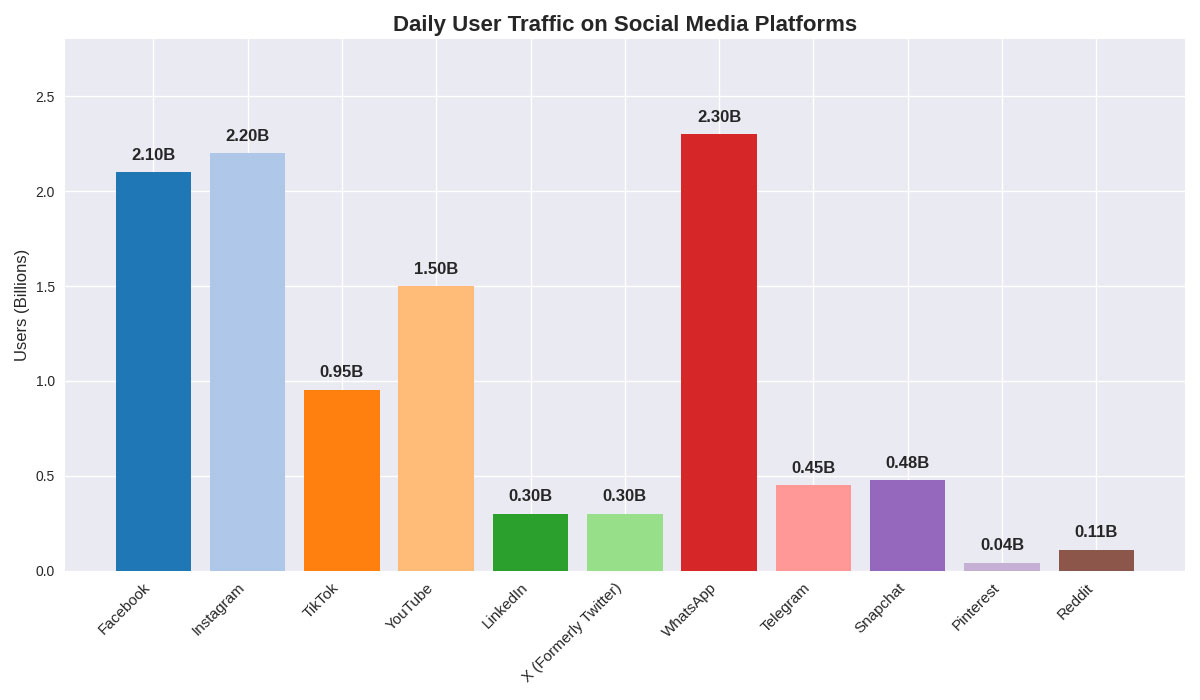
So, here’s a summary for you of some popular social media platforms:
| Platform | Content Type | Average User's Age | Paid Ads Effectiveness | Organic Reach | Best For |
|---|---|---|---|---|---|
| Videos, texts, images, groups | 20-60 | High | Standard | E-commerce, Local Agency | |
| Reels, images, stories | 18–45 | High | Standard-High | Lifestyle, Travel, Food, Fashion | |
| TikTok | Short videos | 16–35 | Very High | Very High | New Brands |
| YouTube | Long & short videos | 18–55 | Very High | Standard | Tech, coach, product demos |
| Texts, carousels, videos | 25–55 | High | High | B2B, SaaS, recruiting, & consulting | |
| X (Twitter) | Short texts, threads | 18–45 | Low-Standard | Standard | Tech, personal branding, media |
| Messages & broadcasts | 20–55 | Low | High | Customer support, re-sales | |
| Snapchat | Short videos, stories | 15–30 | Standard | Low | Youth engagement, Entertainment |
| Images, pins | 20–45 | Standard | Standard-High | Fashion, DIY, Wellness | |
| Texts, discussions | 18–45 | Low-Standard | Standard | Tech, gaming, finance, product reviews |
Learning about your competitors allows you to understand the market, as well as your position from the perspective of others.
Start listing your competitions, and search on which platform they are accelerating. Take notes on their user patterns, reviews, and product features.
Know how to conduct competitor analysis. If you’re running a website, audit the contents of your competition first.
If you do that, a clear view will appear in front of you regarding what you need to do and what is not.
Now that you have perfect knowledge of the market, creating a social media growth strategy will be much easier.
Even a good strategy takes time to become successful. So, it’s your duty to keep patience at that time.
The first and foremost duty is to study the flaws and the points where your competitor is far better than you.
Still, there are some points not to miss at any point. So, let’s get into this real quick.
Don’t scatter your focus, and grow one social media channel at a time. Otherwise, your progress can be held back.
Understand your audience there, and build a good position there first. You’ll find audiences on other platforms, too, once you’ve gained trustworthiness in one place.
People nowadays use platforms like Facebook and Instagram to learn about user opinions, especially Gen Zs.
Therefore, keep an eye on their online behavioral patterns. To perfectly boost your profile, you can add optimized keywords in your content design and even in your bio.
Always try to use:
In your content to make your optimization easier.
Selecting a specific type of content might be challenging for your organic social media growth.
So, keep an eye on your competitors to get enough knowledge on them.
You can generate content like:
You can also perform tests on your contents like A/B testing. Divide your content into model A or model B, and test which one is getting much attention from your audiences.
However, a survey on social media from 2024 showed that only 10% internet traffic comes from other content types, while one-ninth of it comes from short videos.
As handling too much work can disrupt your work-life balance, you can put your work schedule on a calendar.
Therefore, just seeing it once can make you remember what to do next. Moreover, you can keep track of your consistency through this.
You may now have your growth strategy in your hand; however, it’ll take a long time for your business to get recognised.
So, to counter this, you can make the best use of the advertising content and campaigns.
Moreover, people now give proper attention if you collaborate with a famous influencer. Without proper fame, you won’t be able to establish a brand on social media.
You may organically increase your audience steadily, but at one point, you’ll need to switch to advertisements.
While sometimes, strong organic contents are often restricted by the algorithm, paid contents are boosted by it, on the other hand.
There are so many types of ads. For example:
As per the consideration of the algorithm and organic-style reach, short-form videos are encouraged the most.
If you want to create proper engagement with brand awareness, ad campaigns are the most effective way to do that.
However, the first and foremost task here is to set a proper goal. Whether it’s engagement, leads, or sales conversions.
But you can’t set two goals in one campaign, as the algorithm doesn’t work that way.
Then, you need to learn the use of TOF (Top of Funnel) to reach new people, and MOF (Middle of Funnel) to create trustworthiness.
Short and engaging videos are suitable for both of the strategies.
After you start getting attention, use BOF (Bottom of Funnel) like leads to convert traffic into customers.
But your budget matters the most. So, if you have a simple budget, allocate:
And if it’s a scaling one, use the ratio of 4:3:3 at that time.
Note: Test your campaign first for 3-5 days. Identify high CPM ads with low CTR.
Awareness is the best way to solve any problem that can disrupt the balance of your growth.
So, you ned to have a proper knowledge about the indicators. You can even tell if the field and platform are right for you or not.
Moreover, you won’t even need to manually calculate anything, as using tools will make things much easier here.
KPI (Key Performance Indicator) is the most essential thing to consider when launching a campaign.
| Goal | KPIs | Factors |
|---|---|---|
| Awareness | TOF (Top of Funnels) |
|
| Engagement | MOF (Middle of Funnel) |
|
| Traffic | Traffic KPIs |
|
| Leads | Lead Generation KPIs |
|
| Conversion & Sales | BOF (Bottom of Funnel) |
|
| Retargeting | Retargeting KPIs |
|
| Other | Creative Performance KPIs |
|
While taking accountability for KPIs, it’d be wise to use monitoring and analytics tools.
For proper scheduling and monitoring, you can use:
To precisely monitor social listening and brand, you can use:
Moreover, you can try HubSpot Social Tools, Sendible, and Sprinklr to get an all-in-one management tool.
ROI (Return on Investment) shows whether your campaign made a profit or loss.
Basic ROI Formula:
ROI (%)={(Revenue – Cost) / Cost} × 100
In the case of brand awareness, you’d need to measure ROI through,
Check out this video to learn about the key differences between some similar factors!
Let us explain: ROI, ROMI and ROAS.
Following and getting upgraded alongside the trend is the main theme of the 21st century. Your strategy will eventually fall off if you don’t keep up with the trend.
So, research the social media feeds, especially Facebook and Instagram.
You can also stay updated if you keep an eye on:
Check out your favourite influencer’s page and YouTube shorts to get more information.
While keeping up with the social media trends and making new strategies, you also need to know what not to do here.
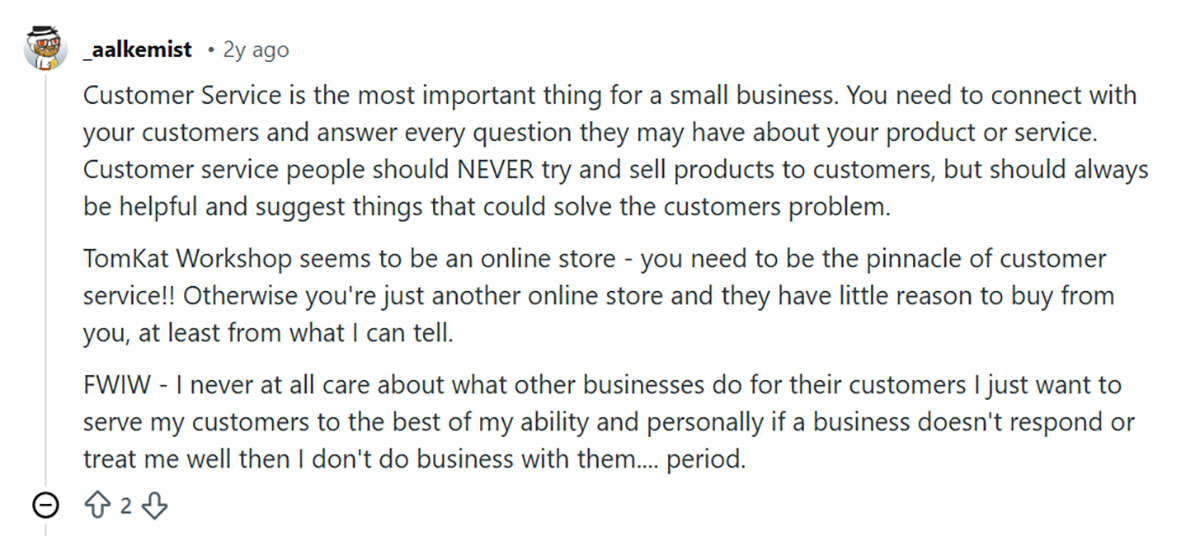
However, if you can maintain living up to their satisfaction, they will be completely hooked on you.
Source: [Reddit]
Your motivating factor always pushes you further, even in the harsh moments.
So, search for what motivates you. It may be a picture from your childhood, or a movie that you love to watch.
No matter what that is, if you’re able to find that, you’ll find the answers to most of your problems.
People don’t usually tend to change once they get into a good position. However, staying the same dulls your ability to grow.
That’s why the tech giants like Google and Meta always keep their platforms updated from time to time.
Things goes same for SEO in Google. If your contents aren’t updated from time to time, you’ll definitely lose your position.
So, keep learning from your failures and applying them to make new strategies to keep your social media growth stable.
Now that you know how you can perfectly form your own social media growth strategy, try to research some case studies of social media campaigns.
You may find these as social media growth tips to know about some common mistakes and factors to get success in the process.
For example, you can study Sony’s PS5 campaign launch on YouTube in 2020. According to research, due to the gaming community’s proper engagement, the campaign earned around 172.9 million views there.
A social media growth strategy isn’t just some words on paper. It is performing a fixed strategy on practical problems.
If it doesn’t work, then you would need to switch to another model. That’s how the process works.
However, before starting your journey, you can learn some basic social media strategies from this FAQ section. This part is fully customised for people who are new to this industry to learn from scratch.
So, let’s dive into it quickly!
Here are 7C’s of social media strategy:
The 5 5 5 rule of social media strategy tells you to always keep variation in your content. However, the most commonly used type is:
Here are the 5 pillars of social media:
The main goal of a social media strategy is to make a brand through attaining trustworthiness, authority, and attention of audiences.
Though depending on various factors like PPC, ROI, and many others, most of the businesses can see the result within 6 months.
The biggest challenge is the sudden change in the algorithms of the platforms for social media strategy & growth.
The road to a social media growth strategy is a long journey. You’ll face a lot of ups and downs in the process, learn from them, and again make another strategy.
That’s how the thighs go here. However, if you understood the basics of the 10-step process, remember that the basics have already been engraved in you.
As a matter of fact, in the 10-step process, step 3, researching the whole market alongside your competitors, is a very important part here.
If you make a mistake there, even your perfect strategy may fail.
Therefore, to stay one step ahead, it’s not enough to plan well—you also need to stand out visually. Partnering with Graphic Design Eye to build your animation and post designs that are strategic, distinctive, and aligned with your brand goals.
Your visuals are as strong as your growth strategy, making it far more achievable!