TL;DR
The best key elements of restaurant menu design, from visual hierarchy and colour psychology to smart pricing and powerful copywriting, do not just list dishes. They drive sales, strengthen your brand, and turn every guest into a loyal fan who keeps coming back.
 Menu Design
 Apr 05,2026
 25 minutes


Let’s be honest with each other for a moment.
You did not open a restaurant just to serve food. You opened it to create something meaningful. A place where families gather, where first dates become love stories, where a tired soul finds comfort in a warm bowl of soup. Your restaurant is an extension of who you are. And your menu? It is the very first conversation you have with every single guest who walks through your door.
Yet, so many restaurant owners treat the menu as an afterthought. A Word document with a list of dishes. A laminated sheet that has not been updated in three years. And then they wonder why sales are flat, why guests always order the cheapest item, and why the brand feels invisible in a crowded market.
Here is what the most successful restaurants in the world understand. A menu is not a list. Instead, it is a strategic design tool. It is the silent salesperson that works every table, every day, every night, without asking for a raise. When you master the key elements of restaurant menu design, you do not just inform your guests. You actually inspire them. You lead them to the dishes you want to sell. You make them feel that every price is fair. And you turn a casual diner into a loyal ambassador for your brand.
So, are you ready to transform your restaurant’s most underrated asset into its most profitable one?
Let’s dive in!
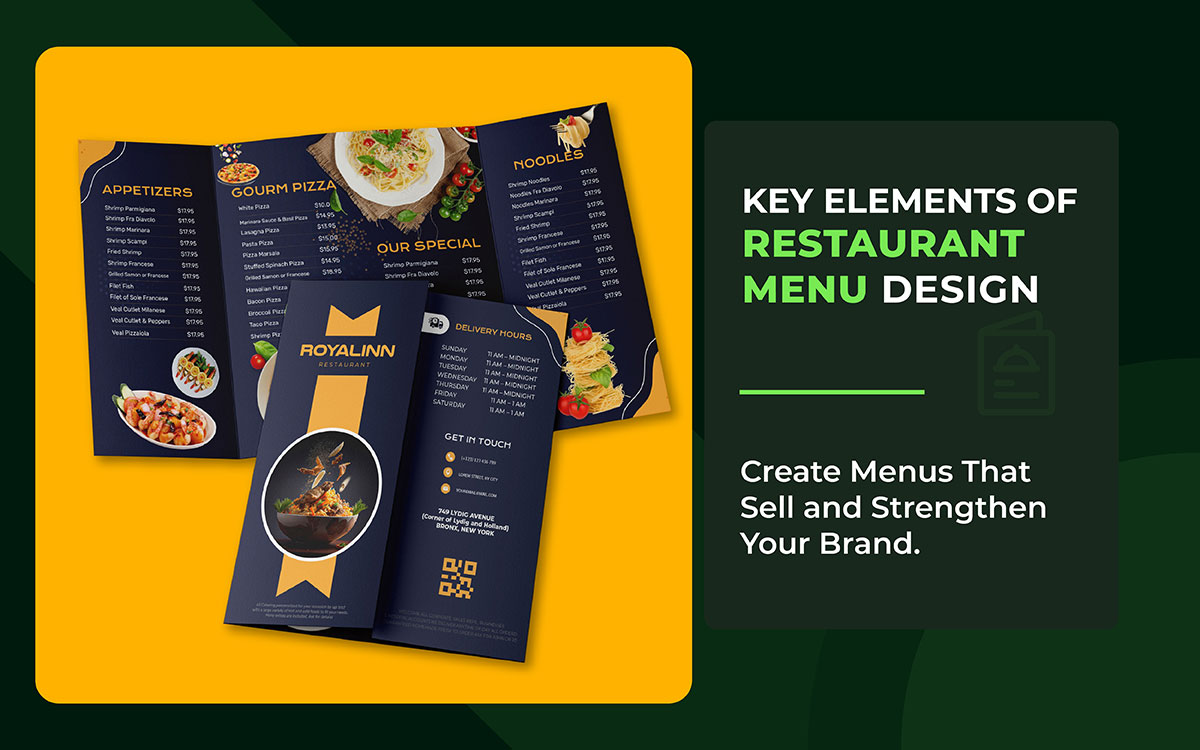
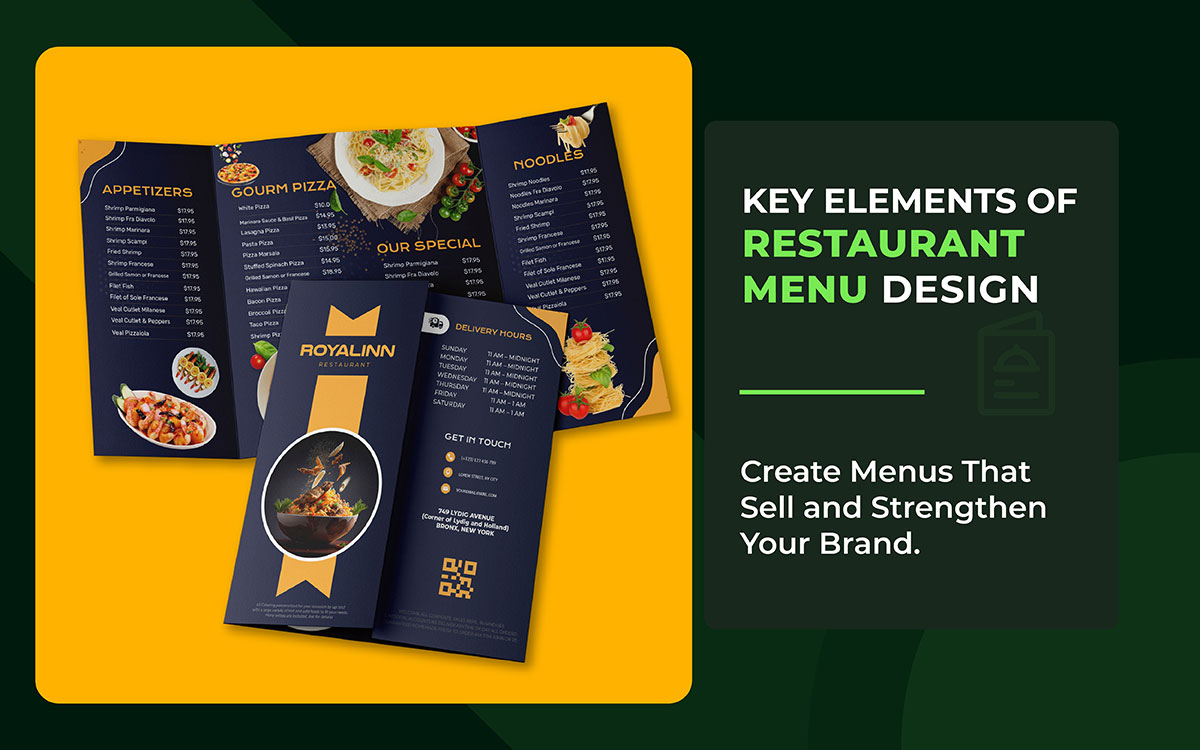
To leave a lasting mark on your guests, your menu must accomplish two things simultaneously. It must be crystal clear and it must be visually stunning. These key elements of restaurant menu design form the living heart of a powerful food brand. When your page is effortless to read, guests feel confident in their choice, and confident guests are happy to spend.
Also, the way you plan your layout fundamentally shifts how people perceive your value. It elevates the dining experience, multiplies your revenue, and keeps your brand living in a guest’s memory long after they have settled the bill.
The following table summarises how each key element of restaurant menu design directly impacts your sales, your guest experience, and ultimately, your brand strength:
| Design Element | Primary Impact | Key Benefit |
|---|---|---|
| Visual Hierarchy | Guides eye to high-margin items | Increased average order value |
| Typography | Builds readability and trust | Reduced ordering friction |
| Colour Psychology | Triggers appetite and emotion | Higher perceived value |
| Copywriting | Creates desire and justifies price | Up to 27% sales uplift per dish |
| Pricing Strategy | Reduces pain of paying | Higher check totals |
| Photography | Provides visual proof | Up to 30% more orders |
| Organisation | Reduces decision fatigue | Faster table turnover |
| Material & Format | Anchors brand perception | Stronger brand loyalty |
Let’s explore each element now!
Think about it. When a guest opens your menu, they do not read it like a book, from top-left to bottom-right, word by word. No. Their eyes dance. They scan. They land on certain spots instinctively, almost magnetically. And that instinct? It is your greatest weapon.
A menu is not just a list of dishes. It is a smart GPS for hunger. Effective and creative layout design uses the science of human behaviour to “nudge” guests toward the meals you want them to order, and it does this so gently that they never even realise it is happening.
Decades of eye-tracking research have revealed a fascinating truth about how we read menus. The eye follows a predictable path. It starts at the centre of the page, then moves to the top right, and finally settles on the top left.
And these three zones form what designers call the “Golden Triangle,” and they are the prime real estate of your menu. Your most profitable dishes must live here. If a guest’s eye lands on these items first, they are far more likely to order them. It is not manipulation; it is intelligent design.
You can transform your menu into a quiet but relentless sales tool by following these proven principles. And if you are just beginning this journey and want a complete roadmap from blank page to finished layout, learning how to design a menu for a restaurant will give you the full picture before you start making decisions.
Typography is not decoration. It is a visual language that builds or destroys trust in a single glance. If a guest has to squint, tilt, or struggle to decipher your dish names, something terrible happens. They stop thinking about food and start thinking about the struggle. And a distracted guest is a guest who orders the cheapest thing and never comes back.
The right font acts as the narrator of your brand’s story. It must balance aesthetic beauty with the non-negotiable need for clarity, and understanding what typography truly means in graphic design will sharpen your eye for the details that separate an amateur menu from a professional one.
Colour is not just a branding choice. It is a biological trigger. Before your guest reads a single word on your menu, the colours on the page have already begun their work: influencing appetite, shaping expectations, and anchoring the perceived value of every dish. This is the fastest, most primal way to set flavour expectations and emotional tone.
Here is a question that might change how you think about your menu forever. What is the difference between “cooked chicken” and “slow-braised free-range chicken with a rosemary-infused jus”?
The answer is not the chicken. It is the story. Copywriting is the invisible bridge between a list of ingredients and a premium dining experience. The right words do not just describe a dish. They justify its price, ignite desire, and create a flavour experience that begins in the mind before the plate ever arrives.
Pricing is not mathematics. It is psychology. The way a price appears on your menu changes how your guest feels about the value of the entire experience. A smart pricing strategy reduces the “pain of paying” and gently guides the guest toward high-value, high-margin selections without them ever feeling pressured or manipulated.
They say we eat with our eyes first. And in the world of restaurant menu design, this is not a cliché; it is a scientific fact. Visual content is one of the highest-stakes elements of your menu. When done well, it can drive massive sales increases. When done poorly, it can single-handedly destroy your brand’s credibility.
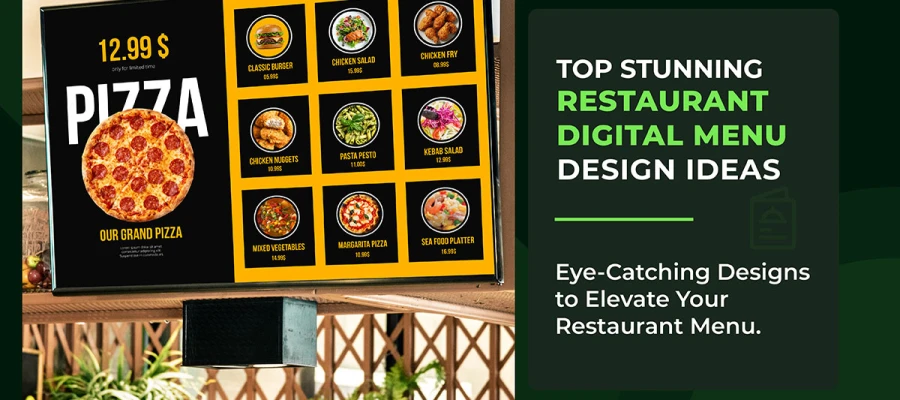
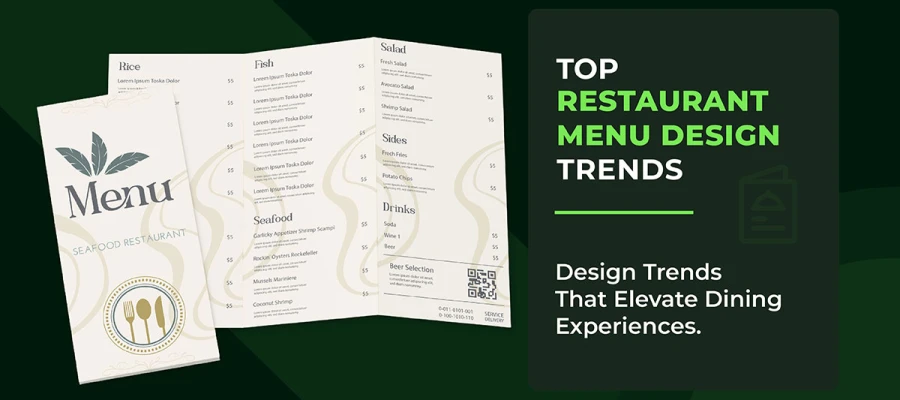
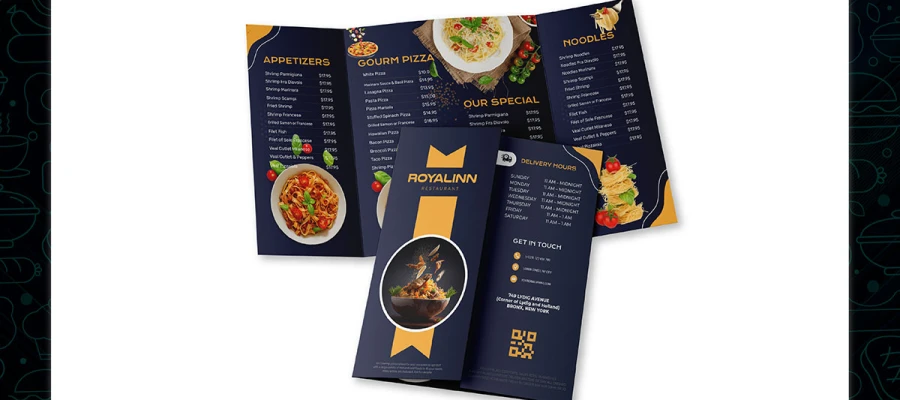
Sometimes, the best way to decide between photography, illustration, and minimalism is to see what already works in the real world. Exploring proven restaurant menu design ideas can spark the visual direction your brand has been searching for.
A beautifully designed menu with terrible organisation is like a symphony played in the wrong order. All the right notes, none of the magic. The structure of your menu should mirror the natural rhythm of a meal, guiding the guest effortlessly from the first sip to the final bite.
The format and material of your menu is the final, tangible expression of your brand’s promise. Whether physical or digital, this “vessel” communicates your quality, your attention to detail, and your respect for the guest before they have tasted a single morsel. Think of it as the first physical handshake between your kitchen and the person sitting at the table.
The weight of the paper, the texture of the cover, the feel of the binding: these sensory details send powerful signals about the price point guests should expect. A heavy leather-bound menu makes a £50 steak feel “correct.” A thin, sticky laminated sheet makes a £15 burger feel overpriced. This is sensory priming at its most practical.
When your menu, your website, and your signage all speak the same visual language, guests trust you before they even taste the food. For restaurants ready to build that kind of consistency across every touchpoint, investing in a thoughtful branding design is the foundation that makes everything else fall into place.
We know you still have questions burning in your mind. Here are the most common ones we hear from restaurant owners, hospitality brands, and designers who are ready to transform their menus:
The eight key elements are visual hierarchy and layout, typography and readability, colour psychology, menu descriptions and copywriting, pricing strategy and presentation, photography and visual content, menu organisation and item sequencing, and material, format, and brand alignment. Together, these elements transform your menu from a passive list into an active, revenue-driving sales tool that strengthens your brand identity with every guest interaction.
Visual hierarchy controls where your guest’s eye lands first. By leveraging the “Golden Triangle” principle, which places your highest-margin dishes at the centre, top right, and top left of the page, you can significantly increase the likelihood that guests will order these items. Combined with isolation techniques like borders and white space, visual hierarchy turns your menu into a strategic guide that quietly directs spending.
It depends on your brand positioning. For fast-casual and digital menus, high-quality food photography can increase orders by up to 30%. However, for fine-dining establishments, the absence of photos can actually elevate perceived value by encouraging guests to use their imagination. The golden rule: if you use photos, they must be professionally shot, consistently styled, and beautifully lit. Low-quality images are worse than no images at all.
The most effective approach combines several psychological principles: remove currency symbols to reduce the “pain of paying,” use charm pricing in casual settings, anchor each category with a high-priced item to make other options feel like a great deal, and scatter prices at the end of descriptions rather than aligning them in a column. For fine dining, clean round numbers communicate confidence and quality.
The optimal range is four to six starters, six to ten mains, and four to five desserts. This provides enough variety to satisfy diverse tastes without triggering choice paralysis. Seasonal menus that rotate regularly tend to outperform large, static menus because they signal freshness, culinary skill, and a commitment to quality.
Warm colours like red and orange stimulate appetite and work beautifully for high-energy, fast-casual brands. Green signals freshness and health, making it ideal for farm-to-table concepts. Black and gold communicate luxury and exclusivity. Blue should generally be avoided in food branding, as the brain associates it with spoiled or unnatural food, unless you are a seafood brand leveraging ocean associations.
Typography directly affects readability, trust, and brand perception. A guest who struggles to read your menu stops thinking about food and starts thinking about the struggle. Use at least 11pt for body text, limit yourself to two font families, and maintain a 4.5:1 contrast ratio for legibility in all lighting conditions. The font you choose is the voice your guest hears with their eyes.
Start by ensuring visual cohesion across all touchpoints: your menu’s colour palette, typography, and voice should match your website, social media, and physical signage. Place your logo prominently at the top of the first page. Choose materials and formats that reflect your price point, such as leather for fine dining and clipboards for casual, and maintain a consistent tone from the first word to the last. A menu that feels like it belongs to a different brand than your website erodes trust.
The Golden Triangle refers to the three zones where a guest’s eye naturally lands first when opening a menu: the centre, the top right, and the top left. Eye-tracking research has consistently confirmed this pattern. By placing your most profitable and most desirable dishes in these zones, you dramatically increase the chances of those items being ordered.
At a minimum, review your menu design seasonally to reflect ingredient availability and shifting guest preferences. However, the underlying design principles, including visual hierarchy, typography, colour psychology, and pricing strategy, should be evaluated annually with fresh sales data to ensure your menu continues to maximise revenue and brand alignment. Restaurants that treat their menu as a living, evolving document consistently outperform those that set it and forget it.
If you have read this far, something tells us you are not the kind of restaurant owner who settles for “good enough.” You understand that every detail matters, from the salt on the rim to the spacing on the page. And that is exactly the mindset that separates the restaurants people forget from the restaurants people recommend to everyone they know.
When you master the key elements of restaurant menu design, you do not just sell more food. You create experiences. You build loyalty. Thus, you turn guests into advocates.
So, do not let your menu be an afterthought.
Well, subscribe to our creative brief. Get weekly breakdowns on font psychology and "golden triangle" layout hacks. Learn about the latest sustainable printing trends delivered straight to your inbox.
Also, Graphic Design Eye LLC provides custom menu design services that go far beyond simple layouts. We don’t use standard templates. Every category and description is built from scratch, crafted to match your food costs and your customers’ intent.
Our revenue-focused design approach ensures your highest-margin items get noticed first, right where diners’ eyes naturally go. We work alongside your kitchen operations so that what your guests read is exactly what they crave to order.
Your guests deserve a menu that is as unforgettable as your food. And you? You deserve the sales, the recognition, and the pride that comes from knowing every single detail of your restaurant tells the same beautiful story.