TL;DR
Looking for the key differences between embroidery vs screen printing and which one is actually right for your brand? If you're decorating custom apparel, this single decision shapes how your brand looks, how long it lasts, and what it costs. Get it wrong, and you're either overpaying for something your audience barely notices or undermining a premium brand with a finish that doesn't hold up.
 Business
 Mar 12,2026
 17 minutes
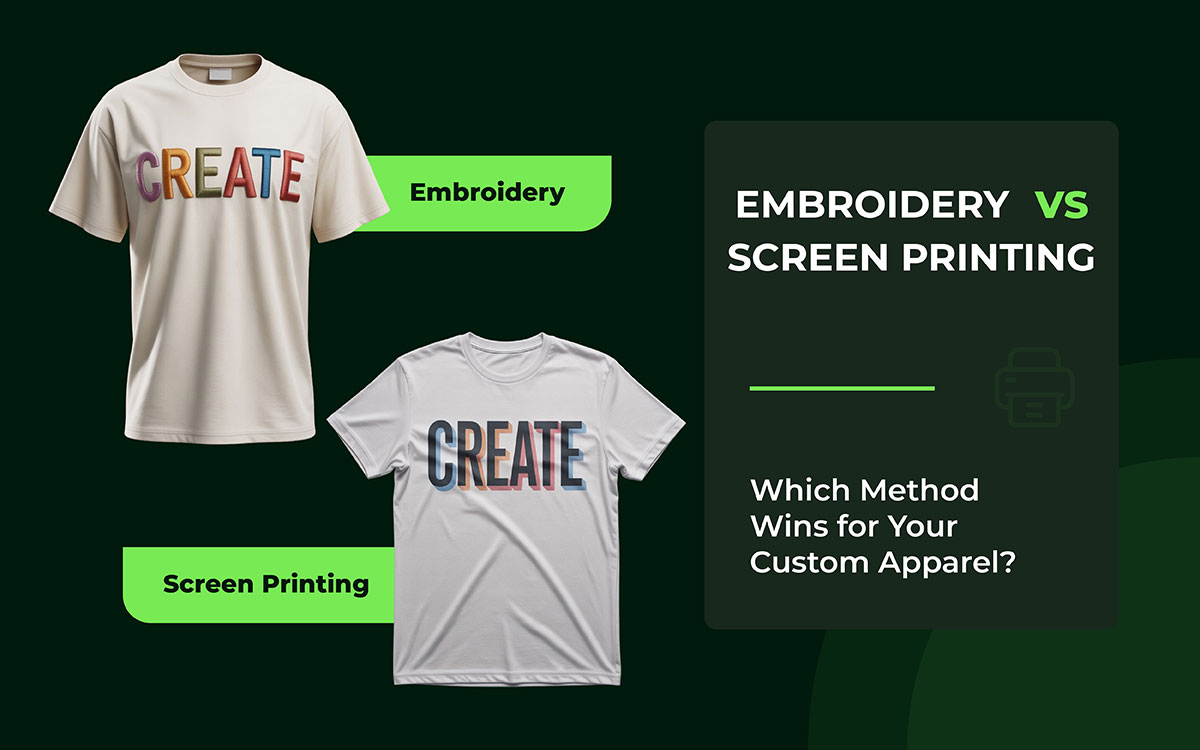


Embroidery builds designs using stitched thread, creating a textured, three-dimensional finish that reads as premium and professional. You'll often spot it on polos, hats, jackets, and corporate uniforms.
Screen printing works differently. It applies ink directly to fabric through a stencil-based process, making it ideal for bold graphics, large-scale artwork, and high-volume runs.
So which printing technique comes out on top? There's no single answer. The right choice depends on design complexity, fabric type, order quantity, budget, and the overall aesthetic you're going for.
This guide breaks down the core differences between embroidery and screen printing, weighs the pros and cons of each, and gives you the clarity to choose the best decoration method for your next custom apparel.
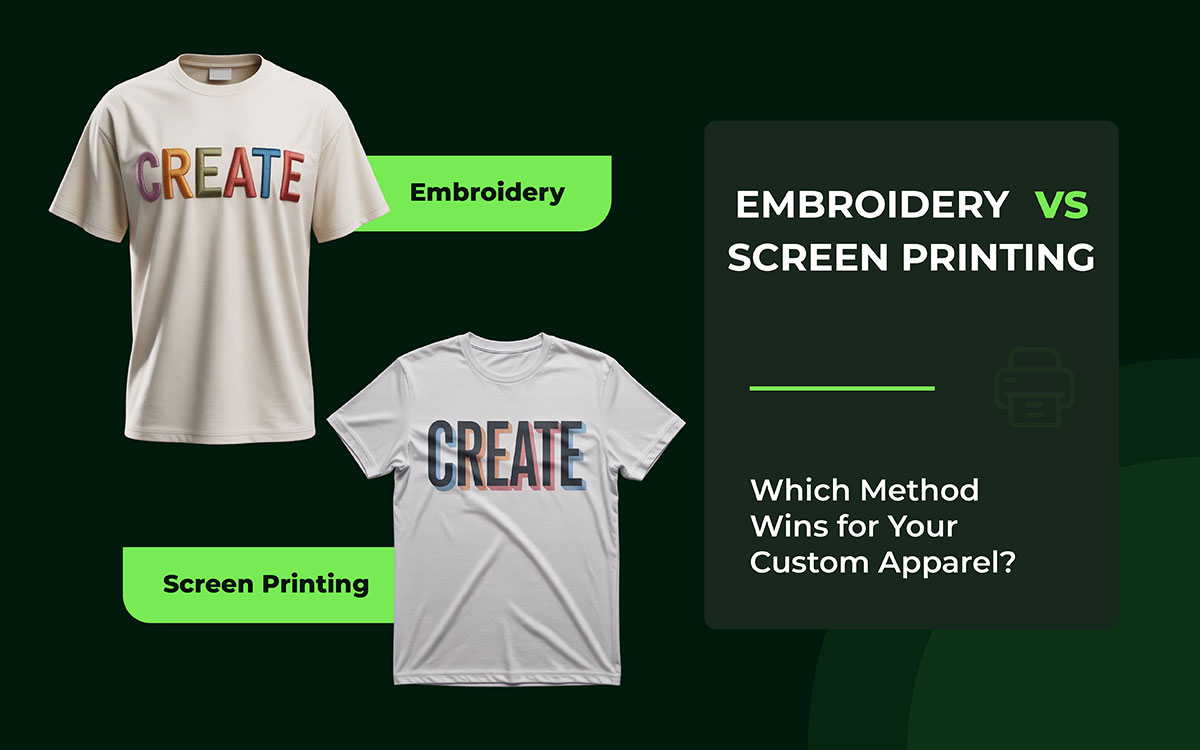
What's the difference between screen printing and embroidery for custom clothes? Embroidery uses real thread sewn into fabric, so your design looks raised and textured. It holds up really well over time, which makes it perfect for logos on polos or jackets.
Screen printing is different. It pushes ink onto fabric to create bright, flat designs. This works best on t-shirt designs and big batches of promotional items.
Price is a big deal, too. Screen printing gets cheaper the more you order. Embroidery looks fancier but costs more for each item.
Here is a quick comparison overview of the detailed comparison of embroidery vs screen printing that follows:
| Aspect | Embroidery | Screen Printing | Winner |
|---|---|---|---|
| 1. Cost Comparison | Higher per piece; setup involves a digitizing fee. Better for small runs with predictable pricing. | Lower cost per unit in bulk; setup cost per color makes small orders expensive. | Embroidery for small runs, Screen Printing for bulk |
| 2. Design Capabilities and Creative Limitations | Best for simple, bold designs. Struggles with tiny text, intricate detail, and very fine lines. | Handles detailed artwork, thin lines, and complex compositions with precision. | Screen Printing |
| 3. Color Flexibility and Gradients | Typically supports 12–15 thread colors; gradients appear stepped rather than smooth. | Allows smooth gradients, color blending, and photo-realistic prints. | Screen Printing |
| 4. Best Method for Logos vs Complex Artwork | Ideal for clean logos and professional branding. | Better for complex artwork, shading-heavy designs, and illustrations. | Embroidery for logos, Screen Printing for complex art |
| 5. Material & Fabric Compatibility | Works best on thicker, stable fabrics that can support stitching. | Performs best on smooth, flat fabrics that allow even ink application. | Depends on fabric; Embroidery for thick, Screen Printing for smooth/soft |
For small orders under 50 pieces, embroidery is usually the better choice. You'll pay around $8–$15 per item, plus a one-time fee of $20–$100 to turn your design into a stitch pattern.
Screen printing works differently; the more you order, the cheaper it gets. At 100+ items, prices drop to $3–$6 each, though setting up the screens costs $20–$50 per color. Where you buy also matters; some East Coast shops charge more for shipping, while California suppliers often offer discounts on large orders.
If you're just starting a small business, embroidery can be a great fit. Pricing is based on stitch count, so there are no surprise costs. Screen printing gets more expensive with each additional color in your design.
Setting up embroidery for a simple logo costs about $50, making it perfect for testing a new brand. But once you hit 250 pieces or more, screen printing becomes the smarter move.
Automated machines can cut costs by 30–40%, based on bulk calculators from suppliers like Underground Shirts. Just keep an eye out for extra charges like design edits.
The debate of embroidery vs screen printing really comes down to one question: how many items do you need? Let’s have a quick glance at the chart first.
| Order Size | Embroidery Cost (per item) | Screen Printing Cost (per item) | Best Pick |
|---|---|---|---|
| 1–24 | $8–$15 | $15–$25 | Embroidery |
| 25–100 | $8–$12 | $5–$10 | Screen Printing |
| 100+ | $8–$10 | $3–$6 | Screen Printing |
When it's all said and done, your order size drives everything.
Starting with embroidery means turning your design into a stitch pattern. This step is called digitizing, and it costs between $20 and $100 in the US. Simple logos typically cost under $20, while detailed designs cost more. You only pay this fee once.
Since embroidery uses thread instead of ink, adding more colors doesn't cost extra. Tools like Wilcom even use AI to speed up the process, allowing designs to be approved quickly.
Screen printing works differently. Every color in your design needs its own mesh screen, and each one costs $20 to $50 to make. You'll also need film positives, which run about $10 to $20 each.
These costs all hit before you print a single shirt. The upside is that screens can be reused for later orders, which saves money down the road.
So which one costs less to start? For small orders, embroidery usually wins. You pay a single digitizing fee, and you're set.
Screen printing gets expensive fast when your design has multiple colors. Small business owners have brought this up a lot recently.
If you're not ordering in bulk, paying one setup fee for embroidery is much easier on your wallet than buying a whole set of screens every time you try a new design.
Are you having big orders of 100 shirts or more? Screen printing is your best bet. On Gildan tees, you can pay as little as $3.75 per shirt, even with multiple colors.
The setup fee gets split across every shirt, so ordering 500 or more can cut your costs by 35–40%. Embroidery looks cleaner and lasts longer, but expect to pay $10–$20 per piece since it takes much more time to produce.
Small orders of 10–50 pieces are where embroidery really shines. Each item usually costs around $10–$15 after the one-time setup fee, which is pretty reasonable.
Screen setup alone is expensive, pushing the price to $15–$25 per item for small quantities. That's just not worth it when you're only ordering a few pieces.
Another plus with embroidery is that adding more colors doesn't raise the price. You always know what you're going to pay. That makes it a solid option for US startups still finding their footing.
Screen printing rarely makes sense for small runs, and most printing companies won't accept orders under 100 pieces. With embroidery, you can order a single piece without spending a fortune.
Wondering how embroidery and screen printing differ for custom clothes? Screen printing rocks for wild, colorful art like fades, pics, and vivid tees. Embroidery adds a bumpy, fancy feel, but it flops on fine bits and soft color shifts. It shines with big logos in up to 15 shades.
2024 Kornit stats show screen printing nails tricky patterns, while embroidery pops with its 3D vibe. Now for real tips. Got merch for a Chicago bash? Screen printing handles hot gradient looks, even AI-style ones that slay on Insta.
Embroidery feels posh and fits company shirts. Skip text under 0.25 inches; it scrunches and blurs. New embroidery from packs tons of choices, rivaling screen printing's blends. In Adobe Illustrator, screen printing does dotted shades, but embroidery needs basic shapes to avoid thread clumps.
Pick screen printing for loud, creative, big prints. Go for embroidery for a sleek, sharp look. Picking right boosts your gear big time.
Screen printing lets you use almost any color you can think of. You can blend colors smoothly and even print images that look like real photos. That makes it perfect for bright, bold promo T-shirts.
Embroidery is a whole different story; it usually only works with 12 to 15 thread colors, and mixing them isn't really possible.
Printful added some new tricks in 2025 that let embroidery handle basic gradients, but it still can't match screen printing for smooth color blending. Instead of a clean fade, embroidery tends to create a "stepped" effect, almost like a staircase of color.
Kornit actually highlighted this exact issue in their 2024 comparisons. So if bold, vibrant colors are your top priority, screen printing is the clear winner.
Embroidery is perfect for simple logos on work polos. The stitches look clean, hold up over time, and extra colors don't cost you more. But if your design includes photos or heavy shading, go with screen printing instead. It captures fine details way better and is cheaper when the artwork gets complicated.
WhCustom's 2024 guide puts it simply: embroidery keeps things neat and minimal, while screen printing handles the complex stuff with no real restrictions.
Which fabrics work best for embroidery vs screen printing in US custom apparel? Embroidery requires thick, strong fabrics such as cotton or denim. These hold the stitches firmly in place.
Screen printing works better on smooth cotton-poly blends because ink sticks cleanly to flat surfaces. The key is pairing the right method with the right fabric. Never use stretchy athletic wear for embroidery; it bunches up and looks bad.
Say you're making jerseys for a Florida sports team. Screen printing is the smarter choice because it works great on light, breathable fabrics and stays bright without cracking.
Embroidery looks clean on heavier fabrics like twill, which is why Midwest uniform suppliers prefer it, but it can damage thin or delicate materials. Right now in the US, eco-friendly fabrics are a big trend, and both methods pair well with organic cotton. That said, screen printing works better on synthetic fabrics, especially for activewear.
Always test samples before going all in. Fabric weight matters more than people think. Embroidery usually needs at least 6 oz fabric to look right.
Got heat-sensitive performance gear? Screen printing handles those materials better, especially with water-based inks, which are popular in eco-conscious US markets.
Choose the right fabric and method together, and your product will last longer, feel better, and show up in searches like "custom US t-shirt fabrics."
Still confused about how to choose the right method between embroidery vs screen printing? Ask yourself a few things:
These factors all tie into what your brand needs and what sells well in the US market.
Match your strategy with your main goals. Your choice shapes how customers view you and how much you pay. Nail this, and you'll get way more for your money.
For branding, choose embroidery. The stitched design looks clean and sharp, and it holds up really well over time. It's great for putting restaurant logos on polo shirts.
The design stays looking fresh even after tons of washes. Screen printing is solid for laid-back brands that want bright, eye-catching graphics, but it just doesn't have that polished, upscale look that embroidery pulls off.
Go with screen printing for promos; it's cheaper when you order in large quantities. It's perfect for turning eye-catching branded t-shirt designs into actual merch that people love wearing, helping more people notice your brand.
Embroidery looks more polished and is great for special giveaways. But if you need hundreds of pieces, the cost quickly climbs.
For merch, screen printing works best for casual items like hoodies. It's cheap and makes colors look bright, which is great for busy places.
Embroidery is better for high-end items like caps, since the stitched, textured look feels more premium and lets you charge higher prices. A 2026 Underground Shirts report found that branding this way can raise profit margins by 15–20%.
Use embroidery for firm items like hats and jackets, and screen printing for softer everyday pieces like t-shirts. Your designs will look cleaner and hold up better over time.
So, what is the best method between embroidery vs screen printing for t-shirts?
The answer is, screen printing is awesome for t-shirts and casual American clothing. The ink sinks into cotton, making bright, bold designs that move with you without cracking. It works especially well for restaurant promo tees in hot, humid places. It can even pull off smooth color gradients.
Embroidery, though, tends to make fabric feel stiff and heavy.
Choose embroidery for hats, polos, and work uniforms. The stitched design looks clean and stays strong on thick fabrics like twill. It works really well for fancy restaurant logos.
Screen printing, on the other hand, struggles on curved surfaces and often blurs small details.
Embroidery is a solid choice for uniforms and work clothes. The stitching is tough and holds up well, especially on thick cotton. It looks sharp, feels premium, and the colors stay bright for a long time.
Screen printing can work on lighter uniforms, too, but it tends to wear out faster than embroidery.
What's the best way to print on clothes based on how much you're ordering? If you need fewer than 50 pieces, embroidery is your cheapest option. The setup cost stays the same whether you buy 5 or 50, so it works well for small orders. But if you need more than 100 pieces, screen printing cuts the per-item cost way down.
Matching your order size to your budget helps your money go further. Embroidery is a smart pick for small businesses still finding their footing. Screen printing makes more sense for larger brands that sell regularly.
For small US businesses, embroidery is often the smartest move. Getting your design ready costs between $20 and $100, and each item runs about $10–$15 for orders under 50 pieces. Screen printing can charge $20–$50 for just one color, so embroidery is clearly the better option when money is tight. It's a low-risk way to try selling merch without spending a fortune.
The finished product looks really good, too. Embroidered logos are raised and textured, which makes your brand feel more legit and trustworthy. You don't have to order a huge pile of items just to get started, which is a big deal when your business is still new.
Embroidery works well even for single orders, giving small businesses more flexibility and less financial stress. Add AI design tools like Adobe to build your visuals quickly, and you've got a strong game plan for attracting customers and making those first sales.
For large US companies ordering over 100 items, screen printing is the smartest choice. Each item costs just $3–$6, saving you 30–40% compared to other methods.
Setup fees run about $20–$50 per color, but when you split that across a big order, it barely affects the price. It handles bold, colorful designs on t-shirts and hoodies really well, and machines do most of the work, so your order gets finished quickly.
Costs stay low, orders scale up easily, and the returns are solid. Embroidery doesn't stand a chance here. It costs $10–$20 per piece, or more, which gets painful fast when you're buying in bulk.
Learn the main differences between embroidery and screen printing for custom clothing. From how long they last and what they cost, to how well they work on hats and photos, get the answers you need to pick the right method for your project.
There's no clear winner. Embroidery feels premium and lasts well on logos. Screen printing gives you bright, bold colors and works great for everyday clothing.
Embroidery usually wins here. It doesn't fade or crack, even after 50+ washes. Screen printing holds up too, but colors can fade with frequent washing.
Totally. Screen printing looks sharp on baseball caps. Many USA brands use it for bold, eye-catching logos. It works well on cotton hats and blends, and it won't break the bank.
Yes, embroidery costs more. Each item can run around $8 because of the setup and stitching involved. Screen printing is cheaper in bulk, often just $2–3 per item for 100 or more.
Yes! Special software like PaintStitch turns photos into realistic embroidery using blended stitches. It's a cool way to create personal, one-of-a-kind apparel pieces.
Go with embroidery for small batches of 1–24 items. Setup costs are lower. Screen printing makes more sense once you hit 25+ pieces, since the cost spreads out.
Yes, and it looks amazing. Screen print the background, then embroider the details on top. Many custom design shops across the USA do this using special inks and alignment tools.
You now have what you need to stop guessing and declare a winner in the battle of embroidery vs screen printing. Neither embroidery nor screen printing always wins the battle.
Embroidery is great when you want something that lasts, looks high-end, and works well on things like polos, hats, and work uniforms. Screen printing is the move when you need bright, bold designs, large orders, and greater flexibility for everyday clothing.
Your budget, fabric type, order size, and brand vibe all point you toward the right answer. And now you know how to figure that out.
Your next step is probably to print an artwork. This is where most brands waste money. They pick a wrong design for the printing method they chose.
A design that isn't set up properly for embroidery or screen printing ends up costing more.
Graphic Design Eye LLC delivers creative services built specifically for businesses that need print-ready artwork, keeping the process smooth and cost-effective from the very first proof. Producing promotional items, too? Check out our custom t-shirt design service while you're at it.
Nail the design upfront, and every step after becomes effortless. Reach out today, and let's make your entire production workflow a whole lot easier.