When your brand has to look right, feel right, and last, what’s the best fabric for t-shirts for durability and style?
 Business
 Jan 20,2026
 17 minutes


The best fabric fits how the shirt will be worn. It should feel good on the skin. It should last long. It should hold prints well. It should align with how you want your brand to feel.
A fabric may look perfect in a design mockup but fail in real-world use. Heat can ruin it. Movement can stretch it out. Washing can fade it fast. Long outdoor workdays can make it uncomfortable. When fabric fails, people notice. Over time, it hurts the trust in a brand.
A good fabric does the opposite. It fades into the background. It supports the design and feels right all day.
In this guide, we’ve listed T-shirt fabric types based on real-world performance. You’ll learn how each fabric feels, wears, washes, and prints, and which materials suit different climates, usages, and brand styles. By the end, you’ll know how to choose the right fabric for everyday wear, outdoor use, or premium brand positioning.
Keep reading!
Cotton, polyester, cotton-poly blends, tri-blends, linen, and bamboo are the top choices for t-shirt fabrics. Each has unique benefits for achieving high-quality print t-shirts.
Choose based on your printing method, budget, and whether you want eco-friendly, premium, or everyday wear T-shirts.
Now, we break down the top 6 best fabric for T-shirts for printing, and determine which material works best for different printing uses.
Let’s learn them one by one in detail:
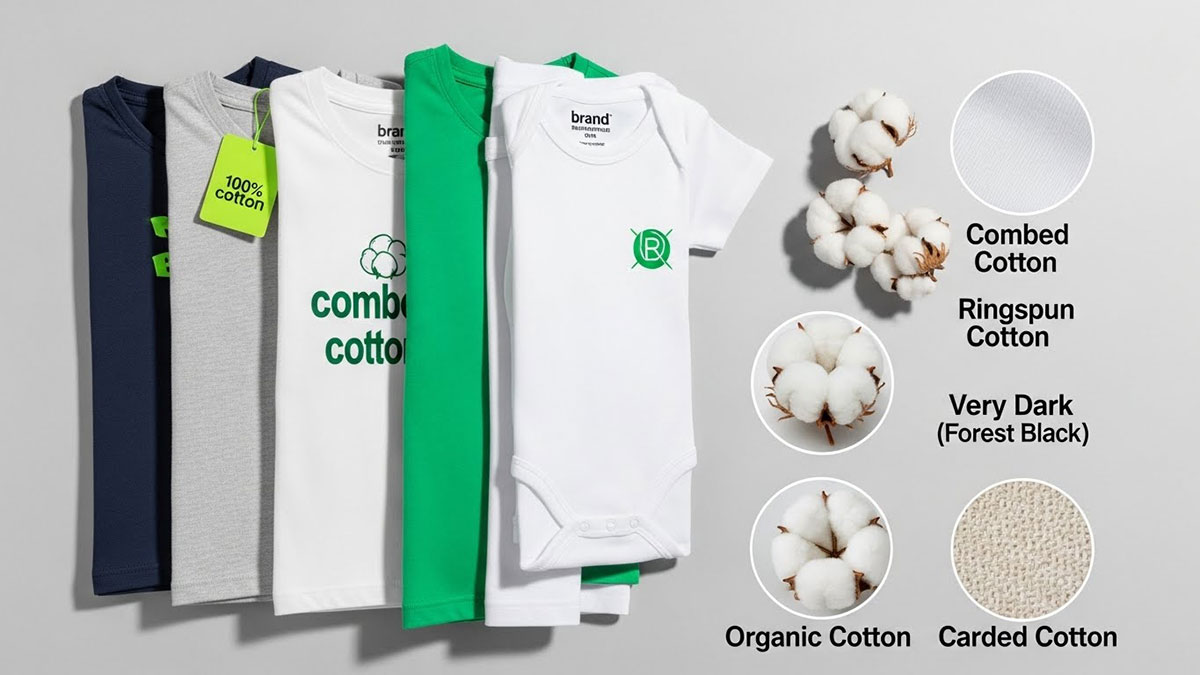
Many companies choose 100% cotton first. It’s the best material for t-shirts because it's soft and comfortable. It is also natural and popular. As a result, brands can sell it at a higher price. Cotton is gentle on the skin and rarely causes allergies. This makes it great for baby clothes and underwear.
It’s also the best fabric for t-shirts in hot weather. Cotton lets air pass through and absorbs sweat. That is why cotton garments are too comfy in summer.
For businesses, cotton offers both comfort and quality. It absorbs dye well and keeps its color for a long time. With proper care, cotton stays strong and lasts longer. This leads to fewer returns and happier customers.
Over time, people trust the brand more. Organic or sustainable cotton adds extra value. It helps brands look eco-friendly. This also attracts buyers who care about the planet.
Cotton is also highly flexible in its use. It works for clothing and home items, such as bed sheets and towels. It is common in promotional goods as well. Some medical and industrial products also use cotton. As a result, brands can use a single material across multiple products.
Cotton is a product with substantial business advantages. However, businesses need to handle care and production-related issues properly.
| Pros | Cons |
|---|---|
| ✅ High consumer demand for natural comfort | ❌ Wrinkles and shrinkage are common |
| ✅ Hypoallergenic and skin-friendly | ❌ Higher care expectations than some synthetics |
| ✅ Breathable and moisture-absorbing | ❌ It may be more expensive than fabrics made from blends or synthetics |
| ✅ Soft, natural feel increases customer loyalty | ❌ Cotton requires careful handling if you want to keep it for a long time |
| ✅ Good dye absorption and color retention | ❌ Cotton may need additional finishing for luxurious textures |
| ✅ Versatile for multiple product lines | ❌ Cotton dries a bit slower than synthetic fibers |
| ✅ Supports sustainability messaging |
Best Suited For:
Polyester is one of the most common fabrics in the world. It’s inexpensive and easy to produce in large quantities. This makes it perfect for big clothing brands.
For businesses, polyester is very useful. It keeps production costs low and allows companies to produce large quantities of clothing quickly. Its raw materials cost less than many natural fabrics. It helps brands increase profits, especially in fast fashion and mass-market clothing.
Polyester is widely available worldwide. This means companies don’t have to worry about running out of it. They can plan their production without problems.
Polyester is also strong and lasts a long time. It doesn’t shrink, stretch, or wrinkle easily. Clothes made from polyester can be washed often without losing their shape. This makes them look new for longer.
Because of this, customers are happier and return fewer items. Polyester dries fast and handles sweat and moisture better than many natural fabrics.
These qualities enable brands to develop additional product types as well. They can use polyester for sports clothes and technical gear without changing the fabric.
Polyester offers substantial commercial advantages, but brands must manage customers' comfort and sustainability expectations carefully.
| Pros | Cons |
|---|---|
| ✅ Low production cost increases profit margins | ❌ A fiber made from petroleum raises sustainability concerns |
| ✅ A stable global supply supports large-scale production | ❌ It can feel less breathable than natural fibers |
| ✅ Very durable and long-lasting | ❌ The low absorbency may make it less comfortable in a hot place |
| ✅ Resists shrinking, wrinkling, and wear | ❌ Microplastic concerns require transparency |
| ✅ Quick drying and moisture management | ❌ Needs blends or finishes to become softer |
| ✅ Good color and shape retention | ❌ Eco branding requires recycled options |
| ✅ Easy to blend with cotton or spandex |
Best For:
Cotton-polyester blend fabric is designed to be comfortable, durable, and affordable. It mixes natural cotton with synthetic polyester. This mix costs less than using only cotton.
Because of the blend, the price stays more stable over time. Companies can plan their budgets better. Large or repeat orders benefit most from this.
The fabric is easier to work with during production. It shrinks less and keeps its shape when cutting and sewing. It also means less waste and fewer mistakes in making clothes.
This fabric is stronger than pure cotton. Polyester makes it more challenging, prevents color fading, and resists wear. Cotton keeps it soft and breathable, so it feels nice to wear every day.
It doesn’t wrinkle easily and dries faster. That makes it easy to manage. People like it, and businesses like it too. It’s great for uniforms and large textile orders.
Because it is comfy, strong, and efficient, the cotton-polyester blend is trusted by many. It gives consistent quality while keeping costs reasonable.
Cotton-poly blends offer substantial value for many business models. But some trade-offs must be managed based on climate, customer expectations, and sustainability goals.
| Pros | Cons |
|---|---|
| ✅ Lower cost than 100% cotton | ❌ Less breathable than pure cotton |
| ✅ More stable pricing for forecasting | ❌ Harder to recycle due to mixed fibers |
| ✅ Durable and abrasion-resistant | ❌ Can feel slightly synthetic if poly is high |
| ✅ Less shrinkage and pilling | ❌ Not ideal for extreme heat |
| ✅ Better color retention | ❌ Sustainability claims need care |
| ✅ Easy care and wrinkle resistance | ❌ Comfort depends on the blend ratio |
| ✅ Faster drying and stain resistance | ❌ May build static in dry conditions |
Best For:
Tri-blend fabric blends three fibers: cotton, polyester, and rayon. The three fibers are primarily responsible for the final fabric's performance. For instance, cotton provides the softness and breathability people expect from standard t-shirts.
Polyester makes the shirt strong, keeps it in shape, and also reduces wrinkles. As a result, the garment is designed to last longer and remain fresh even after multiple washes.
Rayon provides a soft, lightweight feel and a natural drape. It thus makes the fabric look cleaner and more luxurious. From a business perspective, tri-blend fabric is a clever product that lies between two extremes. On the one hand, it is softer and more fashionable than ordinary cotton.
On the other hand, it is still better performing and more durable in everyday use. This equilibrium allows brands to set tri-blend T-shirt prices higher while still meeting comfort expectations.
The fabric is perfect for casual wear, athleisure, and light premium fashion. Therefore, companies can access different markets without frequently changing suppliers or production facilities.
Tri-blend has substantial commercial advantages, but like any fabric, it also has some points that companies need to manage carefully.
| Pros | Cons |
|---|---|
| ✅ Very soft, smooth, and lightweight feel | ❌ Costs typically a little more than basic cotton |
| ✅ Better durability than pure cotton | ❌ Breathability is dependent on the fiber ratio |
| ✅ Holds shape and resists shrinking | ❌ Inconsistent blends can result in lower quality |
| ✅ Looks stylish with natural drape | ❌ More rayon content may raise the cost |
| ✅ Prints and colors are accepted very well | ❌ Need for clear labeling and quality control |
| ✅ Feels more premium to the customers | ❌ Not suitable for very low-budget products |
| ✅ Can be used for a wide range of product categories |
Best For:
Linen is among the best fabrics for t-shirts. It’s made from flax and is a natural, eco-friendly fabric. Flax requires very little water and almost no chemicals.
Linen clothing and home items are fully biodegradable and recyclable, making them an excellent way for your brand to stay green. Certificates such as OEKO-TEX, TEX, or European Flax give customers not only safety and trust but also peace of mind when buying from you.
Linen is really comfortable to wear. It's lightweight and airy, keeping the body cool in hot weather. Also, it absorbs moisture quickly, is gentle on the skin, and is 100% natural, antibacterial, and antistatic.
Its natural appearance and soft drape not only make clothing and home items look more luxurious but also increase customers' willingness to pay a little more.
Linen is tough and durable, and is often longer than cotton. Additionally, it softens over time, making it feel better with continued use. So, there are fewer returns and less waste. Linen is highly versatile.
There is nothing that you cannot make out of linen, such as shirts, dresses, pants, bedding, curtains, and towels. That way, your eco-conscious brand can target more customers, regardless of age or gender.
Fabric Linen has a great potential to offer businesses unique advantages. However, it must be sourced carefully, and customers must be informed.
| Pros | Cons |
|---|---|
| ✅ Environmentally friendly, biodegradable | ❌ Goes at a higher price than cotton or quite a low-impact plastic |
| ✅ Aesthetic, natural, and of a kind nature | ❌ Has less elasticity and wrinkles easily |
| ✅ Breathable to the highest degree | ❌ Customer education on care is required |
| ✅ Absorbs moisture efficiently | ❌ May be softened by finishing |
| ✅ Hypoallergenic and antibacterial | ❌ More expensive blends may limit mass, market |
| ✅ Has strong, long-lasting fibers | ❌ |
Best For:
Bamboo fabric is an entirely natural and sustainable textile. It offers strong ecological advantages and high performance, making it a wise choice for businesses.
Brands can attract eco-conscious consumers while keeping costs reasonable. Bamboo is a fast-growing plant that requires very little water and is pest-resistant, without the need for chemical pesticides.
Moreover, it is soft and breathable. It is also good at managing moisture and has antibacterial properties. With this, companies can position their products as both premium and functional. Bamboo also blends easily with cotton, spandex, and other fibers.
It is suitable for a wide range of products from luxurious loungewear and baby clothes to sportswear. The fiber's flexibility can help the business grow by expanding its customer base and increasing revenue.
Furthermore, when sourced responsibly, primarily through closed-loop lyocell processing, bamboo can build brand trust. It aligns with honest marketing practices and, thus, represents an additional eco-conscious consumer value proposition.
Bamboo fabric provides strong business benefits. However, it is crucial to monitor the material's sourcing and processing closely. Here is a straightforward breakdown:
| Pros | Cons |
|---|---|
| ✅ Fast-growing and renewable, with lower agricultural costs | ❌ Not all bamboo fabrics are truly eco-friendly; processing can use harsh chemicals |
| ✅ Low water and pesticide requirements, sustainable sourcing | ❌ Viscose-type bamboo can shrink or require special care |
| ✅ Soft, breathable, and hypoallergenic premium customer experience | ❌ Higher production cost for closed-loop lyocell |
| ✅ Excellent moisture management & antibacterial, better performance & odor control | ❌ Mislabeling or greenwashing risks consumer backlash if claims are not verified |
| ✅ UV protection & temperature regulation added product value | ❌ Requires clear communication on care and durability |
| ✅ Versatile in blends, supports multiple product lines | ❌ Premium positioning may limit price, sensitive segments |
| ✅ Certifications like OEKO, TEX, credibility, and trust |
Best For:
When you pick the best fabric for t-shirts, don’t just think about the color combinations or the design. The fabric affects the shirt's comfort. It also affects how long your design will last without fading or cracking.
Here are some important considerations for choosing the right material for your t-shirt printing.
The fabric’s softness and texture determine how comfortable it feels against your skin. Cotton is the most common choice for its soft, breathable feel, while blends like cotton-polyester offer a smoother feel. For an ultra-soft touch, modal or bamboo fabrics are excellent options.
Fabric prices vary by quality and type. Basic cotton is affordable, while organic cotton, bamboo, and performance fabrics tend to be more expensive. Polyester is cost-effective and durable, but may lack the softness of cotton.
If you want a T-shirt that lasts longer, consider ring-spun cotton, combed cotton, or polyester blends. These fabrics resist wear and tear better than standard cotton. Heavier fabric weights (measured in GSM – grams per square meter) tend to be more durable.
For athletic or outdoor wear, choose moisture-wicking fabrics like polyester, bamboo, or blends. These materials help absorb sweat and dry quickly, keeping you cool. Cotton is breathable but absorbs moisture, which may not be ideal for intense workouts.
Natural fibers like 100% cotton are prone to shrinkage after washing unless pre-shrunk. Blended fabrics, especially poly-cotton mixes, resist shrinking and wrinkling, making them easier to maintain. Synthetic fabrics like polyester do not shrink but may feel less breathable.
For a more sustainable choice, opt for organic cotton, bamboo, or recycled fabrics. These materials have a lower environmental impact compared to synthetic fibers. Hemp and Tencel (lyocell) are also eco-friendly options with excellent durability.
Have you ever wondered which T-shirts last the longest, feel the softest, or look the best with prints? If you have, you’re in the right place.
Below, you’ll find answers to the most common questions about the best fabric for t-shirts. They cover everything you need to know to pick the right T-shirt.
Polyester and cotton, polyester blends are usually the fabrics that last the longest. They do not shrink significantly, are resistant to tearing, and retain their shape after multiple washes. That is why they are frequently used for everyday wear and work t-shirts.
Pure cotton (100%) is best for most printing methods. The fabric takes the ink very well, thus prints appear vibrant and sharp. Additionally, cotton-poly blends are good printing fabrics and help prints last longer with less cracking.
Bamboo and tri-blend fabrics are very soft to the touch. They are smooth, lightweight, and do not cause discomfort even when worn for extended periods. Also, combed cotton is very soft and is an excellent choice for premium t-shirts.
We have concluded our exploration of the best fabric for t-shirts. After reviewing everything, it's clear that choosing the right t-shirt fabric is a significant decision, not a minor one. The decision affects three aspects: the shirt's feel, its durability, and how the brand is remembered after use.
Every fabric we talked about makes sense. Some fabrics are made to be comfortable. Some are made to be strong. Some are designed to control costs. The right choice is the one that aligns with your business goals, customers, and real-world T-shirt-wearing situations.
Suitable fabric for custom t-shirt designs is like a silent trust builder. Most customers may not know the fabric name, but they feel it on their skin. That feeling often determines whether to buy again.
So why not delay your decision on the next shirt order? Feel the fabric. Reflect on the person wearing it. Reflect on what your brand is promising. When fabric and purpose are a perfect match, a t-shirt is no longer just a garment.
Be sure to choose the right fabrics. Your company will be the one to recognize the change.